
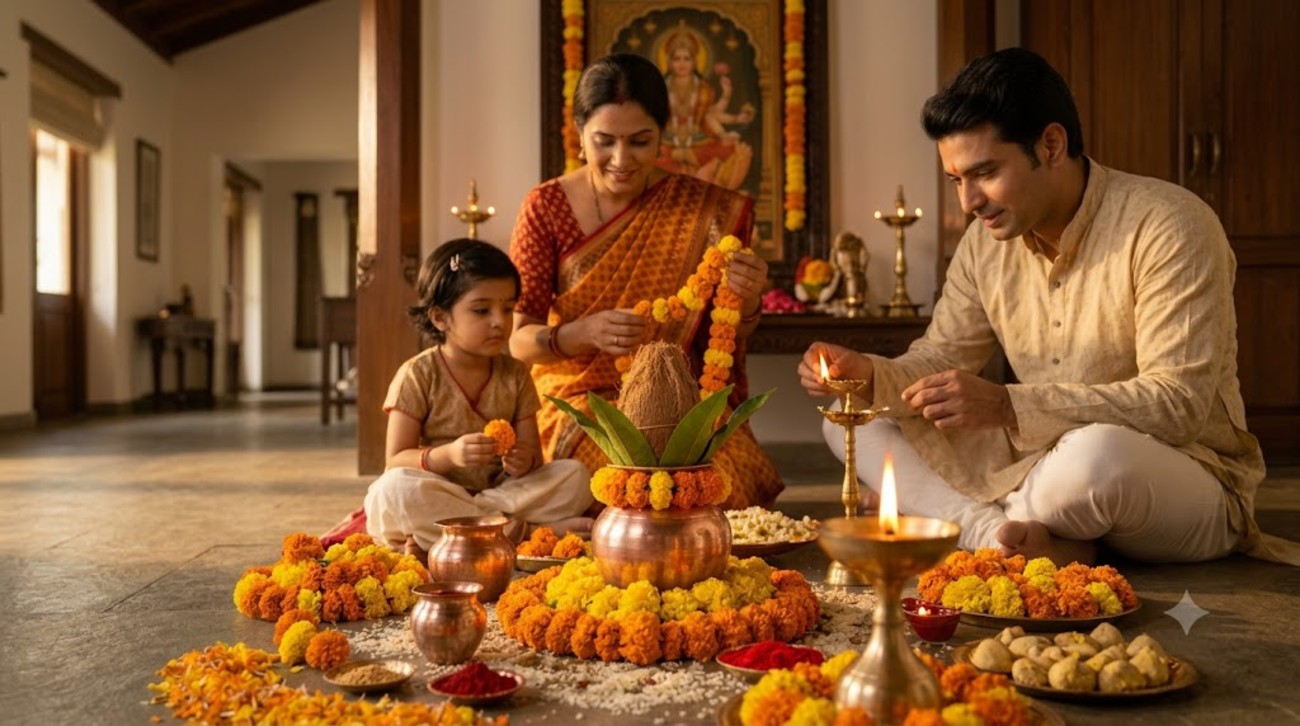
Shardiya Navratri is one of the most widely celebrated forms of Navratri in India. Observed during the autumn season, the festival brings together devotion, prayer, fasting, music, family traditions and community celebrations over nine nights. For many households, the festival begins with preparing the home and setting up a sacred space before moving into daily worship and other rituals.
The word “Navratri” means “nine nights,” and Shardiya Navratri is traditionally associated with the worship of Goddess Durga and her different forms. While the rituals can vary between regions, communities and families, the central experience remains one of devotion, discipline and celebration.
For someone observing Navratri at home for the first time, however, the number of rituals can sometimes feel overwhelming. What needs to be prepared before the first day? What is Ghatasthapana? What happens during daily puja? How does the nine-day observance progress? And how can a family create a meaningful Navratri experience without making every ritual feel complicated?
This guide brings the major Shardiya Navratri puja rituals together in one place, while also explaining the cultural meaning behind the practices and showing how they can become part of a complete festival experience.
Table of Contents
What Is Shardiya Navratri?
Shardiya Navratri is the autumn Navratri observed during the Hindu lunar month of Ashwin. It is traditionally dedicated to the worship of Goddess Durga and is particularly significant in many parts of India.
The festival is celebrated in different ways across the country. In some regions, devotees focus strongly on daily Durga worship and fasting. In Gujarat, the evenings can become occasions for Garba and Dandiya. In West Bengal, the season culminates in the elaborate celebrations of Durga Puja. In northern India, Ramlila and other traditions may form part of the wider festive period.
This regional diversity is one of the most beautiful aspects of Shardiya Navratri. The rituals may look different from one place to another, but each tradition gives people a way to connect with faith, family and community.
If you are discovering Navratri for the first time, our [Navratri festival guide] provides a broader introduction to the festival, its traditions and its many regional celebrations.
Preparing Your Home for Shardiya Navratri
Navratri preparation often begins before the first puja. Families clean their homes, organize the puja area and gather the materials they will need for the days ahead.
The cleaning process is not simply about making the house look festive. For many devotees, it is part of preparing a peaceful and respectful environment for worship.
A small corner of the home can become the main puja space. It does not need to be elaborate. A clean platform, a suitable image or idol of the goddess, flowers, a diya and the materials needed for the family’s customary rituals can be enough.
Many families also decorate the space with marigold flowers, traditional fabrics, rangoli or other festive elements. If you want to create a more beautiful celebration environment, you can explore our guide to Navratri decoration ideas.
The important thing is to create a space that feels intentional rather than simply filling every available surface with decorations.
What Is Ghatasthapana or Kalash Sthapana?
Ghatasthapana, also called Kalash Sthapana in many households, is one of the important rituals associated with the beginning of Navratri.
The ritual involves establishing a sacred kalash as part of the puja setup. The kalash is traditionally filled with water and decorated with elements such as mango leaves and a coconut. In many traditions, it becomes an important symbolic presence throughout the Navratri observance.
Ghatasthapana marks the beginning of the period of worship and sets the tone for the days that follow. The preparation and method can vary according to regional and family traditions, so devotees generally follow the practice passed down within their household or the guidance of their priest.
Because the timing of Ghatasthapana is traditionally connected with an auspicious period, anyone performing the ritual should check the appropriate local Panchang or consult a knowledgeable priest rather than relying on a generic time from another location.
How to Prepare for Ghatasthapana
The preparation for Ghatasthapana can be kept organized by gathering the necessary items beforehand.
Depending on the family’s tradition, the puja arrangement may include a kalash, water, coconut, mango leaves, sacred thread, grains, flowers, a diya, incense and other customary puja materials.
The exact list is not identical in every household. This is important because Navratri rituals have developed through different regional and community traditions.
Instead of treating an online checklist as a universal rule, use it as a starting point and then adapt it to the practice followed by your family.
Preparing everything the previous day can also make the first morning calmer. Rather than searching for flowers, lamps or other items just before the puja, the family can focus on the ritual itself.
Shardiya Navratri Puja Rituals
Once the Navratri observance begins, many families establish a daily rhythm of worship.
The exact puja sequence can differ according to tradition, but a typical home observance may include cleaning the puja space, lighting a diya, offering flowers, incense and other customary offerings, reciting prayers or mantras, and performing aarti.
The purpose is not simply to complete a checklist of actions. The daily ritual creates a regular moment for prayer and reflection during the nine days.
For families with children, this can also become a valuable opportunity to explain the meaning behind the objects and practices they see. A flower can become a lesson about offering, a diya can introduce the symbolism of light, and the daily prayer can become a family routine rather than something children simply watch adults perform.
Daily Worship During the Nine Days

The nine days of Navratri are associated with different forms of Goddess Durga. The way these forms are named and worshipped can vary across traditions, but many devotees use the nine-day period as an extended cycle of prayer and devotion.
Some households maintain a simple daily puja at home, while others follow more elaborate rituals. Devotees may read sacred texts, recite mantras, sing bhajans or attend temple ceremonies.
The most important thing for a home celebration is consistency. A simple ritual performed with attention can feel more meaningful than an elaborate setup that becomes stressful to maintain.
If you want to understand how the nine days are traditionally structured, explore our guide to the nine days of Navratri.
Durga Saptashati and Other Sacred Readings
The recitation of sacred texts is an important part of Navratri worship for many devotees. Durga Saptashati, also known as Devi Mahatmya or Chandi Path in different contexts, is particularly associated with the worship of Goddess Durga.
The text contains verses devoted to the goddess and her manifestations, and its recitation forms part of Navratri observances in many traditions.
However, reading the complete text is not something every household needs to undertake. Some families may recite selected prayers, listen to devotional readings or focus on shorter daily practices.
The important point is to approach sacred reading respectfully and according to the tradition being followed.
Daily Aarti and Prayer
Aarti is one of the most familiar parts of Hindu worship and often becomes the moment when the entire family comes together.
During Navratri, families may perform aarti in the morning, evening or at another time according to their household tradition. The diya or lamp is offered during the prayer, accompanied by devotional songs or mantras.
Evening aarti can create a particularly memorable atmosphere during Navratri. The home becomes quieter, the lamps are lit, flowers surround the puja space and family members gather together.
For children, these repeated moments can become part of their lasting memory of the festival.
Navratri Fasting and Food Traditions
Fasting is another important part of Navratri for many devotees, although the form of fasting differs widely.
Some people observe strict fasts, while others eat selected foods during the day. Ingredients commonly associated with fasting include sabudana, kuttu, singhara, samak, rajgira, makhana, fruits, dairy products and selected vegetables.
The rules followed during a fast are not identical across India or even between families. This is why food should always be understood within the particular fasting tradition being followed.
For practical ideas, explore our guide to Navratri fasting food, which covers common ingredients, vrat dishes and meal-planning ideas.
The Role of the Nine Colours of Navratri
Colours have become an important part of contemporary Navratri celebrations, particularly through clothing and community events.
Many people associate a particular colour with each day of Navratri. The exact sequence can vary from year to year depending on the calendar and the tradition being followed.
The colours can appear in clothing, flowers, decorations, home textiles and even food presentation.
This gives families an easy way to involve children in the festival. Each morning, they can learn the colour associated with the day and use it as inspiration for clothing or a small decorative element.
For the cultural background behind this tradition, explore our guide to the nine colours of Navratri.
Ashtami and Navami: Important Days of the Celebration
Although every day of Navratri has significance, Ashtami and Navami often become particularly important occasions for families.
In many North Indian households, Kanya Pujan or Kanjak is associated with Ashtami or Navami. Young girls are respectfully invited, worshipped as symbolic representatives of the goddess and offered food and gifts according to the family’s tradition.
The exact practices can differ, so families should follow their own customs rather than assuming that one method applies everywhere.
These days can also become occasions for larger family gatherings, special meals and community celebrations.
If Kanya Pujan is part of your family’s Navratri tradition, our detailed Kanya Pujan guide explains the practice in greater depth.
Navratri Aarti, Garba and Community Celebration
Navratri is not only a home-based religious observance. Across India, the festival moves into public spaces through music, dance and community gatherings.
Gujarat is particularly famous for Garba and Dandiya celebrations, where people gather in colourful traditional clothing and dance late into the evening.
The devotional and social aspects of Navratri can exist side by side. A family may begin the evening with prayer and later join a community Garba celebration.
This combination of devotion, music and social connection is one reason Navratri has become such a powerful cultural experience for visitors as well as local communities.
If you want to explore this side of the festival, read our guide to the Garba dance festival.
How to Make Shardiya Navratri Meaningful at Home
A meaningful Navratri does not require an expensive decoration setup or a complicated daily schedule.
Start with a clean puja space. Establish a simple daily prayer routine. Involve family members in preparing flowers, lighting lamps and arranging offerings. Choose a few moments during the nine days to explain the stories and traditions associated with the festival.
Food can become part of this experience as well. Families can prepare a traditional fasting dish together, learn about a regional Navratri food tradition or create a simple festive meal after the evening prayer.
Children can participate through age-appropriate activities such as making decorations, learning devotional songs, identifying the nine colours or creating a small Navratri festival journal.
When everyone participates, Navratri becomes something the family experiences together rather than something one person has to organize.
Shardiya Navratri Rituals for Families With Children
Children often connect with festivals through activity rather than explanation.
Instead of asking them to sit through every ritual without context, give them small responsibilities. They can arrange flowers, help decorate the puja space, prepare a simple rangoli or keep track of the nine days.
You can also create a nine-day learning activity. Each day could introduce a goddess form, a story, a colour, a food tradition or a regional celebration.
This approach helps children understand that Indian festivals are not simply a collection of rituals. They are living cultural traditions that combine stories, food, art, music, family and community.
A Simple Shardiya Navratri Puja Checklist
Before Navratri begins, it can help to prepare a simple checklist.
Before the first day:
- Clean and organize the puja area.
- Gather the items required for your family’s rituals.
- Arrange the kalash and other Ghatasthapana materials.
- Keep flowers and diyas ready.
- Plan any fasting or food requirements.
- Decide how the family will participate in daily worship.
- Prepare simple decorations if desired.
- Check the appropriate local timings for Ghatasthapana.
- Plan any Ashtami or Navami traditions in advance.
During the nine days:
- Maintain the daily puja routine.
- Keep the worship area clean.
- Follow your family’s fasting tradition.
- Make time for aarti or devotional music.
- Involve children and other family members.
- Make space for celebration as well as worship.
The purpose of a checklist is to reduce stress, not to turn a spiritual observance into a project-management exercise.
Bringing Rituals, Food and Celebration Together
One of the most beautiful ways to experience Shardiya Navratri is to see its different traditions as connected.
The morning may begin with prayer. The afternoon may involve preparing a traditional fasting meal. Children may work on decorations. In the evening, the family may perform aarti before joining a Garba celebration or spending time together at home.
This creates a complete festival experience.
For IndianFestival101, that broader experience matters because Indian festivals are not defined by one ritual alone. They are lived through food, family, faith, clothing, music, decoration, travel and community.
That is also why planning Navratri can be enjoyable rather than stressful when the different parts are brought together.
Experience Shardiya Navratri Beyond the Puja
Shardiya Navratri offers many different ways to connect with Indian culture.
You can experience the quiet atmosphere of a home puja, visit a temple, watch a community Garba celebration, explore regional food traditions or travel to a destination where Navratri takes on a distinctive local character.
For international visitors, this diversity is particularly fascinating. The same festival can feel completely different in Ahmedabad, Kolkata, Delhi, Mumbai or a smaller town, because local history and community traditions shape the celebration.
If you are planning to experience Navratri beyond your home, start with our [Navratri festival guide] and explore the different traditions and destinations connected with the celebration.
FAQs
1. What are the main Shardiya Navratri puja rituals?
The main Shardiya Navratri puja rituals include preparing the puja space, performing Ghatasthapana or Kalash Sthapana, worshipping Goddess Durga, offering flowers and prasad, reciting devotional prayers, and performing aarti. Rituals can vary according to regional and family traditions.
2. How to perform Shardiya Navratri puja at home?
To perform Shardiya Navratri puja at home, clean and decorate the worship area, arrange the required puja items, perform Ghatasthapana according to your tradition, and continue daily prayers, offerings and aarti throughout Navratri.
3. What is Ghatasthapana in Shardiya Navratri?
Ghatasthapana, also known as Kalash Sthapana, is a traditional ceremony that marks the beginning of Navratri worship. A sacred kalash is prepared and placed in the puja area as devotees begin their nine-day observance.
4. What are the important rituals performed during the nine days of Navratri?
During the nine days, devotees commonly perform daily prayers and aarti, make offerings to Goddess Durga, observe fasting according to their tradition, and participate in devotional or cultural activities. Ashtami and Navami may include additional ceremonies such as Kanya Pujan.
5. Is fasting necessary during Shardiya Navratri?
Fasting is an important practice for many devotees, but it is not observed in the same way by everyone. Some people observe strict fasting, while others eat permitted vrat foods during Navratri. Fasting practices vary according to family, regional and religious traditions.
Make Shardiya Navratri a Complete Experience
Shardiya Navratri is more than nine days of rituals. It is a time when prayer, family, food, music, colour and community come together.
You do not need to recreate every tradition to experience the festival meaningfully. A carefully prepared puja space, a few moments of daily devotion, traditional food and time spent with family can be enough to create a memorable celebration.
And when you want to explore more, there is an entire world of Navratri waiting beyond the home — from Garba nights and regional food to temples, community celebrations and festival travel.
Explore Navratri with IndianFestival101 and discover the traditions, experiences and stories that make India’s festivals worth celebrating.