
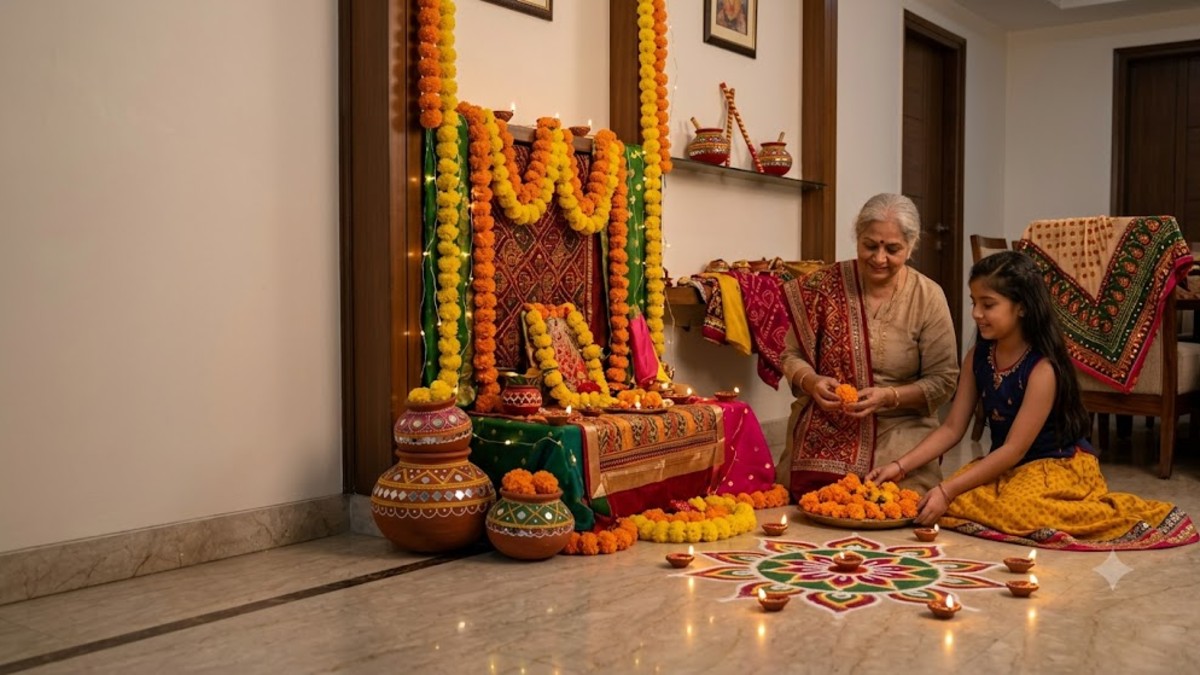
Navratri is a festival of devotion, colour, music, family gatherings and celebration. Whether you are preparing a small puja corner at home, decorating an apartment for a Garba night, setting up a school celebration or planning an office event, the right decoration can completely change the atmosphere. You do not need an expensive setup or elaborate materials. A thoughtful combination of flowers, lights, diyas, traditional fabrics and handmade elements can create a festive space that feels beautiful while still reflecting the spirit of Navratri.
The best Navratri decoration ideas are not simply about making a room look colourful. They are about creating an environment where people want to gather, participate and celebrate. A beautifully decorated puja area can make family rituals feel more meaningful, while a colourful entrance or Garba space can turn an ordinary gathering into a memorable celebration. With a little planning, even simple materials can be transformed into attractive Navratri decorations.
Table of Contents
Why Navratri Decoration Matters
Navratri celebrations often bring together several different experiences. There may be daily prayers at home, devotional music, family meals, Garba or Dandiya evenings, children’s activities and visits from friends and relatives. Decoration helps connect these experiences visually and gives the celebration a distinct identity.
Traditional Indian decoration also provides an opportunity to bring cultural elements into contemporary homes. Marigold flowers, torans, diyas, Bandhani fabrics, colourful dupattas, clay pots and traditional motifs can work beautifully alongside modern fairy lights and simple home décor. The result does not have to look old-fashioned. Instead, the combination can create a festive space that feels both authentic and contemporary.
1. Start with a Beautiful Navratri Entrance
The entrance is the first part of your home that guests see, so it is a natural place to begin your Navratri decoration.
A simple toran made with marigold flowers, mango leaves or colourful fabric can immediately create a festive mood. If you prefer something reusable, choose a traditional textile toran featuring mirror work, embroidery or colourful patterns.
You can place two decorative diyas or lanterns on either side of the entrance. A small rangoli below the doorway can complete the arrangement without making the space feel crowded.
For apartments and smaller homes, vertical decoration works particularly well. A hanging toran combined with a few strings of warm lights can create an attractive entrance without taking up floor space.
2. Create a Traditional Navratri Puja Corner
For many families, the puja area is the heart of the Navratri celebration. Rather than decorating the entire room, concentrate your effort around this space.
Begin with a clean backdrop using a bright dupatta, traditional saree or decorative fabric. Red, yellow, orange, pink and other festive shades can create warmth, while embroidered or printed fabrics add texture.
Place the kalash and other puja elements neatly in the centre and surround the arrangement with flowers or small diyas. A low wooden chowki covered with a colourful cloth can also provide a traditional foundation.
The important principle is balance. The sacred elements should remain the visual focus rather than becoming hidden beneath excessive decoration.
3. Use Marigold Flowers for a Classic Look
Few decorations create an Indian festive atmosphere as quickly as marigold flowers.
Fresh marigold garlands can be used around doors, windows, puja spaces and balconies. You can hang them vertically, arrange them around a backdrop or combine yellow and orange flowers for a layered effect.
If fresh flowers are difficult to maintain throughout the nine days, artificial marigold garlands can provide a practical alternative. They can also be stored and reused during Diwali and other celebrations.
For a more contemporary arrangement, combine marigolds with green leaves and warm white lights rather than covering every surface with flowers.
4. Decorate with Diyas and Traditional Lamps
Lighting is one of the easiest ways to transform a Navratri decoration setup after sunset.
Traditional clay diyas can be arranged around the puja area, on shelves or along a balcony railing. You can also use decorated diyas painted with simple traditional patterns.
For safety and convenience, LED diyas are useful when decorating areas where open flames are not practical. Warm fairy lights can be added behind the arrangement to create depth.
Instead of using lights everywhere, think about creating small pools of light. A well-lit entrance, puja corner and celebration area can often look more elegant than a room covered completely in decorative lighting.
5. Try a Colourful Navratri Fabric Backdrop
Fabric is one of the most versatile materials for Navratri decoration.
A bright dupatta, Bandhani fabric, embroidered cloth or traditional saree can become a backdrop for a puja corner or family photo area. You can layer two or three fabrics to create texture rather than relying on a single large decorative sheet.
For a Garba-themed gathering, colourful textiles can also be used to create a vibrant celebration wall. Add mirrors, tassels, small bells or traditional motifs to make the backdrop more visually interesting.
This approach is particularly useful because many of the materials may already be available at home.
6. Create a Navratri Rangoli
Rangoli is another traditional way to give your home an immediate festive character.
You can create a simple geometric rangoli near the entrance or design a more elaborate pattern around the puja area. Traditional motifs such as flowers, diyas, peacocks and geometric patterns can work beautifully.
For families with children, rangoli can become part of the celebration rather than simply being decoration. Give children a small section of the design and let them experiment with colours or flower petals.
If you want a cleaner and faster setup, reusable rangoli stencils or decorative rangoli stickers can also be used.
7. Use the Nine Colours of Navratri
The nine colours traditionally associated with Navratri provide an excellent creative theme for decoration.
Rather than trying to use all nine colours throughout the house, assign a colour to a specific decorative element. You could use coloured flowers, fabric strips, cushions, ribbons or small decorative objects to represent the colours.
Another idea is to create a nine-colour wall hanging using fabric circles or paper elements. This can become a visual representation of the nine-day celebration while also providing an attractive background for photographs.
This concept works especially well for schools and children’s celebrations because it can become both a decoration project and a learning activity.
8. Make a DIY Navratri Decoration with Children
Navratri decorations do not always need to be purchased. Handmade decorations can make the celebration more personal and give children something meaningful to do.
Children can make paper garlands, colourful hanging ornaments, diya holders, miniature Dandiya sticks or decorative cards. Older children can create traditional motifs using paper, cardboard or recycled materials.
The goal is not perfect craftsmanship. The activity itself becomes part of the celebration.
For parents and schools, this creates a natural opportunity to combine festival learning with creative activity, making Navratri more engaging for children.
9. Decorate Your Balcony for Navratri
A balcony can become a wonderful mini celebration space, especially for families living in apartments.
Start with warm string lights around the railing. Add a few hanging flowers or fabric decorations and place small planters or decorative pots around the corners.
If the balcony is being used for evening gatherings, avoid filling the floor with too many decorative objects. Keep enough open space for people to move comfortably.
A small seating arrangement with colourful cushions can turn the balcony into a relaxed family celebration area.
10. Create a Garba and Dandiya Celebration Area
If you are hosting a Garba or Dandiya evening at home, decoration should support movement rather than interfere with it.
Keep the centre of the room relatively open and concentrate decoration around the walls. A colourful backdrop, hanging fabrics, fairy lights and traditional motifs can establish the festive atmosphere without reducing the available space.
You can also create a small photo corner where guests can take pictures with colourful dupattas, Dandiya sticks and traditional props.
For larger celebrations, a circular arrangement of lights or fabric can visually define the Garba area and make the space feel more intentional.
11. Use Traditional Pots and Earthen Décor
Clay pots, matkas and earthen decorative pieces can bring an authentic Indian character to your Navratri setup.
Painted pots can be placed near entrances, balconies or the puja area. You can decorate them with mirrors, thread, beads or simple painted motifs.
Another option is to place flowers inside small clay pots and arrange them at different heights. This creates a layered display without requiring expensive decorative items.
The natural texture of clay also works particularly well with marigolds and warm lighting.
12. Make a Navratri Photo Booth
A dedicated photo area can become one of the most enjoyable parts of a Navratri gathering.
You do not need professional equipment. A colourful fabric backdrop, flowers, fairy lights and a few traditional props are enough to create a simple photo booth.
Dandiya sticks, colourful dupattas, traditional jewellery, decorative umbrellas and festive headpieces can be used as props.
For family gatherings, this also creates a way to capture memories from each year’s celebration.
13. Navratri Decoration Ideas for Small Homes
Small spaces require a different approach. Instead of decorating every corner, select two or three focal points.
The entrance, puja corner and living-room wall are usually enough to establish a strong festive atmosphere.
Use vertical decorations wherever possible. Hanging flowers, fabric panels, wall hangings and fairy lights take up less floor space than large decorative arrangements.
A small decorated table with flowers, a diya and a traditional textile can also create a beautiful festive corner without requiring a complete room makeover.
14. Eco-Friendly Navratri Decoration Ideas
Festival decoration can also be an opportunity to make more thoughtful choices.
Natural flowers, reusable fabrics, clay diyas, paper decorations and materials already available at home can reduce dependence on disposable décor.
Instead of buying new decorations every year, invest in reusable pieces that can be adapted for Navratri, Diwali and other Indian festivals.
Children can also participate by creating decorations from recycled cardboard, paper and fabric scraps. This turns sustainability into a practical festival activity rather than simply a concept.
15. Navratri Decoration Ideas for Schools
Schools can approach Navratri decoration differently from homes because the decoration should also support learning.
A classroom can feature a nine-colour Navratri display where each colour is introduced with information about the corresponding day. Students can create paper diyas, traditional motifs and festival artwork to decorate the room.
A school entrance can feature a large handmade Navratri banner or rangoli created collectively by students.
The decoration itself can become part of a cultural-learning project, allowing students to explore Indian traditions through art and creativity.
16. Navratri Decoration Ideas for Office Celebrations
Corporate Navratri celebrations usually benefit from a cleaner and more sophisticated decorative approach.
A reception area can feature a simple floral arrangement, traditional fabric and subtle lighting. A small Garba or Dandiya area can use colourful accents without making the workplace feel overcrowded.
Companies can also create a festive photo corner for employees. Branded elements can be incorporated discreetly while allowing the cultural decoration to remain the primary visual theme.
The key is to create a celebration environment that feels festive while still being appropriate for a professional workplace.
17. How to Decorate on a Budget
A beautiful Navratri setup does not require a large budget.
Start by checking what you already have. Dupattas, sarees, cushions, fairy lights, diyas, baskets and decorative objects can often be reused creatively.
Then choose one visual theme rather than buying many unrelated decorations. For example, a combination of marigolds, warm lights and Bandhani fabric can create a complete look with relatively few materials.
DIY decoration can reduce costs further while making the celebration more personal.
The most effective decoration is usually not the one with the most objects. It is the one where each element has a purpose.
Build a Navratri Decoration Theme
Before purchasing anything, decide what kind of atmosphere you want to create.
A traditional Navratri theme can focus on marigolds, diyas, rangoli, clay pots and ethnic textiles.
A colourful Garba theme can use bright fabrics, mirrors, tassels, Dandiya elements and vibrant lighting.
A modern festive theme can combine neutral interiors with carefully selected flowers, warm lights and a few traditional accents.
A children’s Navratri theme can focus on handmade decorations, nine colours, crafts and interactive displays.
Having a theme makes shopping easier and prevents the decoration from becoming visually confusing.
A Simple Navratri Decoration Checklist
Before your celebration begins, check that you have the basic elements ready:
- Entrance decoration or toran
- Flowers or artificial garlands
- Diyas or LED lamps
- Fairy lights
- Rangoli materials
- Puja backdrop fabric
- Decorative pots or baskets
- Nine-colour decorative elements
- Garba and Dandiya décor
- Photo booth props
- Child-friendly DIY materials
- Reusable storage boxes for decorations
Preparing these items a few days before Navratri allows you to enjoy the festival instead of spending the first day searching for missing materials.
Turn Navratri Decoration into a Celebration Activity
One of the most valuable ways to approach Navratri decoration is to stop thinking of it as something that must simply be completed before the festival.
Make the preparation itself part of the celebration.
Families can spend an afternoon creating decorations together. Schools can organise a classroom decoration project. Companies can hold a collaborative office decoration activity. Children can create nine-colour artwork or handmade diya holders.
This transforms decoration from a visual task into a shared festival experience.
And that is where Navratri becomes more than a decorated room. It becomes something people actively participate in.
Create Your Own Navratri Celebration Experience
The most memorable Navratri decorations are rarely the most expensive ones. They are the ones that help people feel connected to the festival.
A few marigold garlands can transform an entrance. A colourful dupatta can become a beautiful backdrop. A row of diyas can make a simple puja corner feel special. A handmade rangoli can bring the family together. A nine-colour display can help children understand the festival while creating something beautiful.
At IndianFestival101, Navratri is not just about knowing the dates or understanding the traditions. It is about discovering ways to celebrate, participate and experience the festival—whether you are celebrating at home, organising an activity at school, planning an office event or travelling to experience Navratri in India.
From decoration and food to Garba, rituals, family activities and festival travel, every element can become part of a larger Navratri experience.
FAQs
What are some simple Navratri decoration ideas for home?
Some simple Navratri decoration ideas include using marigold garlands, diyas, fairy lights, colourful fabrics, rangoli and a decorative toran at the entrance. You can focus on the puja corner, entrance and one living-room wall instead of decorating the entire house.
How can I decorate my home for Navratri on a low budget?
You can create an attractive Navratri decoration on a budget by reusing items you already have, such as dupattas, sarees, cushions, diyas and fairy lights. Handmade paper decorations, flower arrangements and simple rangoli designs can add a festive touch without requiring a large budget.
What flowers are best for Navratri decoration?
Marigold flowers are among the most popular choices for Navratri decoration. Yellow and orange marigolds can be used for torans, puja corners, entrances, balconies and backdrops. You can also combine them with green leaves or other seasonal flowers for a more layered look.
How can I decorate my Navratri puja area?
You can decorate a Navratri puja area with a colourful fabric backdrop, marigold flowers, diyas, rangoli and traditional decorative elements. Keep the arrangement balanced so that the puja setup remains the main focus rather than being hidden by excessive decoration.
What are some DIY Navratri decoration ideas?
DIY Navratri decorations can include paper garlands, handmade diya holders, fabric hangings, painted clay pots, colourful wall decorations and nine-colour artwork. DIY projects are also a good way for families and children to participate in Navratri preparation.
How can I use the nine colours of Navratri in decoration?
You can represent the nine colours of Navratri through flowers, fabrics, ribbons, paper decorations, cushions or wall hangings. Rather than using all nine colours throughout the room, create a dedicated nine-colour display that visually represents the nine-day celebration.
What are some eco-friendly Navratri decoration ideas?
Eco-friendly Navratri decoration can include natural flowers, reusable fabrics, clay diyas, paper crafts and decorations made from materials already available at home. Reusing decorations from previous festivals can also reduce waste and make your celebration more sustainable.
Plan Your Navratri Celebration
Decorating your home is only one part of the Navratri experience. Once the space is ready, you can plan the rituals, family activities, Garba, food, children’s activities and other ways to celebrate the festival.
Explore our complete Navratri guide for ideas, traditions, celebration planning and ways to experience this vibrant festival.
You can also turn your preparation into a more organized celebration with the Navratri Celebration Kit—a practical system designed to help families, schools and groups plan activities and enjoy Navratri together.
[Explore the Navratri Celebration Kit]
Whether your celebration is simple or elaborate, the heart of Navratri remains the same: coming together, participating and creating memories.
Celebrate thoughtfully. Create together. And make your Navratri memorable.
