
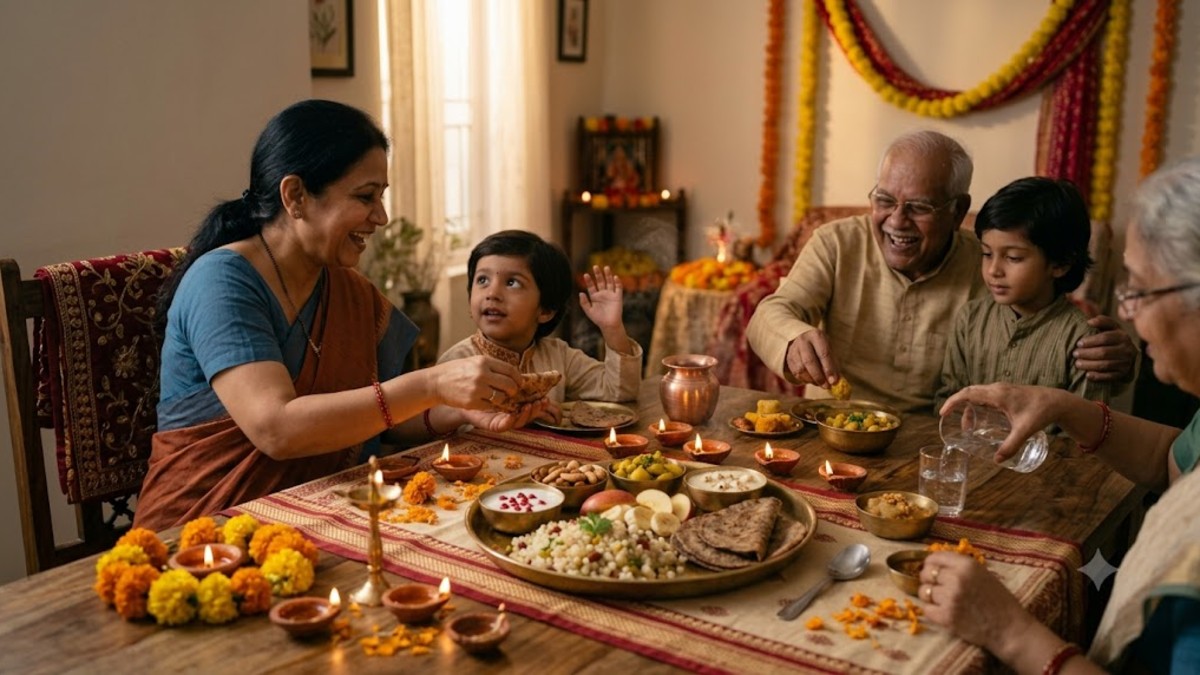
Navratri changes the rhythm of the Indian kitchen. For nine days, many families adjust their everyday meals and prepare foods that are traditionally associated with fasting, devotion and the observance of Navratri. Ingredients such as sabudana, kuttu, singhara, rajgira, samak, makhana, fruits and dairy often become part of the menu.
But Navratri fasting food is not one fixed menu followed in exactly the same way everywhere. Food practices can differ according to region, family tradition and the particular form of fasting being observed. What remains common is the idea of eating simply and choosing foods that fit the household’s religious practice.
For many families, this makes food an important part of the festival experience. Preparing a special meal, making a vrat thali, sharing food with family or discovering a regional Navratri dish can turn an ordinary meal into part of the celebration.
If you are planning your Navratri at home, understanding these food traditions can help you create meals that are practical, festive and connected to the spirit of the occasion.
Table of Contents
What Is Navratri Fasting Food?
Navratri fasting food refers to the foods commonly prepared by people who observe a vrat or fast during Navratri. These meals are generally different from everyday Indian cooking and often use selected grains, flours, fruits, vegetables, dairy products, nuts and other ingredients accepted within a particular fasting tradition.
Some people observe a complete fast or consume very little food, while others have one or more meals during the day. Because practices differ, there is no single Navratri fasting menu that applies to every family.
This is why it is useful to think of Navratri fasting food as a broad food tradition rather than a strict universal menu. A family in North India may prepare kuttu puri and aloo, while another household may prefer sabudana khichdi, fruit, makhana or regional preparations.
The food becomes part of the rhythm of the festival, alongside prayers, rituals, Garba, family gatherings and other Navratri traditions.
What to Eat During a Navratri Fast?
The foods eaten during a Navratri fast depend on the individual’s tradition and the rules followed by their family or community. However, several ingredients are commonly associated with vrat cooking.
Sabudana is one of the most familiar ingredients. It is used in dishes such as sabudana khichdi and sabudana vada, often combined with potatoes, peanuts and spices suitable for the fasting tradition.
Kuttu, or buckwheat, is another popular ingredient. Kuttu flour is commonly used to make puris, rotis and other fasting preparations. Singhara atta, made from water chestnut, is also used in many households.
Samak rice, sometimes called barnyard millet, can be used as an alternative to regular rice in fasting meals. It can be prepared in several ways and works particularly well as part of a simple meal with vegetables or yogurt.
Makhana is another versatile ingredient. It can be roasted for a snack, cooked into savoury preparations or used in desserts such as makhana kheer.
Fruits, dairy products, nuts and selected vegetables are also commonly included in fasting meals, depending on individual practice.
Rather than following a generic list found online, it is sensible to follow the fasting tradition observed by your own family or community.
Common Navratri Fasting Food Ingredients
A Navratri kitchen can look quite different from an ordinary Indian kitchen during these nine days. Some familiar ingredients are replaced with foods traditionally associated with vrat cooking.
Commonly used ingredients include:
- Sabudana
- Kuttu flour
- Singhara flour
- Samak or barnyard millet
- Rajgira
- Makhana
- Potatoes
- Sweet potatoes
- Fruits
- Milk and yogurt
- Peanuts
- Almonds and other nuts
- Coconut
- Selected vegetables
- Rock salt, where used according to the household tradition
These ingredients can be combined in surprisingly different ways. A simple pantry of fasting ingredients can produce breakfast dishes, main meals, snacks and sweets without making the nine days feel repetitive.
Popular Navratri Fasting Food
Sabudana Khichdi
Sabudana khichdi is one of the best-known Navratri fasting dishes. Soaked tapioca pearls are combined with ingredients such as peanuts, potatoes and suitable seasonings to create a filling meal.
It works particularly well for people looking for something simple but satisfying. Families also have their own ways of preparing it, with differences in texture, seasoning and the amount of peanuts or potatoes used.
Kuttu Ki Puri
Kuttu flour is commonly used during Navratri fasting, and kuttu puri is a familiar festive preparation.
The puris are often served with potato-based dishes or yogurt. Because they are filling, they are frequently associated with a substantial fasting meal rather than a light snack.
Singhara Roti
Singhara flour provides another option for fasting meals. Singhara rotis can be paired with vrat-friendly vegetables, yogurt or other foods that fit the family’s fasting practice.
For people who do not want fried food at every meal, a roti-based preparation can make the menu feel more balanced.
Samak Rice
Samak rice is widely used as a substitute for regular rice in many fasting traditions.
It can be prepared as a simple pulao-style dish or paired with yogurt and vegetables. Its versatility makes it useful when planning several days of fasting meals.
Makhana
Makhana can move easily between snacks and meals. Roasted makhana makes a simple evening snack, while cooked preparations and makhana kheer provide other options.
It is also one of the easiest ingredients to keep ready in the kitchen, making it useful during busy Navratri days.
Vrat Ke Aloo
Potatoes appear in many fasting menus because they can be prepared in numerous ways. A simple vrat-style potato dish can accompany kuttu puri, singhara roti or samak rice.
The appeal is largely its flexibility: the same basic ingredient can become part of several different meals.
Rajgira Preparations
Rajgira, or amaranth, is another ingredient associated with fasting food. Depending on regional and family traditions, it can be used in flour-based preparations, ladoos and other festive foods.
Its presence also shows how diverse the ingredient base of Navratri cooking can be.
Navratri Fasting Snacks
Fasting does not necessarily mean giving up snacks. Many households prepare small dishes that can be eaten between meals or served during evening family gatherings.
Sabudana vada, roasted makhana, fruit chaat, nuts and selected potato or sweet-potato preparations are popular choices in many homes.
Snacks can also become part of the social side of Navratri. Families may prepare something together before an evening Garba event, while schools and offices can adapt the idea into simple festive food activities.
If you are planning a celebration, keeping a few simple snacks available can make the day easier without turning every meal into an elaborate cooking project.
Navratri Fasting Sweets and Desserts
Festival food is rarely complete without something sweet, and Navratri has its own collection of sweet preparations.
Makhana kheer, rajgira ladoos, fruit-based desserts, dry-fruit preparations and halwa-style dishes are examples of sweets that may appear in fasting menus, depending on the family’s tradition.
The most enjoyable approach is often to keep desserts simple. A small festive sweet after a family meal can create a sense of celebration without requiring an elaborate menu.
Navratri Food for the Nine Days
Planning food for nine days can initially seem difficult, particularly when the same ingredients appear repeatedly. The easiest solution is to change the preparation rather than constantly searching for completely different ingredients.
For example, sabudana can become a breakfast or snack, samak can form the base of a main meal, makhana can become an evening snack or dessert, and kuttu or singhara flour can be used for different breads and fried preparations.
A simple nine-day meal plan might look like this:
| Day | Meal inspiration |
|---|---|
| Day 1 | Sabudana-based meal |
| Day 2 | Kuttu preparation with potato |
| Day 3 | Fruit, yogurt and nuts |
| Day 4 | Samak-based meal |
| Day 5 | Makhana snack and light meal |
| Day 6 | Singhara preparation |
| Day 7 | Rajgira-based dish |
| Day 8 | Festive meal associated with Kanya Pujan |
| Day 9 | Family celebration meal |
This is a planning framework rather than a religious prescription. Fasting practices vary, so the menu should always be adjusted to the tradition being followed.
For a deeper look at the festival itself, explore our guide to the [nine days of Navratri].
Traditional Navratri Food Across India
One of the most interesting things about Navratri food is that it does not look exactly the same across India.
In northern parts of the country, fasting meals commonly feature ingredients such as kuttu, singhara, samak, potatoes, sabudana and dairy. These foods are familiar to many households that observe Navratri vrat.
In Gujarat, Navratri is closely associated with Garba and Dandiya celebrations, and food becomes part of the larger social experience surrounding the festival. Families and communities may combine fasting foods with gatherings, evening celebrations and regional food traditions.
In Maharashtra, sabudana preparations are particularly familiar during fasting periods, while other regional dishes also appear depending on the household.
In parts of South India, Navratri food traditions can take different forms, including festive offerings, sweets and dishes prepared for gatherings. In some communities, Navratri is also associated with traditions such as Golu.
This regional variety is worth celebrating because it shows that there is no single way to experience an Indian festival.
Food can tell the story of a place just as effectively as music, clothing, dance or architecture.
Navratri Thali Ideas
A Navratri thali does not need to be complicated.
A simple thali might include one main fasting preparation, a vegetable dish, yogurt, fruit and a small sweet. Depending on the household tradition, it could include kuttu puri, vrat-style potatoes, samak rice, sabudana, makhana or another preferred dish.
The visual presentation can also make the meal feel more festive. A traditional plate, a small bowl of yogurt, fresh fruit, flowers and a diya placed safely nearby can create a beautiful celebration setting.
This is where food connects naturally with other parts of Navratri. A meal can become part of the decoration, family gathering and celebration rather than something prepared separately from the festival.
You can also explore our [Navratri decoration ideas] for simple ways to create a festive setting at home.
Healthy Navratri Fasting Food
A fasting menu can become very heavy if every meal relies on fried foods, large portions or rich sweets. Planning a varied menu can make the experience more comfortable.
Include foods from different categories that fit your fasting tradition. Fruits can add freshness, yogurt can accompany meals, nuts can be used in moderation, and preparations such as roasted makhana can provide an alternative to fried snacks.
Portion sizes and hydration also matter. People who are fasting should consider their individual needs and follow appropriate guidance, particularly if they have dietary or medical requirements.
The goal should not be to turn Navratri fasting into a restrictive food challenge. For many people, the food tradition is about simplicity, observance and mindful eating.
Navratri Food Ideas for Families
Food becomes more meaningful when the family participates in preparing it together.
Children can help wash fruit, arrange a thali, decorate the serving area or identify ingredients used in traditional fasting dishes. Older children can learn about the differences between regional Navratri food traditions.
You can also create a simple family food activity: choose one fasting ingredient and learn how it is used in different parts of India.
For example, compare different ways of preparing sabudana or explore how kuttu and singhara are used in fasting meals.
This turns food from a daily necessity into a cultural learning experience.
For more family-friendly celebration ideas, explore our complete Navratri Celebration Guide.
Navratri Food Ideas for Schools
Navratri food can also become an excellent cultural activity in schools.
Instead of asking children simply to bring food from home, teachers can create a small “Food of Navratri” activity. Students can research fasting ingredients, identify different regional dishes and create a simple presentation about how families observe the festival.
A classroom can also create a visual Navratri food chart showing ingredients such as sabudana, kuttu, singhara, rajgira and makhana.
The focus should be on understanding cultural diversity rather than telling every student that one particular fasting practice is universal.
Navratri Food Ideas for Offices
Food can be an easy way for an office to create a Navratri atmosphere without organizing a large event.
A workplace could arrange a small fasting-friendly snack counter, a Navratri thali lunch or a regional food tasting activity. If employees observe different traditions, offering a variety of choices is more inclusive than assuming everyone follows the same fasting rules.
Food can also be combined with other activities such as traditional dress, music or an evening Garba gathering.
For companies planning larger festival celebrations, food can become one part of a complete Navratri celebration experience.
How to Plan Navratri Fasting Food at Home
The easiest way to avoid last-minute cooking is to plan the basic ingredients before Navratri begins.
Make a simple list of the foods your family normally uses during fasting. Check the pantry for flours, sabudana, makhana, nuts and other staples. Then decide which dishes can be prepared quickly and which require more time.
It also helps to plan variety.
You do not need nine completely different menus. Instead, rotate a few ingredients and change the preparation method.
One day could focus on sabudana, another on samak, another on kuttu, while fruit, yogurt, nuts and simple snacks fill the gaps.
This approach makes Navratri food easier to manage while keeping meals interesting.
Turn Navratri Food into a Celebration
Food can be one of the simplest ways to make Navratri feel special at home.
Instead of eating quickly and moving on to the next task, choose one evening to prepare a traditional meal together. Decorate the dining area, light a diya safely, play traditional music and invite children to help arrange the table.
You could even make the meal part of a larger Navratri evening that includes prayer, storytelling, music or Garba.
The idea is simple: celebration does not always require something elaborate.
A carefully prepared meal shared with family can become one of the memories people associate with the festival.
Navratri Food Is More Than a Menu
Navratri fasting food tells a larger story about Indian festival culture.
It shows how religious observance influences everyday life, how regional ingredients become part of traditions and how families pass food practices from one generation to another.
For someone experiencing Navratri for the first time, food can also be an accessible introduction to the festival. A simple meal can open a conversation about fasting, devotion, regional traditions, Garba, family customs and the diversity of Indian celebrations.
That is what makes Navratri food worth exploring beyond a list of recipes.
It is not simply about what goes on the plate. It is about the people, traditions and experiences surrounding the meal.
Frequently Asked Questions About Navratri Fasting Food
What is Navratri fasting food?
Navratri fasting food refers to foods commonly prepared by people observing a vrat during Navratri. These may include ingredients such as sabudana, kuttu, singhara, samak, rajgira, makhana, fruits, dairy and selected vegetables, depending on the family’s tradition.
What can I eat during a Navratri fast?
The foods you can eat depend on the fasting tradition you follow. Common choices include fruits, dairy, sabudana, kuttu, singhara, samak, rajgira, makhana, nuts and selected vegetables.
What are the most popular Navratri fasting foods?
Popular choices include sabudana khichdi, sabudana vada, kuttu puri, singhara roti, samak rice, vrat-style potatoes, roasted makhana, fruit chaat and fasting-friendly sweets.
Can I eat rice during Navratri fasting?
Regular rice is avoided in many Navratri fasting traditions, while samak or barnyard millet is commonly used as an alternative. Practices vary, so follow the tradition observed by your family or community.
Is potato eaten during Navratri fasting?
Potatoes are commonly included in many Navratri fasting menus. They can be prepared in several ways and are often served with kuttu or singhara preparations.
Is sabudana good for Navratri fasting?
Sabudana is one of the most commonly used ingredients in Navratri fasting food. It can be prepared as khichdi, vada and other dishes according to the household’s fasting practice.
What flour is used during Navratri fasting?
Kuttu flour and singhara flour are commonly used during Navratri fasting. Rajgira flour is also used in some households.
What are some easy Navratri fasting food ideas?
Easy options include sabudana khichdi, roasted makhana, fruit and yogurt, simple vrat-style potatoes, samak rice and quick kuttu or singhara preparations.
What sweets can be eaten during Navratri fasting?
Depending on the fasting tradition, options can include makhana kheer, rajgira ladoos, fruit-based desserts, dry-fruit preparations and certain halwa-style sweets.
What should I prepare before Navratri fasting begins?
Prepare a list of the ingredients your family uses during fasting, stock basic items such as sabudana and fasting flours, plan a few simple meals and decide how you will create variety across the nine days.
Is Navratri fasting food the same throughout India?
No. Navratri food traditions vary across regions, communities and families. Different parts of India have their own ingredients, dishes and ways of observing the festival.
How can I make Navratri food more festive?
You can serve food in a traditional thali, decorate the dining area with flowers or textiles, include a diya safely and involve family members in preparing and serving the meal.
Make Navratri a Complete Celebration
Navratri food is only one part of the experience. When food, decoration, family activities, rituals, music and celebration come together, the nine days can become much more memorable.
Explore the complete [Navratri festival guide] to discover traditions, activities, Garba, rituals and practical ways to celebrate.
And if you want a more organized way to bring your preparation and celebration ideas together, keep an eye out for the IndianFestival101 Navratri Celebration Kit — designed as a complete celebration system rather than simply a collection of information.
Plan your Navratri. Prepare with purpose. Celebrate the experience.
