
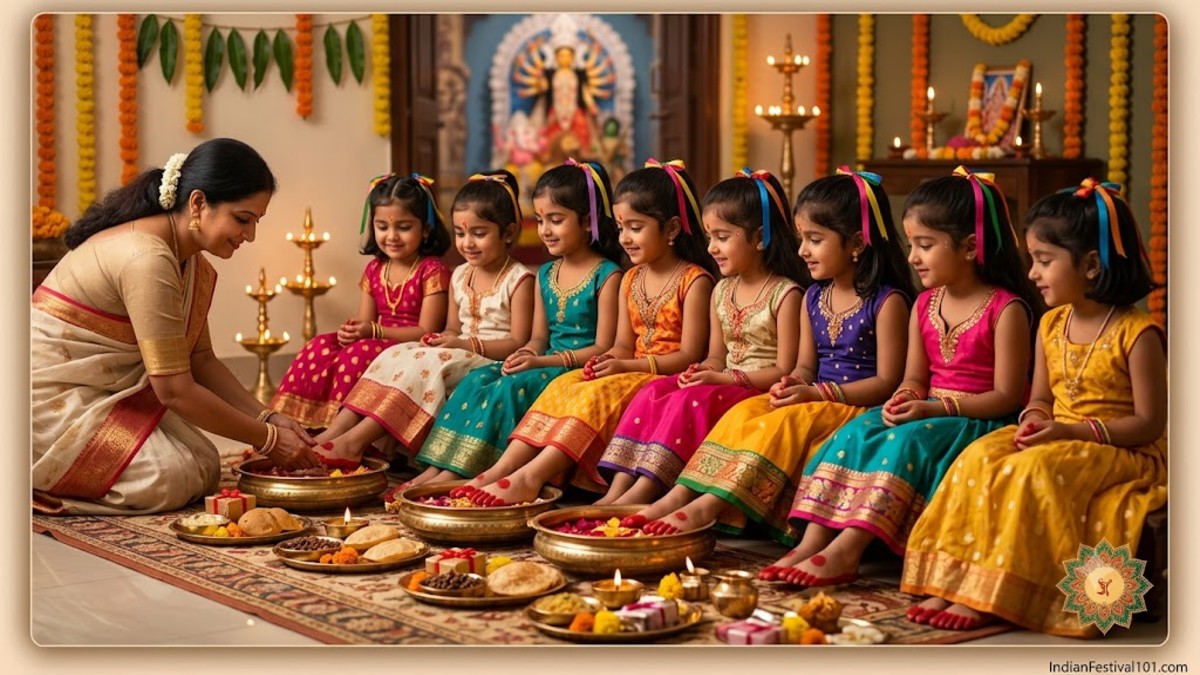
Ashtami Kanya Pujan is one of the most meaningful traditions associated with Navratri. For many Hindu families, the occasion is a time to welcome young girls into the home, honor them as manifestations of the divine feminine, offer traditional food, and seek their blessings. The ritual may be simple in one household and more elaborate in another, but its central idea remains connected with devotion, gratitude and respect.
If you are planning Kanya Pujan at home, there is more to think about than the actual puja. You may need to decide when to perform it, arrange the required samagri, prepare the traditional meal, organize the seating, choose suitable gifts and make sure everything is ready before the children arrive. This guide brings these elements together so that you can understand the tradition and prepare for it without unnecessary last-minute confusion.
Table of Contents
What Is Ashtami Kanya Pujan?
Kanya Pujan, also known as Kanya Puja or Kanjak Puja in some regions, is a Navratri tradition in which young girls are respectfully welcomed and worshipped as symbolic forms of the Goddess. It is particularly associated with the concluding days of Navratri, especially Ashtami and Navami, although the exact practice can differ between families and regions.
The girls are generally welcomed into the home, seated respectfully and offered traditional food after the customary worship. Families may apply tilak, offer flowers or other traditional items, perform aarti and give gifts or dakshina before the children leave. The details can vary, so families often follow the customs they have inherited from their elders or their particular regional tradition.
The importance of Kanya Pujan is therefore not limited to a sequence of rituals. For many families, it represents an opportunity to express devotion to the feminine form of the divine while also teaching younger generations about a cultural tradition that has been observed for generations.
Why Is Kanya Pujan Performed During Navratri?
Navratri is closely associated with the worship of the Goddess in her different forms. Kanya Pujan connects this worship with the symbolic reverence of young girls, who are traditionally regarded as representations of the divine feminine.
The practice is particularly significant toward the end of Navratri because these final days mark the completion of a period of worship, fasting and devotion for many households. Offering food, gifts and respect to young girls becomes part of the family’s way of concluding the observance.
At the same time, Kanya Pujan is practiced differently across India. Some families perform it on Ashtami, others on Navami, and some may follow both days depending on their tradition. This is why it is better to understand Kanya Pujan as a living cultural practice rather than assume that every household follows exactly the same procedure.
When Is Kanya Pujan Performed?
Kanya Pujan is commonly performed on Durga Ashtami or Mahanavami during Sharadiya Navratri. The exact calendar date changes every year because Hindu festival dates are determined according to the lunar calendar and the relevant tithis.
There can also be differences in how families interpret the suitable day. In some traditions, Kanya Pujan is performed on Ashtami, while in others it is performed on Navami. Some families decide according to the tithi prevailing at the appropriate time of day and follow the guidance of their local panchang or priest.
For this reason, the safest approach is to check the Navratri calendar for the particular year and your location before making arrangements. Avoid copying a date from an old article or assuming that the same calendar date will apply every year.
Kanya Pujan in 2026
For Sharadiya Navratri 2026, Ashtami and Navami occur very close together, making it particularly important to check the applicable local panchang before finalizing your Kanya Pujan plans. The exact observance can depend on the tithi and the tradition followed by your family.
If you are publishing this article as an annual resource, keep the main explanation evergreen and update the year-specific date and timing information each Navratri season.
How Many Kanyas Are Invited for Kanya Pujan?
The number of girls invited for Kanya Pujan is traditionally associated with the nine forms of Durga, and some families therefore invite nine girls. However, this practice is not identical in every household or region.
Some families invite fewer girls when nine are not available. In some traditions, a young boy, often associated with the form of Bhairav or Batuk Bhairav, may also be included. The exact practice depends on family tradition and regional customs.
If you are unable to arrange the traditionally preferred number of children, there is no reason to turn the occasion into a stressful exercise. The purpose of the ritual is connected with devotion and respectful observance, so families should follow their own tradition or seek guidance from a trusted religious authority when they are unsure.
Kanya Pujan Samagri Checklist
Preparing the samagri in advance makes the entire occasion much easier. Rather than collecting everything while the children are arriving, make a simple checklist a day or two beforehand and keep the items together.
For the puja, families may need items such as a diya, incense, roli or kumkum, akshat, flowers, aarti materials and other items traditionally used in their household worship. If your family follows a specific puja method, include the items required for that practice rather than buying a long generic list.
The food also requires some preparation. Traditional Kanya Pujan meals commonly include puri, halwa and kala chana. Depending on the household, water, fruit or other suitable additions may also be served.
Then there are the practical items that are easy to forget: plates, glasses, spoons, napkins, seating arrangements and containers for distributing food. These may not be part of the ritual itself, but having them ready makes the experience much more comfortable for everyone.
Finally, keep the gifts and dakshina ready before the puja begins. When everything has already been arranged, you can concentrate on welcoming the children rather than searching for missing items at the last minute.
How to Prepare for Kanya Pujan at Home
A peaceful Kanya Pujan usually begins with preparation rather than the puja itself. Start by deciding which day your family will observe and then work backward from that date.
If you are inviting children from relatives’ or neighbours’ homes, confirm the arrangements in advance. This is especially useful during Navratri because many families may be planning their own celebrations around the same time.
The puja area should be cleaned and arranged before the children arrive. Keep the worship items together and make sure there is enough comfortable seating. If you are performing the ritual in a smaller home, there is no need to create an elaborate setup. A clean and organized space is often more practical than a heavily decorated one.
Food preparation should also be planned according to the number of children. Preparing more than necessary can create unnecessary waste, while preparing too little can make the serving process uncomfortable. Simple advance planning can solve both problems.
The final preparation is the gift arrangement. Keep gifts, dakshina and any traditional offerings together so that the closing part of the ritual feels organized rather than rushed.
Kanya Pujan Vidhi: Step-by-Step Procedure
The exact Kanya Pujan Vidhi varies according to family and regional tradition, but the following sequence provides a practical framework for a home observance.
1. Prepare the Puja Area
Clean the area where the worship will take place and arrange the required puja materials. Keep the space comfortable and safe, particularly if young children will be moving around.
2. Welcome the Kanyas
Welcome the girls respectfully when they arrive. Seat them comfortably and make them feel like honored guests rather than treating the gathering as a hurried formal ritual.
3. Perform the Traditional Welcome
Depending on your family tradition, the customary welcome may include washing the feet of the girls, applying tilak and offering flowers. Follow the practice that is appropriate to your household rather than assuming that every regional tradition is identical.
4. Offer Prayers and Aarti
Perform the customary worship and aarti according to your family’s practice. If a particular mantra or prayer is traditionally used in your home, this is the appropriate time to include it.
5. Serve the Traditional Meal
After the worship, serve the traditional Kanya Pujan meal. Halwa, puri and kala chana are commonly associated with the occasion, although families may have their own variations.
6. Offer Gifts and Dakshina
Once the meal is complete, offer the girls gifts or dakshina according to your family tradition. The gift does not need to be expensive. A thoughtful and useful item can make the gesture more meaningful.
7. Seek Their Blessings
The ceremony can conclude by respectfully seeking the blessings of the children. The emphasis should remain on gratitude, respect and devotion rather than the monetary value of what has been given.
What Food Is Prepared for Kanya Pujan?
The traditional Kanya Pujan meal is often remembered for its simple combination of halwa, puri and kala chana. The three dishes have become closely associated with Kanjak celebrations in many North Indian households.
The appeal of this meal is partly its simplicity. It can be prepared in a home kitchen without requiring an elaborate menu, which allows the family to focus more attention on the puja and the children.
If you are hosting several children, think about serving sizes before cooking. Kanya Pujan is not an occasion where an enormous menu is necessary. A fresh, simple meal served respectfully is often easier to manage than a large spread that creates unnecessary work.
Families should also consider the practical needs of the children attending. If there are dietary restrictions or allergies that you already know about, planning around them is a thoughtful way to make the gathering more welcoming.
Kanya Pujan Gift Ideas for Girls
Gifts have become an important part of Kanya Pujan for many families, but choosing them does not have to become complicated. The best approach is to consider the children’s age, usefulness and the overall budget of the household.
Traditional options may include small accessories, bangles, chunri or other culturally familiar items. These can work particularly well when the family wants to maintain a traditional character while keeping the gift simple.
Useful gifts can be even more practical. Stationery sets, colouring materials, water bottles, small school supplies or creative activity kits can give children something they can continue using after Navratri.
For younger children, small toys or age-appropriate creative sets can make good choices. For older children, practical or educational gifts may feel more appropriate. The important thing is to avoid treating every child as though they have exactly the same interests.
Budget also matters. A Kanya Pujan gift does not need to be expensive to be meaningful. If you are inviting several children, setting a fixed per-child budget before shopping can make the process easier and help you choose gifts consistently.
For a larger collection of ideas organized by category and budget, explore our dedicated Kanya Pujan Gifts Ideas guide.
How to Choose Age-Appropriate Kanya Pujan Gifts
Age is one of the simplest ways to improve your gift selection. A colouring set that delights a young child may not have the same appeal for an older girl, while a practical stationery or personal-use item may be more useful for a school-going child.
If the children are from different age groups, you do not necessarily need completely different gifts. A common base gift combined with a small age-appropriate variation can keep the gifting process manageable.
It is also worth thinking about equality. When several girls are invited together, gifts of broadly similar value can help avoid uncomfortable comparisons. The purpose is to make each child feel welcomed and respected, not to create a competition over who received the most expensive item.
Kanya Pujan Preparation Kit: What Should It Include?
A Kanya Pujan preparation kit can be useful for families who want to organize everything without making several separate shopping trips. Even if you are preparing your own kit at home, thinking about it as a single package makes the planning process much simpler.
A basic kit could combine essential puja materials, items required for the traditional welcome, serving essentials, a preparation checklist and small gifts. Families could then add food ingredients separately according to the number of children attending.
This idea also creates an opportunity for festival platforms such as IndianFestival101 to develop useful seasonal resources. A future Kanya Pujan kit could combine a printable checklist with curated products, gift suggestions or other Navratri preparation resources.
The key is convenience. A useful kit should reduce planning effort rather than simply bundle together products that a family does not actually need.
How Much Does Kanya Pujan Cost?
There is no single fixed cost for Kanya Pujan because the budget depends on the number of children, food quantities, gifts and the level of preparation chosen by the family.
A simple home observance may require only basic puja materials, traditional food and modest gifts. A larger gathering will naturally require more food, serving items and gifts.
One practical way to manage the budget is to divide it into four categories: puja materials, food, gifts and serving or decoration requirements. Decide the approximate amount for each category before shopping.
Gift spending deserves particular attention because it can quickly increase when several children are invited. Setting a per-child amount makes the overall budget easier to control and allows you to choose gifts with a clear purpose rather than buying items impulsively.
Kanya Pujan Checklist
A simple checklist can prevent most last-minute problems.
- Decide whether your family will observe Kanya Pujan on Ashtami or Navami.
- Check the relevant year’s local panchang.
- Decide how many children you will invite.
- Confirm arrangements with their families.
- Clean and prepare the puja area.
- Purchase the required puja samagri.
- Plan the food quantity.
- Buy ingredients for halwa, puri and kala chana if following the traditional menu.
- Arrange plates, glasses, spoons and napkins.
- Select gifts according to age and budget.
- Keep dakshina ready.
- Arrange comfortable seating.
- Keep all puja and gifting materials together.
- Prepare as much as possible before the children arrive.
The purpose of the checklist is not to make the occasion rigid. It simply gives you enough organization to participate in the celebration without constantly thinking about what has been forgotten.
Common Kanya Pujan Mistakes to Avoid
One common mistake is leaving all the preparation until the morning of the puja. Navratri can already be a busy period, and trying to shop, cook, clean and organize gifts at the same time can turn a meaningful occasion into a stressful one.
Another mistake is assuming that there is only one universally correct way to perform Kanya Pujan. Customs differ across regions and families, particularly regarding the day, number of children and exact sequence of rituals. If your family’s practice differs from a general guide, that does not automatically make it incorrect.
Gift selection can also become unnecessarily complicated. Expensive gifts are not required to make children feel welcome. A useful, age-appropriate and thoughtfully chosen gift is often more practical than a costly item selected simply because it looks impressive.
Finally, avoid making the children feel rushed. Kanya Pujan is intended to be a respectful and welcoming observance, so the experience of the children should remain an important part of the planning.
FAQs
What is Ashtami Kanya Pujan?
Ashtami Kanya Pujan is a Navratri tradition in which young girls are respectfully welcomed and worshipped as symbolic forms of the Goddess. It is commonly performed on Ashtami or Navami, depending on family and regional traditions.
Is Kanya Pujan performed on Ashtami or Navami?
Both practices are followed. Some families perform Kanya Pujan on Ashtami, while others perform it on Navami. The appropriate day can depend on the family’s tradition and the tithi for that particular year.
How many girls are invited for Kanya Pujan?
Nine girls are traditionally associated with the nine forms of Durga, but the actual number may vary according to family circumstances and regional traditions. Some families also include a young boy as part of their customary practice.
What food is prepared for Kanya Pujan?
Halwa, puri and kala chana are traditionally associated with Kanya Pujan in many households. Families may have additional or different dishes depending on their regional and family traditions.
What items are needed for Kanya Pujan?
The basic requirements generally include customary puja materials, flowers, diya and worship items, ingredients for the meal, serving items and gifts or dakshina. The exact samagri depends on the family’s method of worship.
What gifts can be given during Kanya Pujan?
Useful gifts such as stationery, colouring sets, small toys, accessories, creative activity kits or other age-appropriate items can be suitable. The choice should depend on the child’s age, your budget and your family’s tradition.
Can Kanya Pujan be performed at home?
Yes. Many families perform Kanya Pujan at home. The arrangement can be simple, with a clean worship space, traditional food and the customary welcome and worship followed according to the family’s practice.
What should be given as dakshina?
Dakshina is traditionally offered according to the family’s practice. There is no need to make it financially excessive. The gesture should be made respectfully and within the family’s means.
What if nine girls are not available?
Families may follow their own traditions when the customary number of girls is not available. Some households invite fewer girls or make other arrangements. If you are unsure about the practice followed by your family, consult a trusted elder or religious guide.
Final Thoughts
Kanya Pujan is ultimately less about creating a perfect arrangement and more about observing Navratri with devotion, respect and thoughtfulness. The food, gifts and decorations can make the occasion special, but they are supporting elements of a tradition whose deeper meaning comes from welcoming and honoring the children.
A little preparation can make the entire experience more comfortable. Confirm the date, organize the samagri, plan the food, choose appropriate gifts and keep the puja space ready before the children arrive. Once these practical details are taken care of, the family can focus on the celebration itself.
If you are planning your wider Navratri celebrations, continue exploring the IndianFestival101 Navratri Festival Guide for information about the nine days, rituals, colors, Kanya Pujan and other ways to experience and celebrate Navratri.