
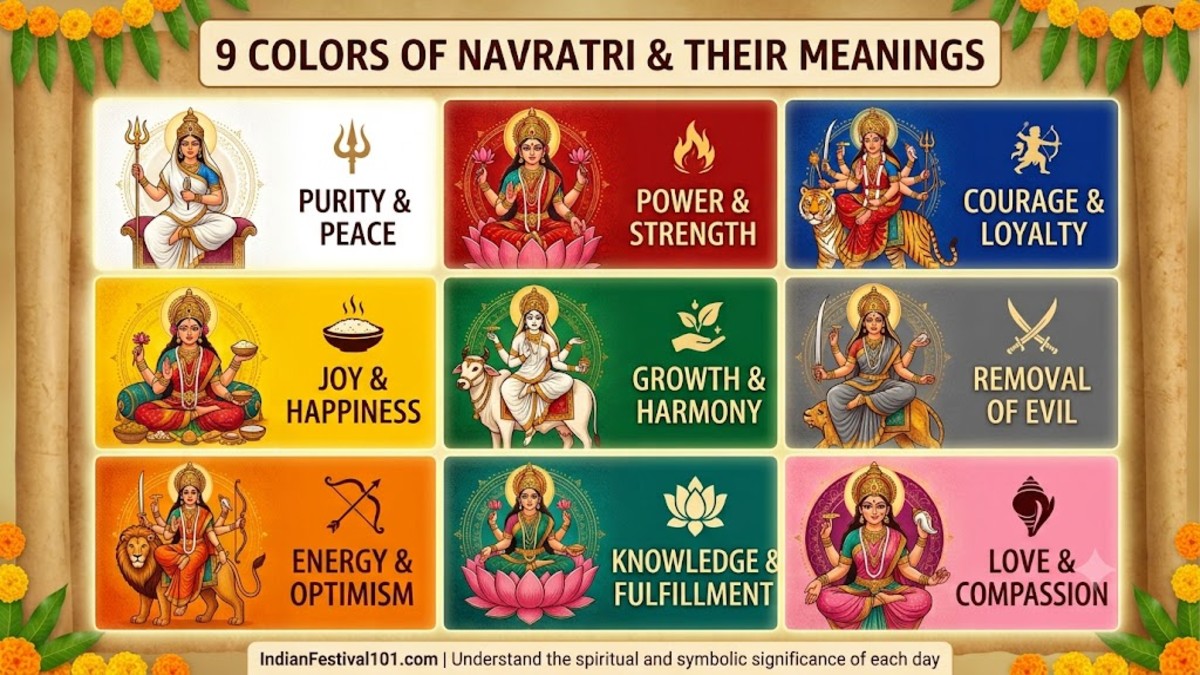
Navratri is a festival of nine nights, and colour has become one of its most recognisable expressions. During the celebration, many devotees and communities associate a particular colour with each day of Navratri. People may wear that day’s colour, decorate their homes with it, use it in festive accessories, or simply enjoy seeing the colour become part of the atmosphere around them.
The tradition makes Navratri visually vibrant, but the colours are not simply a fashion trend. They have become a way for families, schools, workplaces and communities to participate in the festival together. A simple colour can turn an ordinary outfit into a festive one, bring consistency to a family photograph, or give a Garba night a stronger sense of occasion.
At the same time, there is no single colour tradition followed identically across every part of India. The day-wise colours commonly shared for Navratri can vary by region, calendar and local tradition. That is why it is useful to understand the colours as part of the contemporary celebration rather than treating one colour sequence as a universal religious rule.
Table of Contents
What Are the 9 Colors of Navratri?
The nine colours of Navratri are commonly associated with the nine days of the festival. Devotees may choose to wear the colour of the day as part of their celebration. The tradition has become especially visible in cities, workplaces, schools and social celebrations, where groups often coordinate their clothing according to the day’s colour. For many people, it is an enjoyable way of creating a shared festival identity while continuing their own family and regional customs.
The colour tradition also creates opportunities to bring Navratri into everyday life. Instead of thinking only about what to wear, you can use the day’s colour in your home decoration, flowers, table setting, children’s activities or even festive photography.
Navratri Colors for All 9 Days
The commonly followed day-wise colour sequence is:
| Day | Navratri Day | Commonly Associated Colour |
|---|---|---|
| Day 1 | Pratipada | Yellow |
| Day 2 | Dwitiya | Green |
| Day 3 | Tritiya | Grey |
| Day 4 | Chaturthi | Orange |
| Day 5 | Panchami | White |
| Day 6 | Shashthi | Red |
| Day 7 | Saptami | Royal Blue |
| Day 8 | Ashtami | Pink |
| Day 9 | Navami | Purple |
Because colour traditions can differ according to region and year, check the colour sequence followed by your local community or family if you are planning a specific event.
The purpose is not to turn Navratri into a strict dress code. The colours are best understood as a festive way to participate in the celebration.
Day 1: Yellow
Yellow is often associated with brightness, optimism and the welcoming spirit of a new beginning.
Starting Navratri in yellow can create a cheerful atmosphere, whether through clothing, flowers or small decorative details. A yellow Kurta, saree, dupatta or accessory can introduce the colour without requiring an entirely new outfit.
For families, yellow can also be used in the puja area or in simple children’s activities. Even a small yellow element can make the day’s theme visible.
Day 2: Green
Green brings a natural and refreshing quality to the second day.
For clothing, green works particularly well with traditional Indian fabrics and jewellery. A green saree, Chaniya Choli, Kurta, dupatta or ethnic accessory can create a festive appearance while remaining versatile beyond Navratri.
At home, fresh leaves, plants, flowers or green decorative elements can introduce the colour naturally rather than relying entirely on purchased decorations.
Day 3: Grey
Grey provides a more understated contrast to some of the brighter Navratri colours.
It can be particularly useful for people who prefer a sophisticated or contemporary style. A grey ethnic outfit can be paired with colourful jewellery, a bright dupatta or traditional accessories to create a festive look without becoming overly colourful.
For office celebrations, grey can also be an easy colour to incorporate into professional ethnic clothing.
Day 4: Orange
Orange brings warmth and energy to the celebration.
It naturally works with traditional Indian textiles and can be used in everything from sarees and lehengas to scarves, dupattas and men’s Kurta combinations.
Orange also photographs beautifully in festive settings, especially when combined with warm lighting, flowers and traditional decorations.
For a home celebration, you do not need to redecorate an entire room. A few orange flowers, fabrics or decorative details can create the desired effect.
Day 5: White
White introduces a calm and elegant element into the nine-day colour journey.
A white saree, Kurta, ethnic dress or Chaniya Choli can be styled with colourful jewellery or a contrasting dupatta. Because white is versatile, it is also a useful choice for people who want to participate in the colour tradition without purchasing specialised festival clothing.
For a puja at home, white clothing can create a simple and graceful appearance while keeping the focus on the devotional atmosphere.
Day 6: Red
Red is one of the most visually powerful colours associated with Indian festive clothing.
It can be incorporated through a complete outfit or through smaller details such as bangles, jewellery, footwear or a dupatta.
For Garba and Dandiya celebrations, red can create a particularly vibrant appearance when combined with traditional embroidery, mirror work and colourful accessories.
The key is to balance visual impact with comfort, especially if the celebration involves several hours of dancing.
Day 7: Royal Blue
Royal blue introduces a deeper, richer colour into the Navratri palette.
It works particularly well with metallic jewellery, embroidery and traditional textiles. A royal blue Kurta, saree, lehenga or Chaniya Choli can create a striking festive look without relying on excessive decoration.
You can also introduce royal blue through accessories if you prefer a more subtle approach.
Day 8: Pink
Pink adds a softer and playful quality to the celebration.
It can range from delicate pastel shades to bright festive tones, giving people plenty of flexibility. Pink works well for women’s outfits, children’s clothing and accessories, but it does not need to be limited to any particular age or style.
For family celebrations, coordinating different shades of pink can create a cohesive appearance without requiring identical clothing.
Day 8 is also associated with Ashtami in many Navratri observances, making it an important point in the festival journey. You can learn more about the traditions surrounding Ashtami Kanya Pujan.
Day 9: Purple
Purple completes the commonly followed nine-colour sequence with a rich and festive tone.
It works especially well for evening celebrations because darker shades can create an elegant appearance under decorative lighting.
A purple saree, Kurta, lehenga, blouse or accessory can become the centre of an outfit without requiring heavy embellishment.
For a family celebration, purple can also be used in flowers, table decoration or small festive details to bring the colour theme beyond clothing.
Why Do People Wear Navratri Colors?
Wearing the colour associated with each day has become a popular way of participating in Navratri, particularly in urban communities, schools, offices and social gatherings. For some people, it is connected to devotion and tradition. For others, it is a social and cultural expression that makes the nine-day celebration more interactive. There is no need to treat the colour tradition as a competition. Someone may have a complete outfit in the day’s colour, while another person may wear only a scarf, bracelet or accessory. The shared idea is participation.
How to Follow the 9 Colors Without Buying 9 Outfits
One of the easiest mistakes is assuming that following the Navratri colours requires nine new outfits. It does not. A more practical approach is to create a small collection of versatile traditional clothing and change the colour through accessories. A neutral Kurta can be paired with different dupattas, while a simple skirt can be combined with different blouses. Jewellery, bangles, scarves, footwear and hair accessories can also introduce the colour of the day. This approach is more economical and more sustainable, while still allowing you to participate in the tradition. For more outfit inspiration, explore our complete guide to Navratri Outfit Ideas.
Using Navratri Colors in Home Decoration
The colour of the day does not have to stop at your wardrobe. You can introduce it into your puja corner, entrance, dining area or family celebration through flowers, fabrics, candles, diyas, table settings and small decorative elements. The decoration does not need to be expensive. A few flowers in the day’s colour, a matching cloth or simple handmade decoration can be enough to create a visual connection with the day’s theme. This also makes the tradition accessible to children. They can help select flowers, create paper decorations or arrange simple colour-themed elements under adult supervision. For more ideas, explore our guide to Navratri Decoration Ideas.
Navratri Colors for Offices
The nine-colour tradition can also make workplace celebrations more interactive. Employees can participate by wearing the day’s colour, adding a small festive accessory or decorating a shared space. Organisations can keep participation voluntary and inclusive, particularly when employees follow different traditions. A workplace does not need elaborate decorations to create a festive atmosphere. A simple colour theme, traditional food, music and a short cultural activity can be enough to make the celebration meaningful. For companies planning larger festival activities, the colour system can become one component of a wider Navratri celebration rather than the entire event.
Navratri Colors and Food
The colour theme can even influence the way families present their Navratri meals. This does not mean that every dish needs to match the colour of the day. Instead, you can introduce the day’s colour through fruits, garnishes, flowers, serving dishes or table decoration. For families observing a fast, food choices should follow the fasting tradition they personally observe. Practices and permitted foods vary, so the colour theme should remain secondary to the family’s established food traditions. If you are looking for practical ideas, explore our guide to Navratri Fasting Food.
Creating a 9-Day Navratri Experience
The real opportunity behind the nine colours is that they give families a simple framework for making each day feel different. Day 1 might begin with puja and yellow clothing. Another day could include a family meal, while a later evening could be dedicated to Garba or a community event. Children can participate through crafts and storytelling. Schools can use the colours as cultural-learning themes. Offices can create simple team activities. Families can take photographs at the end of each day and build a visual record of their celebration. This turns the nine colours from a list into a nine-day experience. And that is where Navratri becomes much more than what you wear.
Navratri Colors Are About Participation
The nine colours of Navratri are visually appealing, but their greatest value is that they give people a simple way to participate in a festival that can otherwise feel very different from one family or community to another. You can follow the colours through clothing, decoration, food presentation, school activities, office celebrations or small family traditions. You can buy something new, reuse something you already own or simply add one small detail in the colour of the day. There is no need to make the celebration complicated. The colour can be the starting point. From there, it can lead you towards the music of Garba, the rituals of Navratri, festive food, family activities and the cultural experiences that make the festival special.
Experience Navratri Beyond the Colors
If you are celebrating at home, use the nine colours as a framework for creating a fuller Navratri experience. Combine your daily colour with puja, decoration, food, family activities and music. If you are planning a school or office celebration, use the colours as an easy starting point for cultural activities and group participation. And if you are travelling to India during Navratri, the colours can be your introduction to a much larger cultural experience. Seeing communities dress for the festival, visiting decorated spaces and experiencing Garba in person can help you understand why Navratri is so deeply woven into local culture. For IndianFestival101, the goal is not simply to tell you what colour to wear. It is to help you discover the festival and experience it.
Frequently Asked Questions
What are the 9 colors of Navratri?
The commonly followed Navratri colours are Yellow, Green, Grey, Orange, White, Red, Royal Blue, Pink and Purple, with one colour associated with each of the nine days. The sequence can vary according to regional traditions and calendars.
Which colour should I wear on each day of Navratri?
A commonly followed sequence is Yellow on Day 1, Green on Day 2, Grey on Day 3, Orange on Day 4, White on Day 5, Red on Day 6, Royal Blue on Day 7, Pink on Day 8 and Purple on Day 9. Local traditions may follow a different sequence.
Why do people wear different colors during Navratri?
Wearing a different colour each day has become a popular way to participate in Navratri. It allows families, schools, workplaces and communities to create a shared visual celebration while expressing their connection with the festival.
Do I need nine different outfits for Navratri?
No. You can follow the colour tradition without buying nine complete outfits. Reusing clothing and changing dupattas, jewellery, scarves, footwear or other accessories is a simple way to participate.
Can I use Navratri colors for home or office decoration?
Yes. The day’s colour can be incorporated through flowers, fabrics, table settings, handmade decorations and other small details. Schools and offices can also use the colours as themes for cultural activities and celebrations.
Celebrate Every Color, Experience Every Day
Navratri’s nine colours give the festival a beautiful visual rhythm, but the real celebration lies beyond the colours themselves. Wear the colour if you enjoy the tradition. Decorate your home if it makes the celebration more joyful. Teach children about the festival through activities. Join Garba, prepare festive food, participate in puja or simply spend meaningful time with family. Whether you are celebrating Navratri at home or travelling to India to experience it, let each colour open the door to another part of the festival.
Discover India. Celebrate Life.