
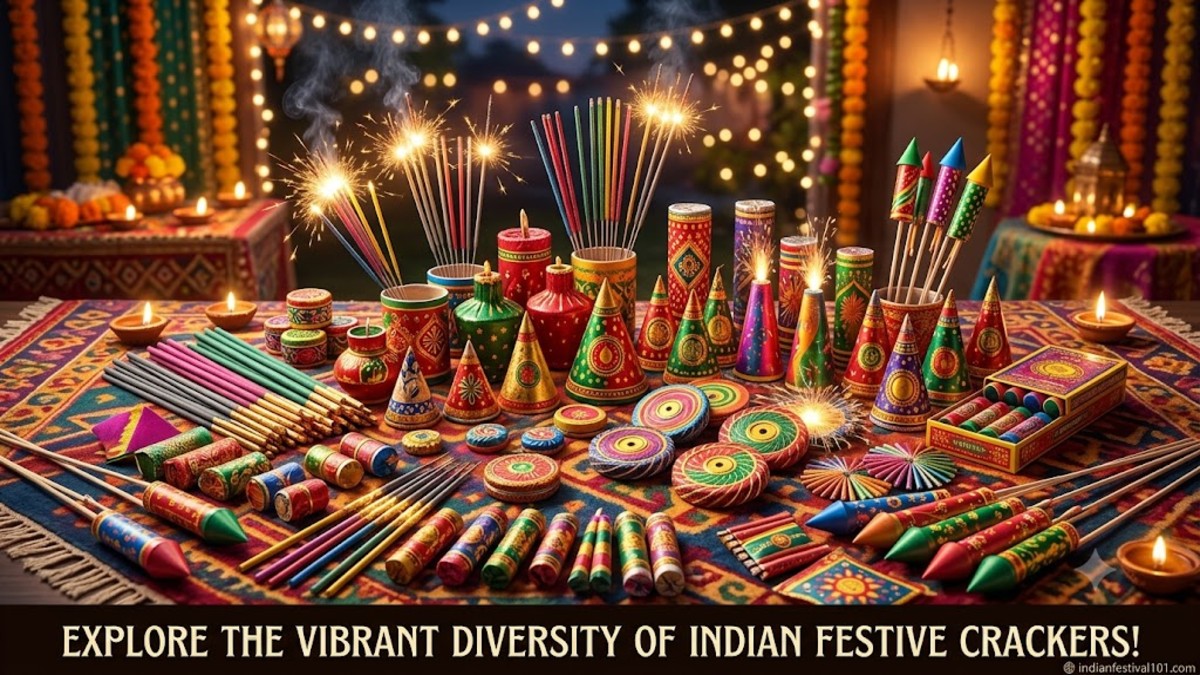
Diwali and fireworks have been closely associated with each other for generations. For many families, the glow of diyas, rangoli, sweets and festive gatherings is accompanied by the sparkle of traditional fireworks. From the familiar phooljhadi held by children under adult supervision to colourful flower pots and aerial displays, different types of fireworks create very different experiences.
But when people search for the “types of crackers,” they are often looking for more than just a list of names. They may want to understand what a particular cracker looks like, whether it produces light or sound, whether it stays on the ground or creates an aerial effect, and how different fireworks fit into a Diwali celebration.
This guide brings those categories together in a simple way. It also explains green crackers, responsible celebration, basic safety considerations and why checking current local regulations is important before using fireworks.
Table of Contents
What Are Crackers and Fireworks?
The words crackers, firecrackers and fireworks are often used interchangeably in everyday conversation, but fireworks actually cover a much wider range of products and effects.
Some fireworks are primarily designed to create light and colour, while others produce sound. Some remain on the ground, while others create effects in the air. There are also products that combine several visual effects into one display.
The official Petroleum and Explosives Safety Organisation (PESO) lists several authorized categories of fireworks, including flower pots or fountains, rockets, Roman candles, shells, sparklers, wheels or chakras and combination fireworks.
Understanding these categories makes it easier to recognize the differences between traditional Diwali fireworks rather than treating every cracker as the same type.
How Are Fireworks Classified?
There is no single way to classify every firework. A useful way for a Diwali guide is to look at four characteristics: the main effect, where the effect occurs, the level of sound and whether the product creates a single or multiple effect.
Light-focused fireworks are mainly enjoyed for their sparkle, colour or fountain-like effects. Sparklers and flower pots are familiar examples.
Ground-based fireworks create their effects close to the surface. Chakris, for example, are known for their spinning movement and circular patterns.
Aerial fireworks create their effects above the ground. Rockets and certain display fireworks fall into this broader category.
Some products combine several effects into a single item. Combination fireworks are designed to create a sequence or mixture of effects rather than one simple visual pattern.
This classification is useful because it shifts the conversation from simply memorizing cracker names to understanding what makes different fireworks different.
Popular Types of Crackers and Fireworks
India has a wide variety of traditional fireworks, and names can sometimes differ from one region to another. The same basic type may also be sold under different brand or regional names.
Here are some of the commonly recognized categories.
Sparklers or Phooljhadi
Phooljhadi is probably one of the most recognizable fireworks associated with Indian Diwali celebrations. When lit, it produces a stream of bright sparks that makes it visually different from fireworks designed primarily for sound.
Its popularity comes partly from its simple visual appeal. Families often associate phooljhadi with childhood Diwali memories, photographs and evening celebrations.
Despite its familiar appearance, a sparkler is still a firework and should not be treated as a toy. Children should not use fireworks without adult supervision, and the manufacturer’s safety directions should always be followed. PESO specifically advises against allowing small children to handle fireworks and recommends adult supervision.
Flower Pots or Anar
Flower pots, commonly called anar, are ground-based fireworks known for producing a fountain of sparks.
Unlike a rocket, the main attraction remains close to the ground, creating a vertical spray of light. This makes the flower pot visually distinctive and particularly popular in family and community celebrations where people want a colourful effect without an aerial burst.
Flower pots or fountains are among the categories listed in PESO’s authorized fireworks classification.
The exact product, effect and permitted use can vary, so consumers should rely on authorized products and the instructions printed on the packaging rather than assuming that every item sold under a familiar name is the same.
Chakri or Ground Spinner
The chakri, or ground spinner, is known for its spinning movement. Once activated, it rotates on the ground and produces a circular pattern of light and sparks.
The name itself reflects the visual character of the firework: chakri means wheel, and the effect resembles a rapidly spinning wheel.
Chakris are included among the wheel or chakra category in the official PESO list.
Because the firework moves while producing its effect, it is particularly important that people follow the product’s safety directions and keep spectators at an appropriate distance.
Rockets
Rockets are aerial fireworks that create their effects above ground. They are visually different from ground-based fireworks because the main display occurs after the firework travels upward.
This category can include different designs and effects, so the appearance of one rocket may be very different from another.
PESO’s authorized-fireworks list includes rockets among color and light-emitting fireworks.
Aerial fireworks require particular attention to the surrounding environment. Overhead wires, trees, buildings and other obstructions can create serious hazards. Official PESO guidance advises against using aerial fireworks where overhead obstructions may interfere with their trajectory and says they should not be used close to buildings.
Roman Candles
Roman candles are another recognizable fireworks category. They are generally associated with repeated light or aerial effects rather than a single brief burst.
Their appearance can vary considerably depending on the product, which is why the packaging and manufacturer’s instructions matter more than relying solely on the traditional name.
Roman candles are also included in PESO’s authorized fireworks classification.
Shells and Aerial Display Fireworks
Shells belong to the broader category of aerial fireworks and are associated with larger bursts or display effects in the sky.
These types of fireworks are more commonly connected with organized or larger-scale displays than small family celebrations. Their use requires appropriate space, safety controls and compliance with local regulations.
PESO lists shells among authorized color and light-emitting fireworks.
For a family celebration, the important distinction is not simply how impressive an aerial firework looks. The available space, surrounding buildings, overhead obstructions and local rules all matter.
Combination Fireworks
Combination fireworks bring multiple effects together in a single product. Instead of producing only one simple visual effect, they can create a sequence of different patterns.
This category is useful for understanding how modern fireworks can combine several traditional effects into one display.
Combination fireworks are specifically included in PESO’s authorized fireworks classification.
For consumers, the important point is to buy only authorized products from reliable sellers and follow the instructions provided with the product.
Sound-Producing Fireworks
Not every firework is primarily about light. Some are designed to produce sound, and this is one of the most noticeable differences between various categories.
Sound-producing fireworks have been subject to specific regulatory limits in India. PESO’s official material specifies sound-level requirements for fireworks, and its public safety guidance states that fireworks exceeding prescribed noise limits are prohibited.
For a family Diwali celebration, this distinction is increasingly relevant because noise can affect young children, older people, pets and people who are sensitive to loud sounds.
A celebration can therefore be visually enjoyable without making loud sound the central part of the experience.
Types of Fireworks at a Glance
| Type | Main Effect | General Category | Common Diwali Association |
|---|---|---|---|
| Phooljhadi | Sparkling light | Light-emitting | Family celebrations |
| Flower Pot / Anar | Fountain of sparks | Ground-based | Home celebrations |
| Chakri | Spinning light | Ground-based | Traditional Diwali |
| Rocket | Aerial effect | Aerial | Outdoor displays |
| Roman Candle | Repeated light/aerial effects | Display firework | Larger celebrations |
| Shell | Aerial burst/display | Aerial | Organized displays |
| Combination Firework | Multiple effects | Combination | Larger displays |
| Sound-Producing Fireworks | Sound | Sound-emitting | Traditional celebrations |
This table is intended to explain the general characteristics of the categories. Individual products can differ, and consumers should always follow the labeling, instructions and current regulations applicable to the product and location.
Traditional Firecrackers and Diwali Celebrations
For many Indian families, fireworks are connected with memories rather than simply products.
A phooljhadi may remind someone of childhood Diwali evenings. A flower pot may bring back memories of watching the courtyard fill with light. The sound of fireworks outside may be associated with family gatherings, new clothes, sweets and the excitement of the festival.
These traditions are also changing.
Today, many families are becoming more conscious of air quality, noise, waste, animal welfare and the safety of children and older family members. As a result, some celebrations are becoming more focused on diyas, decorations, community events, cultural activities and visually attractive but more controlled forms of celebration.
There is no single way to experience Diwali. The important thing is to understand the traditions you are participating in and make choices that fit your family, community and local rules.
What Are Green Crackers?
The term green crackers is used in India for fireworks developed with formulations intended to reduce certain emissions compared with conventional fireworks.
Government information from the Press Information Bureau has described CSIR-developed green fireworks and the development of a green logo and QR coding system to help distinguish approved products and address counterfeit products.
More recent CSIR information published through PIB in 2025 states that CSIR-NEERI’s work on green fireworks has focused on formulations producing approximately 30–40% less particulate matter than conventional crackers.
However, the term green does not mean pollution-free.
A green firework is still a firework and still produces emissions and waste. The more accurate way to describe these products is as fireworks designed to reduce certain emissions under the applicable testing and certification framework.
This distinction is important because consumers should not assume that a green label makes unlimited use environmentally harmless.
How to Identify Green Crackers
When green crackers are legally available in your area, consumers should pay attention to the product’s authenticity rather than relying only on a seller’s verbal claim.
Government information has described the use of a green logo and QR coding system to help identify approved green fireworks and distinguish them from counterfeit products.
Look for clear manufacturer information, proper packaging and the applicable identification or certification information. Avoid suspiciously packaged products or products that do not provide adequate information about their source.
Most importantly, remember that a familiar name does not automatically guarantee that a particular product is an approved green firework.
Firecracker Rules in India: Why Location Matters
One of the biggest mistakes people make when researching Diwali fireworks is assuming that one rule applies identically across the whole country.
Firework restrictions can vary according to the state, city, court directions and local administration. Restrictions can also change from one festival season to another.
Delhi provides a clear example of why checking the current local position matters. The Delhi Environment Department’s published material states that directions issued in December 2024 imposed a complete ban on the manufacture, storage, sale, including online delivery, and bursting of all kinds of firecrackers in the National Capital Territory of Delhi throughout the year.
Therefore, readers should always check the current rules in their own city or state before purchasing, transporting or using fireworks.
Do not assume that information from an older Diwali article, a social-media post or a previous year’s news report is still applicable.
For IndianFestival101, this section should be reviewed every year before Diwali because local regulations and court or administrative directions can change.
Firecracker Safety Tips for Diwali
Fireworks should never be treated as ordinary toys or household decorations. Even familiar products can cause burns, eye injuries or fires when used carelessly.
PESO recommends purchasing fireworks from authorized or reputable manufacturers and following the safety instructions supplied with the product. It also recommends keeping water available and ensuring that adults supervise the use of fireworks.
Some of the most important safety principles are straightforward:
- Never hold a firework while igniting it.
- Do not allow young children to handle fireworks.
- Keep a safe distance between spectators and fireworks.
- Never place fireworks inside containers.
- Do not point fireworks toward people, animals or buildings.
- Keep water readily available.
- Do not use fireworks in narrow lanes or enclosed spaces.
- Keep fireworks away from diyas, candles and other sources of flame.
- Avoid loose or highly flammable clothing.
- Never attempt to manufacture or modify fireworks yourself.
- Do not immediately a