
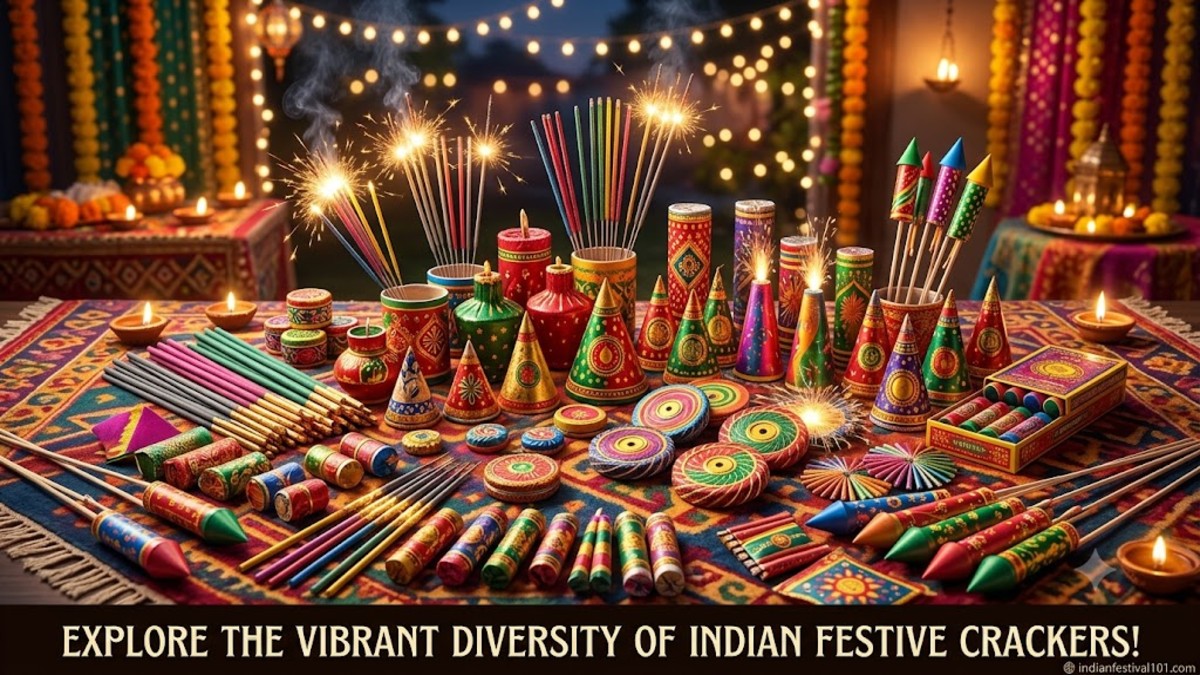
Diwali is one of those festivals that engages almost every sense. Homes begin to glow with diyas, colourful rangoli appears at entrances, sweets are prepared for family and friends, and traditional clothes bring a festive energy to the occasion. For many people, the evening also brings the excitement of fireworks. The sight and sound of crackers lighting up the night have become a familiar part of Diwali celebrations in many parts of India.
But when people talk about crackers, they are actually referring to a surprisingly wide variety of fireworks. Some are designed to create bright sparks, some spin across the ground, some rise into the sky, and others are mainly known for their sound. The names can also change depending on the region, manufacturer and generation.
If you are searching for the types of crackers, this guide takes you through some of the most commonly known Diwali crackers in India, explains what makes each one different and places them within the larger story of Diwali. If you are also looking for ideas beyond fireworks, our guide on how to celebrate Diwali explores the many ways families can create a meaningful festival experience.
It is worth remembering from the beginning that fireworks are pyrotechnic products rather than toys. Their use is subject to applicable laws and local restrictions, and any permitted fireworks should be handled only according to the manufacturer’s instructions.
Table of Contents
What Are Crackers?
In everyday Indian usage, the word “crackers” is often used to describe a broad range of fireworks used during festivals. The category includes everything from a simple sparkler to ground spinners, fountains, rockets and larger aerial fireworks.
What makes these products different is the effect they create. A sparkler is primarily about a continuous stream of light, while a chakri is recognised by its spinning movement. Anar or flower pots create fountains of sparks, while rockets take their effect into the sky. Sound crackers, meanwhile, are designed mainly around the dramatic noise they produce.
The terminology can sometimes be confusing because traditional names and modern commercial names are not always consistent. A product may be sold under a familiar traditional name in one market and a different name elsewhere. That is why the list below should be viewed as a practical guide to commonly recognised types rather than a universal classification of every firework sold in India.
Types of Crackers List
For readers looking specifically for Diwali crackers names, the following list provides a quick overview before we explore each type in greater detail.
| No. | Type of Cracker | Common Name | Main Effect |
|---|---|---|---|
| 1 | Sparklers | Phuljhari | Bright sparks |
| 2 | Flower Pots | Anar | Fountain of sparks |
| 3 | Chakri | Wheel | Spinning sparks |
| 4 | Ground Spinners | Spinner | Rotating light |
| 5 | Rockets | Sky Rocket | Aerial effect |
| 6 | Pencil Crackers | Pencil | Vertical sparks |
| 7 | Ladi | Garland Crackers | Repeated sound |
| 8 | Sound Crackers | Loud Crackers | Sound |
| 9 | Atom Bomb | Traditional sound cracker | Loud sound |
| 10 | Sutli Bomb | Traditional sound cracker | Loud sound |
| 11 | Twinkling Stars | Sparkling fireworks | Twinkling sparks |
| 12 | Colourful Fountains | Fountain fireworks | Coloured sparks |
| 13 | Aerial Fireworks | Sky Fireworks | Sky display |
| 14 | Multi-Effect Fireworks | Combination fireworks | Multiple effects |
| 15 | Green Crackers | Lower-emission fireworks | Light and sound effects |
The same category can contain several variations, and not every product with a particular name will produce exactly the same effect. Product packaging and authorised labelling should therefore be treated as the final source of information.
Why Are Crackers Associated With Diwali?
Fireworks are strongly associated with modern Diwali celebrations, but they are not the foundation of the festival. Diwali has much deeper religious, cultural and family traditions that existed independently of modern fireworks.
The heart of the festival can be found in lamps, prayers, family gatherings, food, decoration, gifts and the many stories associated with the triumph of light over darkness and good over evil. If you want to explore those foundations in more detail, our guide to Diwali history, significance and celebration provides a broader look at how the festival developed and why it remains so important.
Diwali is also not simply a single evening. The celebrations unfold across several days, with each day carrying its own customs and significance. Understanding the 5 Days of Diwali gives a better picture of how fireworks fit into the wider festival period.
Over generations, fireworks became increasingly associated with the festive atmosphere of Diwali. Their flashes of light added another layer to an already illuminated night, and for many families, the excitement of seeing crackers after the evening rituals became part of their childhood memories.
At the same time, people across India celebrate Diwali differently. Some families enjoy fireworks, some use only a few visual fireworks, and others choose to celebrate through diyas, rangoli, food, prayer and family activities. There is no single way to experience the festival.
15 Popular Types of Crackers
1. Sparklers or Phuljhari
Sparklers, commonly called phuljhari in India, are perhaps the most familiar of all Diwali crackers. Their attraction comes from the bright stream of sparks that continues for a short period while the firework burns.
For many people, sparklers are connected with childhood memories of standing outside with family members and watching the small shower of light. Unlike fireworks that travel or produce a large burst, sparklers create a more intimate visual experience.
Their small size can make them appear harmless, but that does not mean they should be treated as toys. They become extremely hot during use, so responsible adult supervision and proper handling are important, particularly when children are involved.
2. Flower Pots or Anars
Flower pots, widely known as anars, are ground-based fireworks that create a fountain of sparks. When activated, they produce a vertical display that can continue for a period of time rather than disappearing in one sudden flash.
Anars are popular because their effect is easy to watch from a distance. The changing sparks and colours also make them visually attractive for family celebrations and photographs.
They fit naturally into a traditional Diwali setting surrounded by diyas, flowers and rangoli. If you are planning the overall appearance of your home, you can also explore these Diwali decoration ideas for ways to create a festive atmosphere that goes beyond fireworks.
3. Chakri
The chakri is one of the classic traditional Diwali crackers. Its name comes from its wheel-like shape and movement.
When activated, a chakri spins across the ground while producing sparks. The combination of circular movement and light makes it quite different from a stationary fountain or sparkler.
The spinning motion is also the reason spectators should keep a safe distance. Fireworks should never be approached or interfered with while they are operating.
For many families, the chakri remains one of the crackers that immediately brings back memories of traditional Diwali celebrations.
4. Ground Spinners
Ground spinners are closely related to the idea of the chakri, although modern versions can come in many different shapes and designs.
Their main attraction is movement. They rotate on the ground and may produce combinations of sparks, light and colour.
Some are designed primarily as visual fireworks, making them quite different from crackers whose main purpose is sound. As with all fireworks, the exact behaviour depends on the specific product, so the manufacturer’s instructions should always be followed.
5. Rockets
Rockets bring the excitement of fireworks into the sky. Unlike ground-based crackers, a rocket travels upward before creating its visual effect.
Part of the attraction comes from anticipation. You see the rocket rise and then wait for the display that follows, which can make it one of the more dramatic types of fireworks associated with Diwali.
Because rockets travel through the air, the surroundings become especially important. They should never be directed toward people, buildings, vehicles, animals or other property, and their use must comply with local regulations.
6. Pencil Crackers
Pencil crackers are narrow, upright fireworks generally associated with a vertical shower of sparks or light.
Their distinctive shape has made them a familiar item in traditional cracker collections, although the exact effect varies between products.
Like other fireworks, they should be used only as directed by the manufacturer. A product’s appearance alone should never be taken as an indication of how it should be handled.
7. Ladi or Garland Crackers
A ladi is a connected sequence or chain of crackers that produces a rapid succession of sound effects.
Ladis have traditionally been associated with the noisier side of Diwali celebrations. For some people, the repeated sound is part of the excitement and festive atmosphere.
For others, however, loud crackers can be disruptive. Neighbours, young children, older people and animals may be particularly sensitive to excessive noise. This is why responsible Diwali celebrations increasingly consider not only what is enjoyable for one household but also how the celebration affects the surrounding community.
8. Sound Crackers
Sound crackers are designed primarily around the noise they produce rather than an elaborate visual display.
They have traditionally occupied an important place in cracker collections, especially for people who associate Diwali with the sound of fireworks in the neighbourhood.
The role of sound in Diwali has become more complicated in recent years because of concerns about noise and community disturbance. Many families now prefer visual fireworks or non-firework activities that allow them to enjoy the festive atmosphere without creating excessive noise.
9. Atom Bomb
“Atom bomb” is a traditional commercial name used for a type of loud firecracker in India. Despite the name, it has no connection with an actual nuclear weapon; the term is simply part of the historical vocabulary used for this category of firework.
Its main characteristic is a loud sound rather than an elaborate visual display. Because of that, it falls into the broader group of sound-oriented crackers.
As with other loud fireworks, its use should be considered alongside current local regulations and the impact of noise on the surrounding community.
10. Sutli Bomb
A sutli bomb is another traditional term associated with a loud firecracker.
It is generally remembered for its sound rather than a decorative visual effect. The name itself comes from the traditional appearance associated with this type of cracker.
Fireworks should never be opened, altered or modified. They should only be used in their intended form and according to the manufacturer’s instructions.
11. Twinkling Stars
Twinkling-star fireworks focus on small, sparkling visual effects. Their appeal comes from the way the sparks appear to shimmer or twinkle against the darker evening sky.
They are particularly suited to celebrations where the visual experience of Diwali is more important than loud sound.
The effect can also complement diyas and decorative lighting, helping create a layered festive atmosphere rather than relying entirely on fireworks.
12. Colourful Fountains
Colourful fountains are designed to create a sustained shower of sparks, often with changing colours.
Unlike a rocket, the firework remains at ground level. Unlike a sparkler, the effect can be much larger and more dramatic.
Fountains are popular because they allow people to watch a continuous visual display. They also fit naturally into family celebrations where the focus is on watching rather than chasing moving fireworks.
13. Aerial Fireworks
Aerial fireworks create their main effects above the ground. Depending on the product, they can produce bursts of colour, patterns or other visual displays in the sky.
Large aerial displays are often better suited to organised or professional events because they require appropriate space, equipment and safety arrangements.
For families who enjoy the spectacle of aerial fireworks, an organised public display can sometimes provide a way to experience the visual excitement without personally handling larger fireworks.
14. Multi-Effect Fireworks
Modern fireworks have expanded beyond the simple categories traditionally associated with Diwali.
Multi-effect fireworks can combine several visual characteristics in one display, such as changing colours, different patterns and multiple stages of effects.
This reflects how the fireworks market has evolved over time. Consumers can now find products designed around increasingly elaborate visual experiences.
However, names and effects vary considerably between manufacturers, so it is always important to rely on the product’s official description rather than assuming that two similarly named fireworks will behave in exactly the same way.
15. Green Crackers
Green crackers have become an important part of the discussion surrounding modern Diwali celebrations.
The term generally refers to fireworks developed under standards intended to reduce certain emissions compared with conventional fireworks. Their introduction reflects growing attention to environmental concerns surrounding firework use.
However, “green” should not be interpreted as meaning completely pollution-free.
Green crackers are still fireworks and can produce smoke, noise, heat and waste. Consumers should therefore look for genuine authorised products and follow the rules applicable in their location.
Types of Crackers Based on Their Effects
Another way to understand the different types of crackers is to forget their traditional names for a moment and look at the experience they create.
Some crackers are primarily about light. Sparklers, fountains and several ground-based fireworks fall into this group. Their appeal comes from sparks, brightness and colour rather than a loud explosion.
Others are about movement. Chakris and ground spinners create a visual experience by rotating across the ground. Their movement is what makes them different from stationary fireworks.
Then there are fireworks designed to create effects in the sky. Rockets and aerial fireworks fall into this category and are usually more dramatic because the display moves away from the ground.
Sound is another major category. Ladis and traditional sound crackers are remembered primarily because of their noise. This can create excitement, but it also means these fireworks require greater consideration for neighbours and local noise restrictions.
Finally, modern fireworks can combine several effects. A single product may provide changing colours, sparks, movement and other visual elements, creating a more elaborate display than many traditional crackers.
Traditional Crackers and Modern Fireworks
The Diwali cracker collection remembered by one generation may look very different from the products available to another.
Older generations often grew up with a relatively familiar group of sparklers, chakris, anars, rockets and sound crackers. Today, the market includes a much wider range of designs and multi-effect products.
This change reflects a broader transformation in the way people experience festivals. Technology, consumer preferences and environmental awareness have all influenced modern celebrations.
At the same time, traditional crackers continue to have emotional value. A phuljhari or chakri may not be the most technologically sophisticated firework available, but it can carry memories of childhood, family and neighbourhood celebrations.
That emotional connection is an important part of understanding why crackers remain associated with Diwali.
What Are Green Crackers?
Green crackers are often presented as one response to concerns about the environmental impact of fireworks.
Their development was intended to address emissions associated with conventional fireworks, but the term can sometimes create confusion. Green crackers are not completely pollution-free fireworks.
They remain pyrotechnic products that produce heat, smoke and noise. Their environmental characteristics depend on the particular product and the standards under which it has been manufactured and authorised.
For that reason, consumers should be cautious about informal claims. Proper labelling, authorised products and current government and local guidance are more reliable than simply trusting a product’s marketing language.
How Different Parts of India Experience Diwali
One of the most interesting things about Diwali is that it does not look exactly the same everywhere in India.
In one city, a family might spend the evening at home with diyas, sweets and a few fireworks. In another place, a neighbourhood may come alive with decorations, community gatherings and cultural performances.
The days surrounding Diwali also have their own traditions. Dhanteras, for example, has a distinct place within the festive period, and learning why Dhanteras is celebrated can help explain why the festival season begins before the main Diwali evening.
This regional and cultural variety is one of the reasons Diwali is such a fascinating festival for travellers. The fireworks may be familiar, but the traditions surrounding them can change dramatically from one part of India to another.
Crackers and Children
For many Indian families, the memory of Diwali is closely connected with childhood. Children may remember choosing their favourite crackers, watching sparklers, helping decorate the home and waiting for the evening celebrations to begin.
But children should never be taught to think of fireworks as ordinary toys.
Responsible adults should supervise children closely and ensure that fireworks are used only in appropriate circumstances. Unused or malfunctioning fireworks should never be touched, opened or modified.
More importantly, children can enjoy Diwali in many ways that do not involve fireworks at all.
Rangoli, for example, combines creativity with Indian cultural tradition. Families and schools can learn more about Rangoli art, Indian festivals and culture and use it as an activity alongside diya decoration, storytelling and crafts.
For schools, this wider approach can turn Diwali from a single celebration into an opportunity to explore Indian culture, art, food and traditions.
How to Celebrate Diwali Responsibly
A responsible Diwali celebration does not necessarily mean giving up everything that makes the festival enjoyable. It means thinking about how each part of the celebration affects the people around you.
If fireworks are permitted in your area and you choose to use them, select legal and properly labelled products, follow the manufacturer’s instructions and observe applicable restrictions.
Fireworks should never be modified, dismantled or combined. Children should be supervised, and people should maintain an appropriate distance from operating fireworks.
Noise is another consideration. A celebration that feels exciting to one household may be uncomfortable for another. Being mindful of neighbours, older people, young children and animals can make the festival more respectful and inclusive.
The same principle applies after the celebration. Firework waste should be cleaned up rather than left on roads, pavements or shared spaces.
These small decisions can help preserve the joy of Diwali while making the celebration more thoughtful.
Diwali Is More Than Crackers
It is easy to associate Diwali almost entirely with fireworks because they provide such dramatic images.
But imagine Diwali without crackers.
There would still be rows of diyas glowing outside homes. There would still be colourful rangoli at doorways. Families would still prepare sweets, exchange gifts, wear festive clothes and gather for prayers.
Children would still listen to stories. Friends would still visit one another. Homes would still be decorated, and communities would still come together.
In other words, the heart of Diwali would remain.
Fireworks are one expression of celebration, but they are not the entire festival. This is especially important for IndianFestival101 because our goal is to help readers discover India and experience its festivals, rather than reducing a cultural celebration to a shopping list.
Create a Complete Diwali Experience
Once you look beyond crackers, Diwali becomes much more interesting.
You can begin with the physical environment by decorating your home with diyas, flowers, rangoli and lights. Our guide to Diwali decoration ideas can help you build that atmosphere without making the preparation unnecessarily complicated.
Food can then become another part of the experience. Traditional sweets and festive dishes bring family members together and often carry memories and recipes from one generation to another.
Clothing adds another visual dimension. Traditional or contemporary Indian festive clothing can make family gatherings, photographs and celebrations feel more special.
Gifting can also become part of the experience. Families looking for something different can explore unique Diwali gift ideas for friends and relatives.
For businesses, Diwali gifting has become an important part of employee appreciation and client relationships. Ideas such as Diwali gifts for employees can be particularly useful for companies planning festive appreciation, while corporate Diwali gift hampers can provide a more complete gifting solution.
The celebration does not have to stop at gifts. Offices can create a festive environment through cultural activities, food and decorations. These office decoration ideas can help workplaces create a Diwali atmosphere that employees can actually participate in.
For people putting together a larger festive hamper or gifting experience, this Diwali gift hamper step-by-step guide can also be useful.
If fireworks are part of your celebration and are legally permitted, they can remain one element of the evening. The key is not to allow them to become the only thing that defines the festival.
Diwali Activities for Schools and Offices
Schools have a particularly valuable opportunity to introduce children to Diwali beyond crackers.
A classroom celebration can include diya decoration, rangoli, storytelling, traditional clothing, crafts, food discussions and cultural presentations. These activities help students understand that Diwali is not simply about fireworks but about traditions that have developed across generations.
Writing activities can also become part of the learning experience. Students can use resources such as an essay on Diwali celebration to understand the festival and develop their own writing.
For younger learners, simpler resources such as 10 lines on Diwali in English and 5 lines on Diwali in English can provide an accessible starting point.
Offices can take a similar approach by combining decoration, traditional clothing, food, employee activities, gifting and cultural experiences. This creates a celebration in which employees can participate rather than simply receiving a gift and going home.
Diwali Wishes and Sharing the Celebration
Diwali is also a festival of communication. People send greetings to family members, friends, colleagues and clients, particularly when they cannot celebrate together in person.
A simple message can become part of the festival experience, whether it is a traditional greeting, a personal message or a professional Diwali wish. Readers looking for inspiration can explore these Happy Diwali festival wishes when preparing messages for different occasions.
The important thing is that the greeting reflects the spirit of the festival rather than feeling like a routine seasonal message.
Beyond Diwali Night
Diwali is part of a much larger Indian festival landscape, and the celebrations do not end with one evening of fireworks.
Dev Diwali, for example, offers a very different cultural experience. Exploring Dev Diwali’s date, significance and celebration reveals another fascinating tradition associated with the broader Diwali season.
This is one of the reasons IndianFestival101 approaches festivals from a wider cultural and travel perspective. A person who begins by searching for types of crackers may eventually become interested in Diwali history, food, decoration, clothing, regional celebrations and the possibility of experiencing the festival in India.
From Crackers to the Complete Diwali Experience
Someone searching for types of crackers may initially want nothing more than a list of names.
But that simple search can open the door to a much larger understanding of Diwali.
You can discover why the festival is celebrated, learn about its five-day structure, understand Dhanteras, explore traditional decorations and rangoli, discover festive food and clothing, find activities for children and learn how families and workplaces create their own Diwali traditions.
That is where the idea of a complete Diwali experience becomes important.
For families, the experience can bring together decoration, food, stories, activities, gifts and celebration. For schools, it can combine creativity with cultural learning. For companies, it can become a way of bringing employees together through food, activities, decoration and gifting.
And for travellers, Diwali can become something much bigger than watching fireworks.
Experiencing the festival in India can mean walking through illuminated streets, visiting markets, tasting regional sweets, seeing traditional decorations, witnessing community celebrations and discovering how different regions interpret one of India’s most important festivals.
IndianFestival101’s goal is to help readers move from simply knowing about a festival to experiencing it.
Frequently Asked Questions About Types of Crackers
What are the different types of crackers used during Diwali?
Commonly known types include sparklers or phuljhari, flower pots or anars, chakris, ground spinners, rockets, pencil crackers, ladis, sound crackers, fountains, aerial fireworks and modern multi-effect fireworks.
What are the most common Diwali crackers?
Sparklers, flower pots, chakris and rockets are among the best-known Diwali fireworks. Traditional sound crackers and ladis are also widely recognised.
What are anars?
Anars, commonly called flower pots, are ground-based fireworks that produce a fountain of sparks and may create colourful visual effects.
What is a chakri cracker?
A chakri is a spinning ground firework that rotates while producing sparks and light.
What is a ladi cracker?
A ladi is a connected sequence or chain of crackers that produces a succession of sound effects.
What are green crackers?
Green crackers are fireworks developed under standards intended to reduce certain emissions compared with conventional fireworks. They are not completely pollution-free and remain regulated pyrotechnic products.
Which crackers produce colourful effects?
Flower pots, fountains, sparklers, ground spinners and many aerial fireworks can produce colourful visual effects. The exact effect depends on the specific product.
Which crackers produce mainly sound?
Ladis and traditional sound crackers are primarily associated with sound rather than elaborate visual effects.
Are crackers necessary for celebrating Diwali?
No. Fireworks are only one possible part of Diwali. Families can celebrate with diyas, prayer, rangoli, food, gifts, traditional clothing, music, storytelling and cultural activities.
Are crackers safe for children?
Fireworks should never be treated as toys. Children should be kept under responsible adult supervision, and all applicable safety instructions and local regulations should be followed.
Final Thoughts
The world of types of crackers is much broader than the familiar names many of us remember from childhood. Sparklers, anars, chakris, rockets, fountains, sound crackers and modern multi-effect fireworks each create a different experience.
Understanding these types helps explain why crackers have become such a recognisable part of modern Diwali celebrations. But it also reminds us that fireworks are only one small piece of a much larger festival.
Diwali lives in the glow of lamps, the colours of rangoli, the taste of sweets, the warmth of family gatherings, the exchange of gifts and the stories passed from one generation to the next.
Whether someone chooses to celebrate with a few permitted fireworks, attends an organised display or celebrates without crackers, the essence of Diwali remains light, connection, tradition and celebration.
That broader experience is what makes Diwali one of India’s most fascinating festivals—and what IndianFestival101 is here to help you discover.