
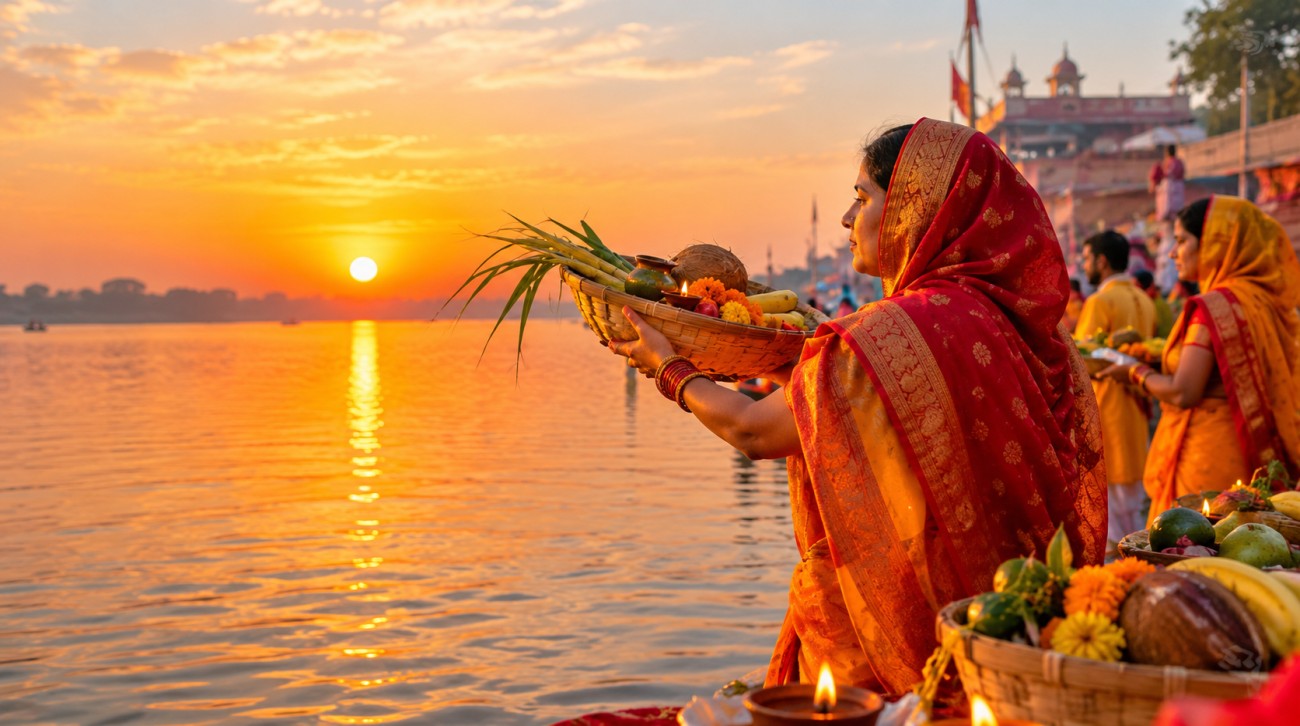
Chhath Puja is one of India’s most meaningful festivals dedicated to Surya Dev, the Sun God, and Chhathi Maiya. Celebrated especially in Bihar, Jharkhand, eastern Uttar Pradesh and parts of Nepal, this festival brings families and communities together through prayer, fasting, traditional offerings, folk songs and worship at rivers, ponds and other water bodies.
Unlike festivals centred primarily on elaborate temple ceremonies, Chhath Puja is widely known for its direct connection with nature. Devotees offer arghya, a ritual offering of water and other customary offerings, to both the setting and rising Sun. The observance expresses gratitude for the life, energy and sustenance associated with the Sun.
Chhath Puja is also deeply connected with family traditions and regional identity. For many people from Bihar and the surrounding regions, preparing for the festival means cleaning homes, preparing traditional prasad, arranging bamboo baskets and gathering with relatives at the local ghat.
INDIANFESTIVAL101 COMMUNITY
Make Every Celebration Special
Get festival inspiration, cultural stories, celebration ideas and practical guides delivered to your inbox.
By subscribing, you agree to our Privacy Policy.
In this guide, discover the meaning of Chhath Puja, its traditional history, religious significance, four-day rituals, regional variations and the ways this important Indian festival continues to bring communities together.
Table of Contents
What Is the Meaning of Chhath Puja?
The word Chhath is commonly associated with the Hindi word for six, and the festival’s principal observance takes place on the sixth lunar day, or Shashthi, of the bright fortnight of the Hindu month of Kartika. The festival is also known as Chhath Parva, Surya Shashthi and Dala Chhath in different contexts.
Chhath Puja is dedicated primarily to Surya Dev, the Sun God, and also honours Chhathi Maiya, who is revered in regional traditions associated with the festival. The worship expresses gratitude for the natural forces that sustain life and prayers for family well-being, prosperity and the health of loved ones.
The observance traditionally spans four days, each with its own practices: Nahay Khay, Kharna, Sandhya Arghya and Usha Arghya. The most distinctive feature is the offering made to the setting Sun, followed by the offering to the rising Sun the next morning.
For devotees, Chhath Puja is not simply a seasonal celebration. It is an expression of faith, self-discipline, gratitude and a close relationship between human life and nature.
History of Chhath Puja
Chhath Puja is associated with ancient Hindu traditions of reverence for the Sun. Solar worship has a long history in Indian religious culture, and Vedic literature includes hymns addressed to Surya and other deities associated with light and dawn. However, the precise historical origin of the present-day Chhath observance cannot be established with certainty.
Over generations, religious beliefs, regional customs, oral traditions and community practices have shaped the festival as it is celebrated today. Bihar and neighbouring regions have become especially important centres of Chhath Puja, where families continue to pass down ritual practices, songs and recipes.
Several stories from Hindu epics and religious traditions are associated with Chhath. These accounts are important to devotees, although they should be understood as traditional narratives rather than conclusive historical records.
The Story of Karna
In the Mahabharata tradition, Karna is the son of Surya Dev. Popular accounts connect his devotion to the Sun with the practice of offering prayers to Surya. Because of this association, Karna is often mentioned in discussions about the traditional origins of Chhath Puja.
The story reinforces the festival’s central theme of devotion to the Sun. It does not, by itself, establish when the present-day four-day festival began.
The Tradition of Draupadi and the Pandavas
Another popular account connects solar worship with Draupadi and the Pandavas. In versions of the story, prayers or observances associated with the Sun are linked with the Pandavas’ difficulties and their hopes for protection and restoration.
This narrative is one of several traditional explanations through which devotees understand the power of faith, perseverance and prayer.
The Story of Rama and Sita
Some regional traditions associate Chhath-related solar worship with Rama and Sita after their return to Ayodhya. These accounts connect worship of the Sun with gratitude, renewal and auspicious beginnings.
The details of these stories differ across tellings. They are best presented as part of the festival’s religious and cultural heritage rather than as a single universally accepted historical explanation.
Taken together, these traditions show how Chhath Puja has developed a rich cultural identity that combines reverence for the Sun, family devotion and regional practices.
Significance of Chhath Puja
Chhath Puja has religious, cultural, social and environmental dimensions. Its meaning extends beyond the formal rituals performed over four days.
1. Gratitude to Surya Dev
The Sun is essential to life on Earth. It provides light and warmth and supports the natural processes on which agriculture and ecosystems depend.
Through prayers and offerings to Surya Dev, devotees express gratitude for these gifts. The worship of both the setting and rising Sun is a distinctive feature of Chhath Puja and reflects an appreciation of different stages of the natural cycle.
2. Worship of Chhathi Maiya
Chhathi Maiya holds an important place in the devotional traditions surrounding the festival. Many devotees associate her blessings with family welfare, the well-being of children and protection of loved ones.
Beliefs and descriptions of Chhathi Maiya vary among communities. Her presence in the festival reflects the diversity of regional Hindu traditions and the personal meaning that devotees attach to Chhath.
3. Faith, Discipline and Self-Control
Chhath Puja is known for its demanding observances. Many devotees, known as vratis, follow a period of ritual discipline that may include fasting, restrictions on food and water, and particular rules for preparing and handling offerings.
These practices are understood by devotees as expressions of commitment, purity and devotion. Fasting practices can be physically demanding, however, and should not be described as a proven medical treatment or a method of detoxification. People with health concerns should seek appropriate medical guidance and follow advice suited to their circumstances.
4. Family Bonds and Community Participation
Chhath Puja is often a collective effort. Family members help prepare prasad, arrange fruits and traditional offerings, clean the home and organise the journey to the ghat.
Neighbours and volunteers may help prepare public gathering areas and coordinate local celebrations. These shared responsibilities strengthen community relationships and help transmit traditions to younger generations.
5. Respect for Nature and Water
The festival’s association with rivers, ponds, sunlight and seasonal produce places nature at the centre of the observance.
Many communities clean and prepare their ghats before the festival. Responsible celebration also means avoiding litter, protecting water quality, following local safety instructions and disposing of offerings and packaging appropriately.
The festival’s environmental significance is most meaningful when reverence for nature is accompanied by practical care for the places where rituals take place.
The Four Days of Chhath Puja
Chhath Puja traditionally unfolds over four days. The sequence creates a gradual movement from preparation and purification to offerings at sunset and sunrise.
Day 1: Nahay Khay
Nahay Khay marks the beginning of the festival. Devotees follow customary bathing and household-cleaning practices and prepare a simple meal according to their family tradition.
In many households, the meal includes rice, lentils and vegetables, with particular dishes varying by region. Care is taken to prepare food and the puja area according to the family’s observances.
The day establishes the atmosphere of preparation and discipline that continues throughout the festival.
Day 2: Kharna
Kharna is observed on the second day. Devotees commonly fast during the day and perform their customary evening ritual before taking the meal associated with Kharna.
Rice pudding, often prepared with milk and jaggery, and roti are familiar parts of the observance in many households. The precise recipe and accompanying offerings vary by tradition.
After Kharna, many devotees begin the longer fast that continues through the main offerings. The nature and duration of fasting can vary, so the practices followed by the individual household should guide how the observance is described.
Day 3: Sandhya Arghya
Sandhya Arghya is the evening offering to the setting Sun and one of the festival’s most recognisable moments.
Devotees gather at rivers, ponds and designated ghats with baskets containing traditional offerings. These may include thekua, bananas, coconut, sugarcane and seasonal fruits, alongside the items required by their family custom.
As the Sun approaches the horizon, devotees offer arghya and prayers. Traditional Chhath songs may be sung, and families gather respectfully around the water.
In some communities, additional customs such as Kosi are observed. Their form and timing vary by region and family tradition.
Day 4: Usha Arghya
Usha Arghya takes place before or around sunrise on the final day. Devotees return to the ghat and offer prayers to the rising Sun.
This morning ritual completes the principal sequence of offerings. Afterward, devotees conclude their fast according to their customary practice, and prasad is shared with family members, neighbours and other participants.
The transition from sunset to sunrise gives Chhath Puja its distinctive rhythm: gratitude expressed at the end of the day and renewed devotion at the beginning of another.
Chaiti Chhath and Kartik Chhath
Chhath Puja is observed on two main seasonal occasions in many communities: Chaiti Chhath and Kartik Chhath.
Kartik Chhath
Kartik Chhath is the more widely recognised observance in many parts of northern India. It takes place during the Hindu month of Kartika, usually in October or November according to the Gregorian calendar.
The celebration is especially prominent in Bihar and is observed by communities across India and abroad. People who have moved away from their ancestral homes often continue the tradition in their new cities and countries.
Chaiti Chhath
Chaiti Chhath is observed during the Hindu month of Chaitra, generally in March or April. It follows a similar devotional pattern, although the scale and local customs may differ from the Kartik observance.
Both occasions demonstrate the continuing importance of solar worship in regional religious life.
Traditional Offerings and Prasad of Chhath Puja
Food and offerings are an important part of Chhath Puja. Their preparation often involves careful attention to household customs and traditional methods.
Common offerings may include:
- Thekua: A traditional sweet prepared in many households for Chhath.
- Seasonal fruits: Bananas, coconut and other locally available fruits are frequently included.
- Sugarcane: An important offering in many regional traditions.
- Kheer: Rice pudding is commonly associated with Kharna in many households.
- Rice-based sweets: Items such as rice laddoo or kasar may be prepared according to local custom.
- Water and other ritual materials: Used in the arghya offering and related observances.
Not every family uses an identical list or preparation method. If you are preparing for the festival, see our Chhath Puja Samagri List for a practical checklist of commonly used items. Adapt it to the traditions followed in your home.
Where Is Chhath Puja Celebrated?
Chhath Puja is especially associated with Bihar, Jharkhand and eastern Uttar Pradesh. It is also celebrated in other parts of India, including Delhi, where communities from these regions have established homes and continued their traditions.
The festival is also observed by members of the Indian diaspora in countries around the world. Local arrangements differ depending on the availability of suitable water bodies, community organisations and spaces where rituals can be performed.
In places where large numbers of devotees gather, local authorities and volunteers may organise designated ghats, manage crowds and issue safety instructions. Anyone attending a public celebration should follow local guidance and avoid unsafe water conditions.
Chhath Puja Songs and Cultural Traditions
Folk songs are a cherished part of Chhath Puja. Sung in regional languages and dialects, these songs express devotion, family relationships, longing for home and the emotional significance of the festival.
Many songs are passed from one generation to the next. They may accompany household preparations, the making of prasad or the journey to the ghat.
For people living far from their ancestral communities, hearing familiar Chhath songs can bring back memories of family celebrations and reinforce a sense of belonging. Music therefore plays a role not only in worship but also in preserving regional language and cultural memory.
How to Celebrate Chhath Puja Respectfully
Chhath Puja can be an opportunity to learn about the cultural traditions of Bihar and neighbouring regions, whether you observe the festival yourself or attend as a visitor.
- Respect the rituals: Follow the instructions of devotees and local organisers, and avoid interrupting prayers or offerings.
- Keep the ghat clean: Do not leave plastic, packaging or other waste near the water.
- Follow water safety guidance: Use designated access points and observe local restrictions, especially in crowded areas or where water conditions are unsafe.
- Be considerate when taking photographs: Ask permission before taking close-up photographs of individuals or private rituals.
- Learn from the community: Traditional songs, recipes and family practices offer valuable insight into the festival’s regional heritage.
- Avoid generalisations: Customs differ between families, so do not assume that every devotee follows the same ritual or fasting practice.
For travellers interested in India’s cultural diversity, Chhath Puja provides an opportunity to understand the importance of nature, family and community in regional festival traditions. Participation should always be respectful and guided by local customs.
Frequently Asked Questions About Chhath Puja
1. Why is Chhath Puja celebrated?
Chhath Puja is observed to honour Surya Dev and Chhathi Maiya. Devotees express gratitude for the Sun’s life-sustaining role and pray for family well-being, prosperity and the welfare of loved ones.
2. What is the history of Chhath Puja?
Chhath Puja is associated with ancient Hindu traditions of solar worship. Popular religious narratives connect it with figures such as Karna, Draupadi, Rama and Sita, but the precise historical origin of the present-day festival cannot be established with certainty.
3. Why are both the setting and rising Sun worshipped?
The evening and morning offerings are central to Chhath Puja. They express gratitude to the Sun at sunset and sunrise, reflecting the festival’s emphasis on nature, continuity and renewal.
4. What are the four days of Chhath Puja?
The four days are Nahay Khay, Kharna, Sandhya Arghya and Usha Arghya. They move from preparation and customary fasting practices to the evening offering to the setting Sun and the final morning offering to the rising Sun.
5. Is Chhath Puja celebrated only in Bihar?
No. Although Bihar is a major centre of Chhath Puja, the festival is also celebrated in Jharkhand, eastern Uttar Pradesh, Delhi and other parts of India, as well as by diaspora communities abroad.
Conclusion
Chhath Puja is a powerful expression of faith, gratitude and respect for nature. Through its four-day observance, devotees honour Surya Dev and Chhathi Maiya while preserving family customs, regional songs and shared community practices.
Its enduring significance lies not only in the rituals at sunset and sunrise but also in the care, discipline and cooperation that surround them. From preparing traditional prasad to gathering at the ghat, each part of the festival connects generations with a living cultural tradition.
Discover more about India’s festivals and traditions with IndianFestival101, and explore our Chhath Puja Samagri List to plan the customary offerings for your family’s celebration.