
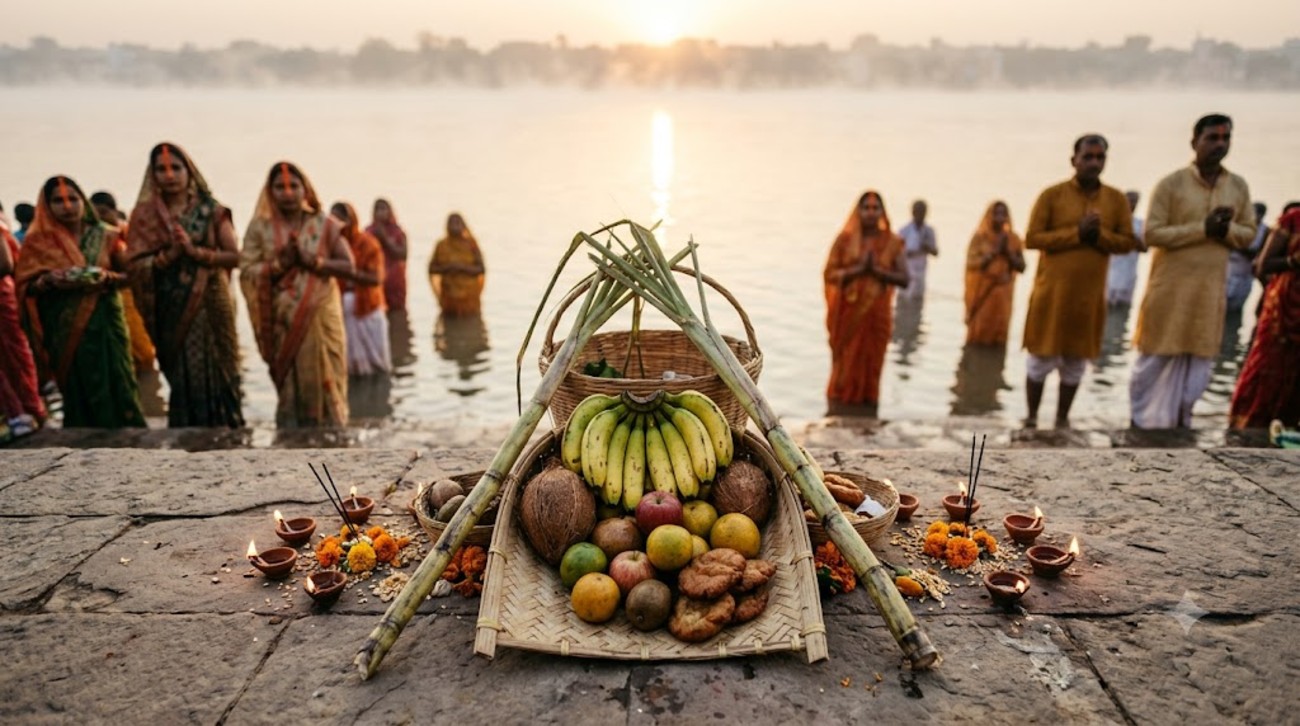
Chhath Puja is one of the most meaningful traditional festivals dedicated to Surya Dev, the Sun God, and Chhathi Maiya. Celebrated with devotion in Bihar, Jharkhand, eastern Uttar Pradesh and many other parts of India, the festival brings families and communities together through fasting, prayer, traditional offerings and worship near rivers, ponds and other water bodies.
Preparing the samagri, or puja materials, is an important part of the celebration. From bamboo baskets and seasonal fruits to thekua, diyas and items used for offering arghya, having everything ready can make the four-day observance more organized.
This Chhath Puja Samagri List brings the commonly used items together in one place. You can use it as a shopping checklist for Nahay Khay, Kharna, Sandhya Arghya and Usha Arghya, while adapting it to your family’s customs and local traditions.
INDIANFESTIVAL101 COMMUNITY
Make Every Celebration Special
Get festival inspiration, cultural stories, celebration ideas and practical guides delivered to your inbox.
By subscribing, you agree to our Privacy Policy.
Important: Chhath Puja practices vary by family, region and community. Not every item listed here is compulsory for every household. Follow the traditions observed by your family or local puja guide.
Table of Contents
Chhath Puja Samagri List: Quick Master Checklist
Use this master list to plan your shopping before the festival begins. Check off the items that apply to your family’s observance.
1. Traditional fruits and offerings
- Bananas, including a whole bunch if customary
- Coconut
- Sugarcane
- Seasonal fruits such as apples, oranges, guavas and sweet lime
- Thekua, prepared at home or sourced according to family custom
- Rice laddoo or other traditional prasad, where customary
- Jaggery
- Rice
- Wheat flour for thekua, if preparing it at home
- Ghee or another ingredient used in your family’s traditional preparation
- Milk for rituals where required
- Clean water for offerings
- Ginger, turmeric or other customary produce used in your local tradition
Choose fresh produce and keep offerings clean and protected until they are needed.
2. Puja utensils and traditional baskets
- Soop or sup — a traditional winnowing basket
- Daura or other basket used to carry offerings
- Lota or kalash for water
- Puja thali or plate
- Small bowls for individual offerings
- A clean cloth for arranging or covering offerings
- A tray or container for transporting items
- A clean mat or suitable surface for preparation
Bamboo baskets are traditional in many Chhath celebrations. If your family uses a particular type or number of baskets, follow that practice.
3. Diya and puja essentials
- Diyas
- Cotton wicks
- Ghee or oil for the lamps
- Incense sticks, if used in your tradition
- Flowers
- Akshat, or rice used in worship
- Sindoor or other customary ritual materials
- Betel leaves and betel nuts, where customary
- Clean water containers
- Matches or a lighter, stored safely
- A clean cloth for the puja area
4. Preparation and practical supplies
- Ingredients for the meals and prasad planned for each day
- Clean utensils reserved for ritual preparation, if that is your family custom
- Containers for storing prepared offerings
- A list of items to carry to the ghat or water body
- Suitable clothing for the observance
- A bag or basket for transporting supplies
- Drinking water and practical supplies for the journey, as appropriate
- A plan for safely carrying and lighting diyas
You may not need every item above. Use the master checklist as a planning aid rather than a fixed list of mandatory ritual materials.
Chhath Puja Samagri for Each of the Four Days
Chhath Puja is traditionally observed over four days. Understanding the purpose of each day helps you decide which supplies to prepare first.
Day 1: Nahay Khay Samagri List
Nahay Khay marks the beginning of the observance. Devotees follow customary practices of bathing, preparing the home and eating a simple, traditionally prepared meal.
Items commonly needed include:
- Ingredients for the family’s traditional Nahay Khay meal
- Rice, lentils and vegetables according to local practice
- Ingredients such as pumpkin or bottle gourd, where customary
- Cooking oil or ghee, as used in the household
- Clean drinking and cooking water
- Clean utensils and a tidy preparation area
- Fresh ingredients for the next stages of the festival
The exact meal differs between households. Ask the person coordinating the observance which dishes and ingredients are traditionally prepared in your family.
Preparation tip: Make a separate list for the Nahay Khay meal instead of mixing its ingredients with the fruits and offerings needed later in the festival.
Day 2: Kharna Samagri List
Kharna is an important stage of Chhath Puja. Devotees observe a fast according to their tradition and prepare the customary prasad for the occasion. In many households, offerings include kheer and roti, although recipes and practices can differ.
Commonly used ingredients and supplies include:
- Rice or another grain specified by family tradition
- Milk
- Jaggery or sugar, according to the customary recipe
- Wheat flour for roti
- Ghee, if required
- Clean cooking water
- Cooking utensils
- Plates or bowls for distributing prasad
- A clean area for preparation and serving
Some families use particular ingredients or preparation methods associated with their tradition. Confirm these details in advance rather than assuming that every household follows the same recipe.
Preparation tip: Purchase ingredients early and keep them stored separately. If preparing traditional prasad, follow your family’s established recipe and food-handling practices.
Day 3: Sandhya Arghya Samagri List
Sandhya Arghya is the evening offering made to the setting Sun. Families often gather at a riverbank, pond or another designated water body, carrying carefully arranged offerings in traditional baskets.
Commonly used items include:
- Soop or sup for arranging offerings
- Daura or baskets for carrying the samagri
- Sugarcane
- Coconut
- Bananas and other seasonal fruits
- Thekua
- Rice laddoo or other customary prasad
- Water in a lota or suitable vessel
- Diyas, cotton wicks and ghee or oil, where used
- Flowers and other traditional offerings
- A clean cloth for arranging or covering items
- Additional ritual materials required by your family’s practice
The fruits and prasad are often arranged carefully in the baskets. The arrangement, number of baskets and selection of offerings can differ across families and regions.
Preparation tip: Arrange the baskets before leaving home and check that delicate fruits and prasad are secure. If you are visiting a crowded ghat, plan how you will carry the offerings safely.
Day 4: Usha Arghya Samagri List
Usha Arghya is the morning offering made to the rising Sun. It marks the final major ritual of the four-day observance, followed by the completion of the fast according to the devotee’s tradition.
Items to prepare may include:
- The remaining fruits and traditional prasad
- Soop and daura or the baskets used by your family
- A lota or vessel containing water
- Sugarcane and coconut, where customary
- Thekua and other customary offerings
- Diyas or flowers, if used
- Clean cloths and practical supplies for the early-morning visit
- Drinking water and other essentials appropriate for the outing
Some households prepare the baskets for both Sandhya Arghya and Usha Arghya together, while others make adjustments before the morning ritual.
Preparation tip: Check the baskets and transport arrangements the previous evening. Early preparation can help the family leave on time without rushing.
Fruits Used in Chhath Puja
Fruits are a prominent part of Chhath Puja offerings. The selection usually reflects local availability, family custom and the offerings prepared for the festival.
Common choices include:
- Bananas: Often arranged in bunches and included in traditional offerings.
- Coconut: Used in many families’ puja arrangements.
- Sugarcane: A familiar offering in numerous Chhath traditions.
- Seasonal fruits: Apples, oranges, guavas, sweet lime and other locally available fruits may be included.
- Other regional fruits: The selection can change depending on the region and household tradition.
When shopping, prioritize freshness and choose fruits that will remain in good condition until the relevant ritual. Avoid buying more than your family can use, particularly when several relatives are contributing offerings.
There is no single fruit list that applies identically to every Chhath celebration. If your household follows a specific traditional list, use it as the final guide.
Thekua Ingredients for Chhath Puja
Thekua is a traditional sweet commonly associated with Chhath Puja, particularly in Bihar and neighbouring regions. It is often prepared at home and included among the festival offerings.
A common home-style ingredient list may include:
- Wheat flour
- Jaggery or sugar, depending on the recipe
- Ghee or oil, as required
- Water or another liquid used to prepare the dough
- Optional flavouring ingredients, such as cardamom, if customary
Recipes differ in sweetness, texture and preparation method. Some families have a recipe passed down through generations, and those customary methods may be preferred for the festival.
If you are preparing thekua for puja, decide on the quantity in advance and keep the ingredients separate from the supplies intended for other dishes. Store the finished thekua in a clean, dry container after it has cooled.
Chhath Puja Shopping List in Hindi
If you are shopping with family members or visiting a local market, this short Hindi list can be useful. Names and preferences vary by region, so add the items your household traditionally uses.
| English | Hindi |
|---|---|
| Banana | केला |
| Coconut | नारियल |
| Sugarcane | गन्ना |
| Seasonal fruits | मौसमी फल |
| Thekua | ठेकुआ |
| Rice | चावल |
| Wheat flour | गेहूं का आटा |
| Jaggery | गुड़ |
| Milk | दूध |
| Ghee | घी |
| Bamboo winnowing basket (soop) | सूप |
| Offering basket (daura) | दउरा / दौरा |
| Water vessel (lota) | लोटा |
| Puja plate | पूजा की थाली |
| Diya | दीपक |
| Cotton wick | रूई की बत्ती |
| Flowers | फूल |
| Incense sticks | अगरबत्ती |
For the most accurate local list, confirm the names and customary items with the family member who organizes the puja.
How to Plan Your Chhath Puja Shopping
A little planning can make festival preparation more manageable, especially when several people are sharing the work.
1. Divide the list into categories
Separate your shopping list into fruits, grains and ingredients, puja utensils, diya supplies, and items needed for the ghat. This helps you avoid buying duplicate items or overlooking essentials.
2. Buy reusable items first
Baskets, utensils, water vessels and trays may be reusable, depending on your family’s practices. Check what is already available at home before purchasing new supplies.
3. Buy perishable items closer to the festival
Fresh fruits, flowers and other perishable offerings should be purchased with their intended use in mind. Avoid leaving delicate produce exposed to heat or storing it in unsuitable conditions.
4. Confirm quantities with your family
The quantity of fruits, prasad and other offerings depends on family size, local customs and whether you are preparing offerings for a household or a larger gathering. Instead of following a universal quantity chart, estimate what your family needs and confirm any customary requirements.
5. Prepare separate bags or baskets
Keep the items for each stage organized. Labelled bags or a simple checklist can help family members distinguish ingredients for meals from the offerings to be carried to the ghat.
6. Check transport and safety
If you are travelling to a crowded water body, plan how you will carry the offerings and return home. Follow local safety guidance, keep children supervised near water, and handle open flames carefully.
FAQs About Chhath Puja Samagri
1. What items are essential for Chhath Puja?
Commonly used items include traditional fruits, thekua or other customary prasad, a soop or offering basket, a water vessel and the puja materials followed by your family. The exact list varies by region and household.
2. Which fruits are used in Chhath Puja?
Bananas, coconut, sugarcane and seasonal fruits are commonly included in many Chhath offerings. Families may add other fruits according to local availability and tradition.
3. What samagri is needed for Sandhya Arghya?
Common items include baskets, fruits, thekua, sugarcane, coconut, water and other customary offerings. Some families also carry diyas, flowers and additional ritual materials.
4. What is needed for Kharna?
Kharna preparations often include ingredients for traditional prasad, such as kheer and roti in many households. Ingredients and preparation methods vary, so follow your family’s customary recipe.
5. Can I prepare the Chhath Puja Samagri List in advance?
Yes. Reusable utensils, baskets and non-perishable ingredients can usually be organized in advance. Purchase fresh fruits and flowers closer to when they are needed, and confirm your family’s specific requirements before shopping.
Final Checklist Before You Leave for the Ghat
Before leaving home, confirm that your family has arranged the customary offerings, checked the baskets and water vessels, packed the required prasad and prepared for safe travel. A final check can save time and reduce last-minute stress.
May your Chhath Puja preparations bring your family together in devotion, gratitude and celebration.