
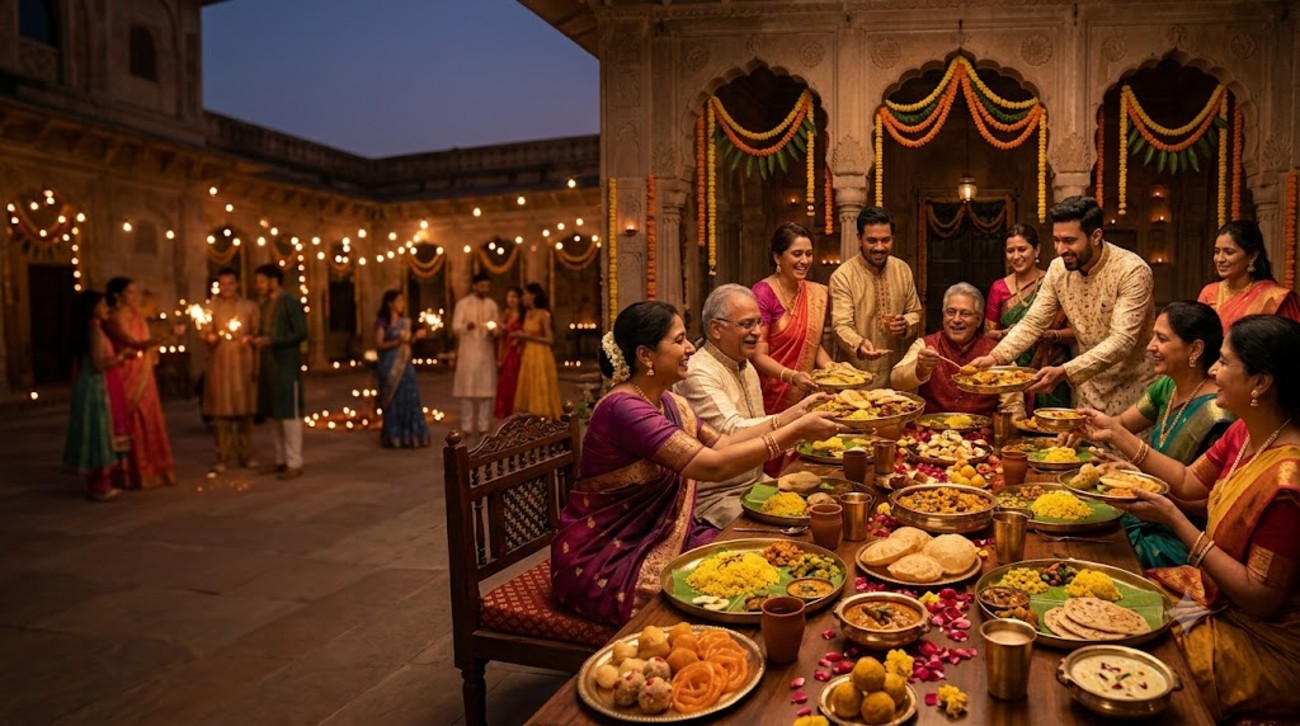
Indian traditional food is a reflection of the country’s extraordinary cultural and regional diversity. From dal baati churma in Rajasthan and dosa in South India to litti chokha in Bihar and traditional sweets prepared during Diwali, Indian cuisine changes dramatically from one region to another. Local ingredients, climate, history, communities and generations of cooking traditions have all shaped the food people enjoy across India.
There is no single dish that can represent Indian traditional food. Instead, India has a vast collection of regional cuisines, family recipes, seasonal preparations, festival foods, snacks, sweets and everyday meals. A traditional meal in Kerala can look completely different from one in Punjab, Gujarat, Bengal or Assam, yet each is an important part of India’s food heritage.
Food is also deeply connected with Indian festivals. Special dishes are prepared to mark religious celebrations, harvest festivals, seasonal occasions and family gatherings. Sweets are exchanged, festive meals are shared and traditional recipes are passed from one generation to the next.
For travellers, this makes food one of the best ways to experience India. Exploring traditional cuisine can take you beyond famous monuments and tourist attractions and introduce you to the people, places, ingredients and traditions that make each destination unique.
In this guide, we explore Indian traditional food by region, state, meal type and festival, along with the dishes and food experiences travellers should look for when exploring India.
Table of Contents
What Is Indian Traditional Food?
Indian traditional food is the collection of regional dishes, cooking methods and food traditions that have developed across India over generations. It includes everyday meals, regional specialities, snacks, sweets and festival foods shaped by local ingredients, culture, climate and traditions.
There is no single traditional Indian cuisine. India has hundreds of regional food traditions, each with its own combinations of grains, vegetables, lentils, dairy, seafood, meat, fruits, spices and cooking techniques. This diversity is one of the defining characteristics of Indian food culture. The same ingredient may be transformed into completely different dishes depending on where you travel.
Why Is Food Important in Indian Culture?
In India, food is deeply connected with hospitality and family life. Offering food to a guest is traditionally regarded as an expression of welcome, while many celebrations are incomplete without preparing special dishes for relatives, friends and neighbours. Food also follows the rhythm of the Indian calendar. Certain ingredients and preparations become especially important during particular seasons or festivals. Harvest celebrations, religious festivals and family occasions often have their own culinary traditions. This is why understanding Indian food can add another dimension to understanding Indian festivals. The food on the table is often part of the story behind the celebration.
Traditional Indian Food by Region
India’s geography plays an important role in shaping its food. Climate, agriculture, local ingredients and historical influences have all contributed to distinct regional cuisines.
North India
North Indian food is known for its breads, lentils, dairy products, vegetables, aromatic spices and rich gravies. Wheat is an important staple in many northern regions, resulting in foods such as roti, paratha, naan and other flatbreads. Popular traditional dishes include rajma, chole, dal makhani, aloo paratha and kadhi. Punjab is particularly known for dishes such as sarson ka saag and makki di roti, while Rajasthan has developed a distinctive cuisine suited to its dry climate, including dal baati churma and gatte ki sabzi. The region also has a strong tradition of festive sweets and dairy-based preparations, including kheer, halwa and various forms of ladoo.
South India
South Indian cuisine is remarkably diverse, with rice, lentils, coconut, tamarind, curry leaves and regional spices appearing frequently in traditional cooking. Dosa, idli, vada, sambar and different varieties of rice dishes are widely recognised, but the region’s culinary traditions go far beyond these familiar foods.
Kerala’s cuisine makes extensive use of coconut and includes dishes such as appam, puttu and avial. Tamil Nadu has its own rich traditions of rice, lentil and vegetable preparations, while Karnataka and Andhra Pradesh offer distinctive dishes shaped by their own local ingredients and culinary history. For visitors, a traditional South Indian meal served on a banana leaf can itself become a cultural experience.
East India
Eastern India has a particularly strong relationship with rice, vegetables, fish and sweets. Bengali cuisine is famous for preparations involving fish, mustard and rice, as well as sweets such as rasgulla and sandesh. Odisha has distinctive dishes including dalma and pakhala, while Bihar is known for foods such as litti chokha. The region also has strong festival-food traditions, with sweets and special preparations playing an important role during religious and seasonal celebrations.
West India
Western India’s food culture ranges from the vegetarian traditions of Gujarat and Rajasthan to the coastal cuisines of Maharashtra, Goa and other regions. Gujarati cuisine is known for dishes such as dhokla, thepla, undhiyu and kadhi. Maharashtra has foods such as puran poli, poha and misal, while Rajasthan is famous for dal baati churma and other dishes developed around locally available ingredients. Along the coast, seafood and coconut become increasingly important. This creates an enormous contrast between inland and coastal cuisines within the same broad region.
Northeast India
The food traditions of Northeast India are among the most distinctive in the country. Rice is an important staple in many communities, while local herbs, vegetables, fermented foods, bamboo shoots, fish and meats feature prominently across the region. Assamese cuisine includes preparations such as khar and masor tenga. Other northeastern states have their own unique ingredients and cooking traditions. For travellers interested in discovering lesser-known sides of India, exploring Northeast Indian food can provide an entirely different culinary perspective.
Famous Indian Traditional Foods You Should Try
India offers an enormous number of traditional dishes, so choosing only a few is difficult. However, some foods provide a useful introduction to the country’s culinary diversity.
Dal Baati Churma
Associated strongly with Rajasthan, dal baati churma combines baked wheat balls with lentils and a sweet, crumbly preparation called churma. It represents the hearty food traditions of Rajasthan and is especially enjoyable as part of a regional food experience.
Sarson Ka Saag and Makki Ki Roti
This classic Punjabi combination brings together mustard greens and corn-based flatbread. It is strongly associated with winter and traditional Punjabi home cooking.
Litti Chokha
Litti chokha is a traditional food associated with Bihar and neighbouring parts of eastern North India. Litti is made from wheat dough filled with a roasted gram-flour mixture, while chokha is typically prepared with roasted vegetables.
Dosa and Sambar
Dosa is a fermented rice-and-lentil crepe traditionally associated with South India. Served with sambar and chutneys, it has become one of the best-known representatives of South Indian cuisine.
Idli
Soft steamed cakes made from a fermented rice-and-lentil batter, idli is commonly eaten for breakfast and can be served with sambar and chutneys.
Puttu and Kadala Curry
Puttu, made using steamed rice flour and coconut, is a traditional Kerala food often served with kadala curry. It offers visitors a taste of Kerala’s distinctive relationship with rice and coconut.
Dhokla
Dhokla is a steamed Gujarati preparation made from a fermented batter. Light and soft in texture, it is commonly enjoyed as a snack or part of a larger meal.
Poha
Poha is made from flattened rice and is particularly popular in parts of western and central India. It is often prepared with onions, peanuts, spices and fresh herbs.
Pakhala
Pakhala is a traditional Odisha preparation based on fermented rice and water. It is particularly associated with warm weather and demonstrates how traditional Indian food can reflect climate and seasonal needs.
Traditional Indian Breakfast Foods
Breakfast varies dramatically across India. In one region, breakfast may mean idli and sambar. In another, it may be poha, paratha, upma, luchi, appam or a regional rice preparation. This diversity makes breakfast one of the easiest ways for travellers to begin exploring local food culture. Instead of looking only for familiar restaurant dishes, visitors can ask what people in that region traditionally eat in the morning. A local breakfast can often reveal ingredients, flavours and cooking methods that are less visible on tourist-oriented menus.
Traditional Indian Snacks
Indian snacks are an important part of everyday food culture as well as festivals and social gatherings. Samosa, kachori, pakora, dhokla, chakli, murukku, mathri and various regional savoury preparations can be found in different parts of the country. Street food adds another layer to this tradition. Chaat, pani puri, bhel puri, vada pav and regional specialities demonstrate how food can become part of the social experience of Indian cities. For travellers, exploring local markets and traditional food streets can sometimes be just as memorable as visiting famous landmarks.
Traditional Indian Sweets and Desserts
Indian sweets are closely associated with celebrations. Ladoo, jalebi, peda, barfi, kheer, halwa, rasgulla, sandesh, modak and many other sweets are prepared in different regions and communities. Sweets often have cultural meaning beyond their taste. They may be offered to guests, distributed among neighbours, prepared during religious celebrations or associated with particular festivals. For this reason, discovering traditional sweets is an important part of experiencing India’s festival culture.
Indian Traditional Food During Festivals
Festival food is one of the strongest examples of the relationship between Indian cuisine and cultural traditions. During festivals, families may prepare dishes that are not part of their everyday meals. Some foods are associated with particular rituals, while others are simply prepared because a celebration feels incomplete without them.
Diwali Food
Diwali is closely associated with sweets, snacks and sharing food with family and friends. Ladoo, barfi, gujiya, chakli, namak para and other festive preparations are commonly associated with Diwali celebrations in different parts of India. Food also becomes part of the social side of Diwali, when families exchange sweets and invite guests to celebrate together. If you are planning a Diwali celebration, our guide on how to celebrate Diwali can help you explore the festival beyond its food traditions.
Holi Food
Holi has its own culinary traditions, with gujiya being one of the best-known festive foods associated with the celebration. Thandai and a variety of savoury and sweet preparations also appear during Holi celebrations, although recipes and customs vary from region to region. Food during Holi reflects the festival’s broader spirit of colour, hospitality and community.
Navratri Food
Navratri food can be particularly interesting because fasting traditions differ across families and regions. During fasting periods, people may prepare dishes using ingredients considered suitable for the fast, including sabudana, potatoes, fruits, dairy products, kuttu flour and other permitted ingredients depending on individual tradition. This creates a special cuisine of its own, with dishes such as sabudana khichdi, vrat-friendly rotis, kuttu preparations and fruit-based foods.
If you’re exploring Navratri cuisine, our detailed guide to Navratri fasting food covers the foods and preparations commonly associated with the fasting tradition. You can also explore our Navratri festival guide to understand the wider celebration, traditions and experiences surrounding the festival.
Makar Sankranti Food
Makar Sankranti is associated with harvest traditions and seasonal foods in different parts of India. Til and jaggery are particularly important in many regional celebrations. Preparations such as til ladoo and other sesame-based sweets are enjoyed during the festival. The foods vary significantly across states, making Makar Sankranti a good example of how one festival can have many regional culinary expressions.
Pongal Food
Pongal in Tamil Nadu is both a harvest festival and the name of a traditional preparation associated with the celebration. Pongal can be prepared in sweet and savoury forms, with rice and lentils forming the base. Sweet Pongal, prepared with ingredients such as jaggery, milk and ghee, is especially associated with the festival.
Onam Food
Onam is famous for the traditional Onam Sadya, a vegetarian feast served with numerous dishes, often on a banana leaf. The meal demonstrates how food can become a communal cultural experience. A Sadya is not simply a collection of dishes; the arrangement, variety and way of serving are all part of the tradition.
Traditional Food of India by State
One of the best ways to understand Indian traditional food is to explore it geographically.
| Region/State | Traditional Foods | What Makes It Special |
|---|---|---|
| Punjab | Sarson ka saag, makki di roti, chole | Wheat, dairy and hearty flavours |
| Rajasthan | Dal baati churma, gatte ki sabzi | Dishes adapted to the dry climate |
| Gujarat | Dhokla, thepla, undhiyu | Diverse vegetarian food traditions |
| Maharashtra | Puran poli, poha, misal | Strong regional and seasonal variety |
| Bihar | Litti chokha, sattu dishes | Rustic grain and roasted-flour traditions |
| West Bengal | Fish dishes, sandesh, mishti doi | Rice, fish and distinctive sweets |
| Odisha | Dalma, pakhala | Rice-based and seasonal traditions |
| Tamil Nadu | Pongal, dosa, idli, sambar | Rice, lentils and fermented foods |
| Kerala | Appam, puttu, avial | Coconut, rice and coastal influences |
| Karnataka | Bisi bele bath, ragi dishes | Rice, millet and regional spice traditions |
| Assam | Khar, masor tenga | Rice, fish and distinctive local ingredients |
This table is only a starting point. Every state contains multiple communities and regional cuisines, meaning that even a single state can offer a substantial culinary journey.
Where Can You Experience Indian Traditional Food?
One of the best ways to understand India’s food culture is to experience it where the tradition belongs. Travellers can discover traditional Indian food through local restaurants, food markets, street-food areas, cultural experiences, regional fairs, family-style meals and festival celebrations.
Instead of looking only for internationally familiar Indian dishes, try foods that are strongly connected to the destination you are visiting. A traditional breakfast in South India, a Rajasthani thali, a Gujarati meal or a Bengali sweet experience can each provide a different window into local culture. This is also where food and festival travel naturally come together. If you’re planning a journey around a celebration, exploring [festival travel experiences] can help you discover the food, traditions, people and destinations connected with the festival.
What Should Tourists Eat in India?
Travellers visiting India should resist the temptation to judge Indian food only by the dishes most commonly found internationally. Try at least one traditional dish from each region you visit.
If you are in Rajasthan, explore Rajasthani cuisine. In Kerala, try a traditional Kerala meal. In Bengal, explore Bengali sweets and regional dishes. In Gujarat, experience Gujarati food. If you travel through South India, try a traditional breakfast. Local food markets, family-run restaurants and regional food experiences can sometimes reveal more about a destination than standard tourist restaurants.
It is also worth asking locals about seasonal specialities. A dish prepared during a festival or harvest season can tell you much more about the culture of a place than a generic restaurant menu.
How Indian Traditional Food Changes With Seasons
Traditional Indian food is closely connected with the seasons. Summer foods may emphasise cooling ingredients and refreshing drinks, while winter brings hearty preparations, nuts, sesame, jaggery and warming spices in many regions. Seasonality also influences festival food. Harvest celebrations naturally highlight newly available agricultural products, while religious and cultural traditions can determine which ingredients are used or avoided. This seasonal relationship between food and culture is one reason traditional cuisine continues to feel connected to everyday life.
Discover India Through Festival Food
A festival becomes much richer when you experience more than its most visible attractions. Imagine visiting Gujarat during Navratri. The Garba performances are central to the experience, but the journey can also include regional food, local markets, traditional clothing, music and community celebrations. You can learn more about the cultural side of the celebration through our guide to the Garba dance festival.
Similarly, experiencing Diwali in India is not only about lights and decorations. Sharing sweets, visiting homes, exploring markets and tasting regional festive dishes can help visitors understand the social character of the celebration. Traditional clothing can also be part of the experience. If you’re interested in how clothing connects with India’s celebrations, explore our guide to Indian festival fashion.
This connection between food, festivals and travel is particularly important for IndianFestival101 because food can become a gateway to festival travel. A traveller may begin by searching for a festival, discover its traditional food, become interested in the region and eventually decide to experience the festival in person.
Indian Traditional Food Is More Than a Meal
Indian traditional food carries memories, regional identity and family traditions. A recipe may be passed from a grandmother to a parent and then to another generation. A festival sweet may appear every year because it reminds a family of home. A regional dish may immediately bring back memories of a particular city or village. That emotional connection is what makes Indian food such an important part of cultural tourism.
When travellers taste a regional dish in the place where it originated or evolved, they are not simply eating. They are experiencing part of the region’s living culture.
How to Explore Indian Food Through Festivals
If you want to discover Indian traditional food more deeply, festivals provide an excellent starting point. Choose a festival and explore:
- The region where it is celebrated
- Traditional foods prepared during the festival
- Local sweets and snacks
- Seasonal ingredients
- Traditional markets
- Regional cooking methods
- Cultural stories connected with food
- Local restaurants and food experiences
You can then combine the food experience with the festival itself. For example, someone researching Navratri can explore why Navratri is celebrated, discover the nine days of Navratri, learn about the 9 colors of Navratri, explore fasting food and then plan a trip around a major regional celebration. This approach transforms a food experience into a broader cultural journey.
Frequently Asked Questions About Indian Traditional Food
What is Indian traditional food?
Indian traditional food refers to regional dishes and cooking practices that have developed over generations and are connected with India’s diverse cultures, ingredients, seasons and traditions.
What is the most famous traditional food in India?
There is no single dish that represents all of India. Popular traditional foods include dosa, idli, dal baati churma, litti chokha, dhokla, biryani, sarson ka saag, poha and many regional specialities.
What are some traditional Indian festival foods?
Festival foods vary by region and celebration. Examples include sweets and snacks during Diwali, gujiya during Holi, fasting dishes during Navratri, sesame-based sweets during Makar Sankranti, Pongal during the Tamil harvest festival and Sadya during Onam.
Which Indian state has the best traditional food?
There is no objective answer because Indian cuisine is highly regional. Punjab, Rajasthan, Gujarat, Maharashtra, West Bengal, Tamil Nadu, Kerala, Odisha, Assam and many other regions each offer distinctive traditional food experiences.
What traditional Indian food should tourists try?
Tourists should try foods that are strongly connected to the region they are visiting. Experiencing local breakfast, regional meals, traditional sweets and festival-specific foods is often more rewarding than eating only internationally popular Indian dishes.
Why is food important during Indian festivals?
Food can represent hospitality, tradition, seasonal abundance, religious customs and community. Special dishes and sweets are often prepared to celebrate festivals and shared with family, friends and guests.
Experience India One Plate at a Time
Indian traditional food is one of the simplest ways to experience the diversity of India. Every region brings its own ingredients, recipes, cooking methods and stories, while festivals add another layer of meaning through special dishes, sweets and shared meals.
Whether you’re discovering India from home or planning a festival journey, don’t look at food as something separate from the culture. A traditional meal can introduce you to a region’s history, a festival’s traditions and the people who keep those traditions alive.
At IndianFestival101, we believe that discovering India means experiencing its celebrations in all their richness—through festivals, food, traditions, destinations and the people who bring them to life.
Explore a festival. Discover its traditions. Taste its culture. And experience India beyond the ordinary.