

The Sun has always held a special place in Indian culture. It brings light to the world, supports agriculture, influences seasons and sustains life. Across India, communities have developed traditions that express gratitude for this natural source of energy through prayers, rituals, harvest celebrations and cultural festivals. Sun festivals in India reflect this deep connection between people and nature. Some festivals, such as Chhath Puja and Ratha Saptami, are directly dedicated to Surya, the Sun God. Others, including Makar Sankranti and Pongal, celebrate solar transitions, seasonal change and the harvest while honouring the natural forces that support agriculture.
These celebrations are also windows into India’s regional diversity. From devotees offering prayers at riverbanks in Bihar to families preparing traditional Pongal in Tamil Nadu and kite flyers filling Gujarat’s skies, every region expresses its relationship with the Sun in a distinctive way. If you want to understand India’s spiritual traditions, agricultural heritage, regional food and cultural celebrations, exploring its Sun festivals is a wonderful place to begin.
Table of Contents
What Are Sun Festivals in India?
Sun festivals in India are religious and cultural celebrations associated with Surya, the Sun, solar movements, seasonal transitions and agricultural cycles.
INDIANFESTIVAL101 COMMUNITY
Make Every Celebration Special
Get festival inspiration, cultural stories, celebration ideas and practical guides delivered to your inbox.
By subscribing, you agree to our Privacy Policy.
In Hindu traditions, Surya is revered as a source of light, vitality, knowledge and life. Ancient Indian traditions also recognised the importance of the Sun in measuring time, understanding seasons and supporting cultivation.
Some festivals involve direct worship of the Sun through prayers, offerings and ritual bathing. Others mark important points in the agricultural calendar, when communities celebrate the harvest, prepare seasonal food and express gratitude for nature’s abundance.
The celebrations differ across states, but many share a common theme: recognising the connection between human life, nature and the changing seasons.
Why Is the Sun Worshipped in Indian Culture?
The Sun is more than a celestial object in Indian cultural and religious traditions. It represents energy, illumination, discipline and the continuity of life.
In Hindu belief, Surya is worshipped as a deity who provides light and sustains living beings. Traditional practices such as offering water to the rising Sun, reciting Surya mantras and observing festivals dedicated to Surya reflect this reverence.
The Sun also has an important place in India’s agricultural history. Farmers depend on seasonal patterns, sunlight and rainfall to cultivate crops. Harvest festivals therefore express gratitude not only for the crops but also for the natural conditions that make agriculture possible.
This is why Sun-related celebrations often bring together spirituality, farming, food, family and community life.
List of Popular Sun Festivals in India
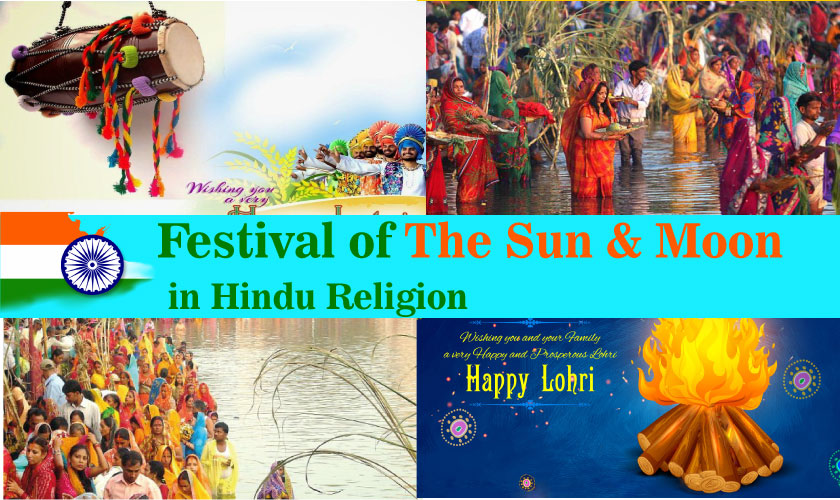
India celebrates several festivals connected with Sun worship, solar transitions and seasonal harvests. Some are directly dedicated to Surya, while others have broader agricultural and cultural significance.
| Festival | Main region | Usual period | Main association |
|---|---|---|---|
| Chhath Puja | Bihar, Jharkhand, eastern Uttar Pradesh | October–November; also March–April | Direct worship of the setting and rising Sun |
| Ratha Saptami | Andhra Pradesh and other regions | January–February | Worship of Surya |
| Samba Dashami | Odisha | December–January | Worship of the Sun for family well-being |
| Makar Sankranti | Across India | January | Solar transition and harvest |
| Pongal | Tamil Nadu | January | Harvest, Sun and agricultural traditions |
| Uttarayan | Gujarat | January | Makar Sankranti and kite flying |
| Magh Bihu | Assam | January | Harvest, community feasts and seasonal change |
| Lohri | Punjab and neighbouring regions | January | Winter harvest and seasonal celebration |
| Modhera Dance Festival | Gujarat | January | Cultural performances at the Sun Temple |
The exact dates of festivals based on the Hindu calendar can vary from year to year. Regional names and customs may also differ.
Major Sun Festivals Celebrated in India
1. Chhath Puja – The Festival Dedicated to the Setting and Rising Sun
Chhath Puja is one of India’s most distinctive festivals dedicated to Surya. It is especially popular in Bihar, Jharkhand and eastern Uttar Pradesh, although communities celebrate it in many other parts of the country and abroad.
The festival expresses gratitude to the Sun for sustaining life and seeks blessings for the well-being, longevity and prosperity of family members.
One of its most remarkable features is that devotees offer prayers to both the setting Sun and the rising Sun. This makes Chhath visually and spiritually distinctive among Indian festivals.
Chhath Puja is traditionally observed over four days:
- Nahay Khay: Devotees take a ritual bath, clean their homes and begin the observance.
- Kharna: A day-long fast is followed by evening prayers and a traditional offering, commonly including kheer.
- Sandhya Arghya: Devotees gather near rivers, ponds and other water bodies to offer prayers to the setting Sun.
- Usha Arghya: Before sunrise, devotees offer prayers to the rising Sun and conclude the main fasting observance.
The festival is also known for its traditional offerings, including thekua, fruits, sugarcane and other seasonal items. Folk songs, decorated bamboo baskets, earthen lamps and gatherings at riverbanks create a powerful community experience.
For visitors, Chhath offers an opportunity to witness the cultural traditions of Bihar and eastern Uttar Pradesh. Major celebrations can be experienced in Patna, Varanasi and other cities along the Ganga, although visitors should respect the religious nature of the rituals and follow local guidance.
Read our detailed guide to [Chhath Puja celebration] to understand its rituals, preparations and traditions.
2. Ratha Saptami – Celebrating the Chariot of the Sun God
Ratha Saptami, also known as Surya Jayanti or Magha Saptami, is a Hindu festival dedicated to Surya. It is observed on the seventh day of the bright fortnight of the Hindu month of Magha, usually falling in January or February.
The festival symbolically represents Surya beginning his journey across the sky in a celestial chariot drawn by seven horses. The imagery represents the Sun’s movement, light and the passage of time.
Devotees traditionally wake early, take ritual baths and offer prayers to Surya. Temples dedicated to the Sun God organise special worship, processions and celebrations.
One of the most significant places to experience Ratha Saptami is the Arasavalli Sun Temple in Srikakulam, Andhra Pradesh. The temple is dedicated to Sri Suryanarayana Swamy and attracts devotees during the festival.
Ratha Saptami is an important opportunity to explore India’s living temple traditions and the continuing cultural significance of Sun worship.
3. Samba Dashami – Odisha’s Festival of Sun Worship
Samba Dashami is a distinctive festival celebrated in Odisha, particularly associated with family prayers for the health and well-being of children.
According to traditional legend, Samba, the son of Lord Krishna, suffered from an illness and worshipped Surya to seek relief. The story forms an important part of the festival’s cultural and religious significance.
Families observe rituals dedicated to the Sun God, with special prayers and traditional food offerings. In many households, women prepare a variety of dishes and offer them to Surya before sharing the food with family members.
The festival is generally observed on the tenth day of the bright fortnight of the Odia month of Pausha, which usually falls in December or January.
Samba Dashami is a reminder that Indian festivals are often deeply connected with family relationships, local legends, food traditions and regional identity.
4. Makar Sankranti – Celebrating the Solar Transition
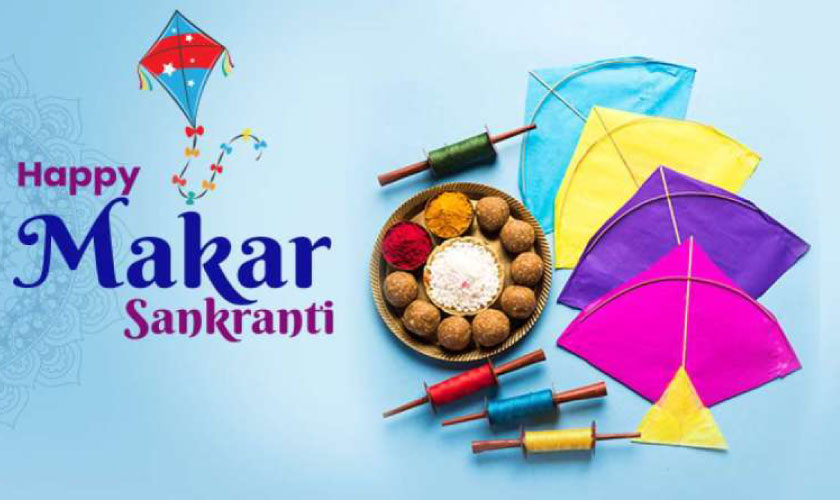
Makar Sankranti is one of India’s most widely celebrated festivals associated with the Sun. It marks the Sun’s transition into Makara, or Capricorn, in the traditional Hindu astronomical calendar.
The festival usually falls in January and is associated with the beginning of Uttarayana, traditionally understood as the Sun’s northward journey.
Unlike many Hindu festivals that follow lunar dates, Makar Sankranti is based on the solar calendar. Its date therefore generally remains around 14 or 15 January.
The celebration takes different forms across India. People take holy dips in rivers, offer prayers, prepare traditional food, distribute sweets and participate in community activities.
In many regions, sesame seeds and jaggery are important festival ingredients. These seasonal foods are shared with family, friends and neighbours as symbols of warmth, goodwill and togetherness.
Makar Sankranti also connects several regional celebrations, each with its own food, music and customs.
5. Pongal – Tamil Nadu’s Harvest Festival
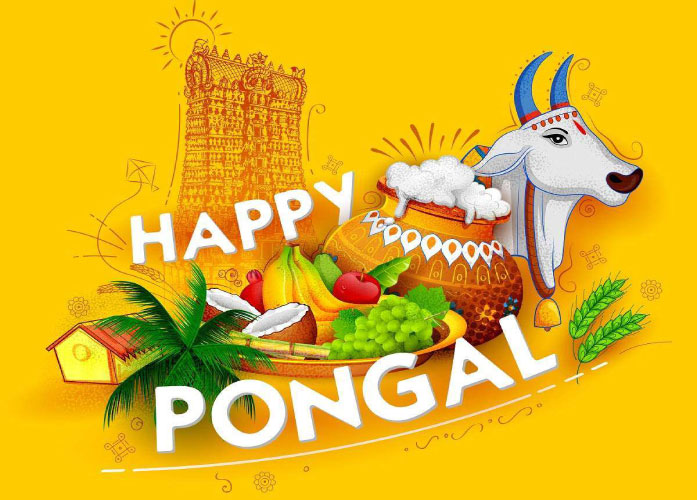
Pongal is one of the most important harvest festivals of Tamil Nadu. Celebrated over four days in January, it expresses gratitude to nature, the Sun, cattle and the agricultural community. The festival is closely connected with the harvest season and the preparation of newly harvested rice. The four days are traditionally known as:
- Bhogi Pongal: Homes are cleaned and families prepare for the new season.
- Thai Pongal: The main day of the festival, when freshly harvested rice is cooked with milk and jaggery in a traditional pot and offered in gratitude.
- Mattu Pongal: Cattle are honoured for their contribution to farming.
- Kaanum Pongal: Families and friends come together for visits, outings and community celebrations.
The overflowing Pongal pot is one of the festival’s most recognisable symbols. It represents abundance, prosperity and hopes for a successful year.
During Pongal, homes are decorated with colourful kolam designs, sugarcane is displayed, traditional dishes are prepared and families gather to celebrate. For travellers, Pongal is a wonderful opportunity to experience Tamil Nadu’s rural traditions, local cuisine and hospitality. Explore more about [Pongal festival celebration] and its cultural traditions.
6. Uttarayan – Gujarat’s Festival of Kites
In Gujarat, Makar Sankranti is widely celebrated as Uttarayan. The festival is particularly famous for its kite-flying traditions. As the winter season changes, rooftops and open spaces fill with colourful kites. Families and friends gather to fly kites, enjoy traditional food and participate in friendly competitions. Ahmedabad is one of the best-known places to experience Uttarayan. The International Kite Festival also attracts visitors and kite enthusiasts from different parts of India and the world. Traditional foods such as undhiyu, jalebi, chikki and sesame-based sweets add to the festive atmosphere. Uttarayan demonstrates how a solar festival can become a large-scale cultural celebration, bringing together local communities, food, craft and tourism.
7. Magh Bihu – Assam’s Harvest Celebration
Magh Bihu, also known as Bhogali Bihu, is Assam’s harvest festival celebrated in January. The festival marks the end of the harvesting season and is closely connected with food, community gatherings and agricultural traditions. One of its most recognisable features is the meji, a temporary structure made from bamboo, thatch and other natural materials. People gather around it for traditional rituals and celebrations. Food plays a central role in Magh Bihu. Families prepare pitha, laru and other traditional dishes using rice, coconut, sesame and jaggery. Community feasts, traditional games and cultural performances make the festival an important expression of Assamese identity.
Although Magh Bihu is primarily a harvest celebration rather than a festival exclusively dedicated to Surya, it belongs to the wider seasonal and agricultural festival landscape associated with the January transition.
8. Lohri – Welcoming the Harvest Season
Lohri is a popular winter festival celebrated in Punjab and neighbouring regions, usually on 13 January.
The celebration is associated with the agricultural cycle, the end of the coldest part of winter and the arrival of the harvest season.
Families and communities gather around bonfires, sing traditional songs, dance bhangra and gidda, and share seasonal foods.
Peanuts, popcorn, rewri, gajak and sesame sweets are commonly enjoyed during the celebration.
Lohri is also an important family occasion, particularly for celebrating marriages and the birth of children in some communities.
Its connection with seasonal change and harvest makes it an important part of India’s broader winter festival calendar.
9. Modhera Dance Festival – Culture Around the Sun Temple
The Modhera Dance Festival, also known as Uttarardh Mahotsav or Modhera Utsav, is a cultural celebration held at the historic Sun Temple in Modhera, Gujarat.
Unlike Chhath Puja or Ratha Saptami, it is primarily a performing-arts festival rather than a traditional religious festival dedicated to worshipping Surya.
The magnificent Sun Temple provides a historic setting for classical and traditional dance performances. Artists from different regions showcase India’s performing-arts heritage against the backdrop of the temple’s remarkable architecture.
The festival offers a different way to experience India’s relationship with the Sun: through architecture, history, sculpture, music and dance.
For travellers interested in heritage and culture, Modhera can be combined with a visit to nearby Patan and other destinations in northern Gujarat.
How to Experience Sun Festivals in India as a Traveller
Sun festivals offer travellers an opportunity to experience India beyond its monuments and popular tourist attractions. They reveal how local communities celebrate nature, preserve traditions and bring generations together. The experience can be very different depending on the destination.
- Bihar and eastern Uttar Pradesh: Experience Chhath Puja near riverbanks and explore the region’s folk traditions and local food.
- Odisha: Visit Konark, explore the Sun Temple and experience the cultural atmosphere of the Konark region.
- Andhra Pradesh: Explore the Arasavalli Sun Temple and its Ratha Saptami celebrations.
- Tamil Nadu: Experience Pongal through village celebrations, traditional cooking, kolam decorations and agricultural customs.
- Gujarat: Enjoy Uttarayan’s kite-flying culture and explore the heritage of Modhera.
- Assam: Experience Magh Bihu through traditional food, community gatherings and Assamese cultural performances.
- Punjab: Discover Lohri through bonfires, music, dance and seasonal food.
Practical Travel Tips
Plan around the festival calendar. Many festivals follow the Hindu lunar or solar calendar, so their Gregorian dates can change. Check the local festival schedule before booking your trip.
Book accommodation early. Popular pilgrimage and festival destinations can become crowded during major celebrations.
Respect religious customs. Ask before photographing people, rituals or private ceremonies. Follow instructions at temples and sacred bathing areas.
Choose appropriate clothing. Wear comfortable and modest clothing when visiting religious places. Carry footwear suitable for walking and outdoor celebrations.
Explore local food and culture. Festival food, regional markets, music, crafts and traditional performances are important parts of the experience.
Travel responsibly. Respect local communities, avoid littering near rivers and sacred places, and follow safety instructions during large gatherings.
For more ideas about experiencing India’s celebrations and destinations, explore our [festival travel experiences].
Why Sun Festivals Are Important for India’s Cultural Heritage
Sun festivals preserve traditions that connect spirituality, agriculture, local history and community life. They remind people of the importance of natural resources and the relationship between food production and seasonal cycles. They also preserve regional languages, folk songs, traditional recipes, crafts and local celebrations.
For international visitors, these festivals provide a deeper understanding of India. They show that the country’s cultural diversity is not limited to different religions or languages. It is also reflected in how communities understand nature, celebrate harvests and express gratitude. Sun festivals are therefore important not only as religious occasions but also as living cultural traditions.
FAQs About Sun Festivals in India
Which is the most famous Sun festival in India?
Chhath Puja is among India’s most prominent festivals dedicated directly to the Sun God. It is especially popular in Bihar, Jharkhand and eastern Uttar Pradesh and is known for prayers offered to both the setting and rising Sun.
Which festivals in India are dedicated to the Sun God?
Chhath Puja, Ratha Saptami and Samba Dashami are important festivals directly associated with the worship of Surya. Makar Sankranti is also associated with the Sun’s transition into Capricorn and regional harvest celebrations.
When are Sun festivals celebrated in India?
Sun-related festivals occur at different times of the year. Makar Sankranti, Pongal, Lohri and Magh Bihu are generally celebrated in January. Ratha Saptami usually falls in January or February, while Chhath Puja is commonly observed in October–November and also in March–April.
Why is Chhath Puja called a Sun festival?
Chhath Puja is dedicated to Surya, the Sun God. Devotees offer prayers to the setting Sun on the third day and the rising Sun on the fourth day of the main observance.
Is Pongal a festival dedicated to the Sun God?
Pongal is a harvest festival that expresses gratitude to nature, farmers, cattle and the Sun. The main Thai Pongal day includes preparing and offering a traditional rice dish in gratitude for the harvest.
Where can tourists experience Sun festivals in India?
Popular destinations include Patna and Varanasi for Chhath Puja, Srikakulam for Ratha Saptami, Konark for its Sun Temple and cultural festivals, Tamil Nadu for Pongal, and Ahmedabad for Uttarayan.
What food is prepared during Sun festivals?
Traditional foods include thekua during Chhath Puja, sesame and jaggery sweets during Makar Sankranti, Pongal rice preparations in Tamil Nadu, pitha during Magh Bihu and rewri and gajak during Lohri.
Are all harvest festivals in India dedicated to the Sun?
No. Many harvest festivals are connected with seasonal change, agricultural traditions and gratitude to nature, but they are not all exclusively dedicated to Surya. Their religious meanings and regional customs differ.
Experience India’s Festivals Through the Celebration of the Sun
From the sacred riverbanks of Chhath Puja to the colourful skies of Uttarayan, from the traditional Pongal pot in Tamil Nadu to the magnificent Sun Temple of Konark, India’s Sun-related festivals reveal the country’s remarkable connection with nature.
These celebrations bring together faith, agriculture, food, music, family traditions and regional identity. They also create opportunities for travellers to experience India’s cultural heritage in a more meaningful way.
Whether you are exploring Indian festivals for cultural learning, planning a family celebration, organising a school activity or travelling to experience regional traditions, Sun festivals offer a fascinating journey through India’s diversity.
At IndianFestival101, discover the stories behind India’s festivals, explore how communities celebrate them and find inspiration to experience the culture of India.
Discover India. Celebrate Life.