
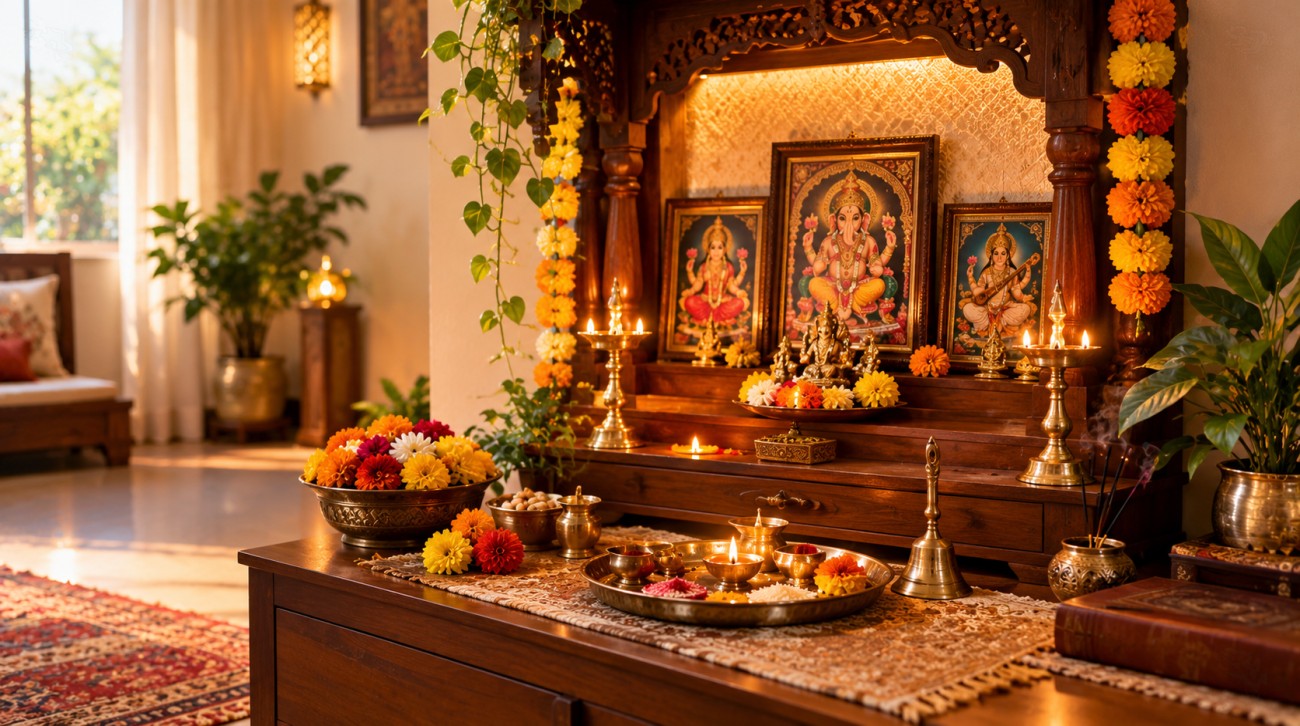
A pooja room is more than a decorated corner of the house. For many Indian families, it is a place for daily prayers, quiet reflection, family traditions and celebrations throughout the year. A clean, thoughtfully arranged prayer space can make these moments feel more peaceful, whether you have a separate mandir, a compact prayer shelf or a small corner in your living room. Decorating a pooja room does not necessarily require expensive marble work, elaborate lighting or a large collection of religious objects. The most important elements are a suitable place for prayer, the items your family uses for worship, good organisation and decorations that reflect your personal traditions.
The best pooja room decoration items combine beauty with practicality. A traditional brass diya, a well-arranged pooja thali, fresh flowers, soft lighting and a clean background can create a welcoming space without making it feel crowded. In this guide, we explore the essential pooja room decoration items for Indian homes, explain how to choose them, share ideas for small and large prayer spaces, and offer practical tips for decorating safely during Diwali and other festivals.
Table of Contents
Essential Pooja Room Decoration Items at a Glance
If you are setting up or refreshing a home mandir, begin with the essentials and add decorative details according to your space and family traditions.
INDIANFESTIVAL101 COMMUNITY
Make Every Celebration Special
Get festival inspiration, cultural stories, celebration ideas and practical guides delivered to your inbox.
By subscribing, you agree to our Privacy Policy.
| Item | Why it is useful | What to consider |
|---|---|---|
| Mandir or prayer shelf | Provides a designated place for worship | Size, stability and ease of cleaning |
| Idols, images or religious symbols | Reflect your family’s worship traditions | Personal beliefs, respectful placement and available space |
| Diya or lamp | Used in many daily and festive prayer traditions | Stable base, heat-resistant surface and safe placement |
| Pooja thali | Keeps frequently used ritual items together | Size, material and ease of maintenance |
| Bell, incense holder or other ritual accessories | Supports the practices followed by your household | Choose only what your family uses |
| Flowers and garlands | Add colour and a fresh festive touch | Freshness, fragrance and easy disposal |
| Decorative lighting | Creates a warm atmosphere | Safe wiring, low heat and suitable brightness |
| Storage boxes or drawers | Keep prayer supplies organised | Accessibility and protection from dust |
| Rangoli or decorative backdrop | Enhances the surrounding area | Space, materials and ease of cleaning |
Not every household needs every item. Your family’s customs, the type of worship you follow and the size of your prayer area should determine what belongs in your pooja room.
1. A Mandir or Prayer Shelf
The mandir is often the visual centre of a home pooja room. It can be a traditional wooden temple, a carved marble structure, a compact wall-mounted unit or a simple shelf dedicated to prayer.
For a spacious home, a wooden or marble mandir may provide room for religious images, lamps and ritual accessories. In an apartment, a neatly arranged shelf or compact cabinet can serve the same purpose without taking up valuable floor space.
Choose a structure that is stable, easy to clean and suitable for the weight of the objects you plan to place on it. Consider how doors open, whether shelves are accessible and how the area will be cleaned around the base.
Natural wood can create a warm, traditional appearance, while marble and light-coloured finishes often suit minimalist interiors. Metal details or carved panels can add visual interest without requiring extensive decoration.
Most importantly, arrange the mandir according to your family’s religious customs. There is no single layout that every Indian household must follow.
2. Idols, Pictures and Religious Symbols
Religious images and symbols often give a pooja space its personal meaning. Depending on the household, these may include idols, framed pictures, sacred texts or other objects associated with worship.
Choose items that reflect the traditions your family follows rather than filling the mandir with objects simply because they are decorative. A small, carefully arranged collection can look more peaceful and be easier to maintain than a crowded shelf.
Consider the size of each object in relation to the mandir. Large frames can overwhelm a narrow shelf, while too many small objects can make cleaning difficult. Stable bases and suitable stands help keep items secure.
Families also differ in how they arrange, clean and care for religious objects. Follow the practices you have learned within your own tradition, and avoid treating one household’s customs as a universal rule.
For a modern home, a simple background, coordinated frames and uncluttered shelves can help the religious objects remain the focus of the space.
3. Diyas and Decorative Lamps
A diya is one of the most recognisable elements of many Indian prayer spaces. It is used in numerous daily worship practices and becomes especially prominent during festivals such as Diwali.
Traditional clay diyas offer a simple, familiar look. Brass and other metal lamps can be reused over many years, while decorative electric diyas provide an alternative in homes where an open flame is unsuitable.
For everyday use, choose a lamp with a stable base and place it on a heat-resistant surface away from curtains, flowers, paper and other flammable materials. Never leave a burning diya unattended, and keep flames out of children’s reach.
During Diwali, a few carefully positioned lamps can create a beautiful effect without crowding the mandir. You can explore more festive inspiration in our guide to Diwali decoration ideas.
4. A Well-Arranged Pooja Thali
A pooja thali keeps frequently used worship accessories together and makes preparation easier. Depending on family customs, it may hold a diya, kumkum, roli, rice grains, flowers or other ritual materials.
Brass and stainless steel are popular choices because they are durable and relatively easy to maintain. Decorative thalis may feature engraved patterns, coloured details or traditional motifs, making them suitable for festivals and special occasions.
Choose a size that fits your needs. A compact thali works well for daily worship in a small apartment, while a larger one may be useful for family gatherings or festive rituals.
After use, clean the thali according to its material and store the contents in suitable containers. Keeping frequently used items together can make daily prayer routines simpler.
For more ideas, read our guide to pooja thali decoration.
5. Flowers, Garlands and Fresh Decorative Elements
Flowers bring colour, fragrance and a natural softness to a prayer space. Marigolds, roses, jasmine and other locally available flowers are used in different Indian traditions, although preferences vary by region and religious practice.
A small garland, a few fresh flowers in a clean bowl or a simple arrangement beside the mandir may be all you need. For special occasions, flower strings can decorate the surrounding doorway or backdrop.
Choose flowers that suit the season and your household’s customs. If anyone at home is sensitive to fragrance, use lightly scented or unscented alternatives.
Fresh flowers need regular attention. Remove wilted petals and replace water in flower containers to keep the area clean. Avoid placing flowers directly against open flames or hot lamps.
Artificial garlands can be useful for longer-lasting decoration, particularly in hard-to-reach areas. Choose good-quality reusable pieces and store them carefully after the festival.
6. Lighting for a Calm and Welcoming Atmosphere
Lighting can change the entire appearance of a pooja room. Warm, soft illumination often complements wood, brass, flowers and traditional decorations, while excessively bright or colourful lights can make a small space feel busy.
A simple ceiling light, a small wall light or concealed LED lighting around a shelf can provide practical illumination. Decorative string lights may be used during festivals, provided they are suitable for the location and installed safely.
Avoid placing electrical connections close to water used for cleaning or rituals. Keep wires away from flames, hot surfaces and areas where people could trip. Switch off decorative lights when they are not needed, and use products with appropriate safety certifications.
In a compact home, lighting beneath a shelf can help the mandir feel visually distinct without requiring additional furniture.
7. Incense Holders and Other Ritual Accessories
Some households use incense, dhoop or other fragrant materials during prayer. A suitable holder keeps these items contained and provides a designated place for ash.
Choose a stable, heat-resistant holder and position it away from curtains, paper, wooden decorations and other combustible materials. Keep the area ventilated, particularly in smaller rooms.
Incense is not essential for every prayer practice. If your household avoids smoke because of personal preference, respiratory sensitivity or indoor air quality concerns, you can simply omit it.
Other accessories might include a small bell, a container for ritual powders, a water vessel or storage for prayer materials. Include only the items your family uses regularly, and keep them clean and accessible.
8. A Decorative Backdrop for the Mandir
A backdrop can help define the prayer area, especially when the mandir is located in a living room or multipurpose space.
Wooden panels, simple carved designs, a painted wall or a subtle patterned surface can provide an attractive background. If you rent your home, removable wall coverings or freestanding decorative panels may be more practical than permanent alterations.
For a traditional appearance, warm wood tones and restrained brass accents can work well. For a contemporary interior, neutral colours and clean lines may make the space feel calmer.
Avoid adding too many competing patterns behind the religious objects. The backdrop should complement the mandir rather than become the main attraction.
If you are planning a festive refresh, use the same colour palette for the backdrop, flowers and surrounding decorations. This creates a coordinated look without requiring a complete redesign.
9. Storage Boxes and Organisers
A beautiful pooja room is easier to maintain when the everyday supplies have designated places. Small boxes, trays and drawers can hold cotton wicks, matches, incense, ritual powders, prayer books and other regularly used items.
Use containers that suit the contents. Keep flammable supplies away from open flames and hot lamps, and store liquids securely to prevent spills. Clearly organised compartments can also make it easier for family members to prepare for prayer.
If the mandir has limited space, use a nearby drawer or cupboard rather than stacking supplies on the worship shelf. This keeps the main area uncluttered and leaves enough room for the items currently in use.
Regularly check stored supplies and remove empty packaging, dried flowers and items that are no longer needed.
10. Rangoli and Floor Decorations Around the Pooja Room
Rangoli can create a festive entrance or define the area around a mandir. Designs may be made with coloured powders, flower petals, rice flour or other materials according to local traditions.
For Diwali, a small floral or geometric rangoli near the prayer area can complement diyas and garlands. It does not need to be elaborate; a simple design that suits the available space can be equally attractive.
If the prayer area is used frequently, avoid placing slippery materials where people walk. Keep rangoli away from open flames, and make sure floor decorations do not obstruct access to the mandir.
For a deeper look at this art form, explore our article on rangoli art in Indian festivals and culture.
How to Decorate a Small Pooja Room in an Apartment
A small prayer space can be just as meaningful as a separate room. The key is to use the available space carefully and choose decorations that serve a purpose.
Begin with a compact, stable mandir or a designated shelf. Keep the number of objects manageable, store extra supplies nearby and use a light-coloured background if you want the space to feel open.
Wall-mounted storage may free up the surface area needed for daily worship. A small tray can keep ritual accessories together, while warm LED lighting can provide a gentle glow without occupying shelf space.
Instead of adding many decorative objects, choose two or three details that work well together—for example, a brass lamp, a small flower arrangement and a coordinated backdrop.
If your prayer area is part of a shared room, use a rug or a simple visual boundary to distinguish it from the surrounding space, provided it does not create a trip hazard or sit too close to flames.
The aim is not to make a small mandir look like a large temple. It is to create a clean, accessible and respectful place that fits your home and your family’s practice.
Pooja Room Decoration Ideas for Diwali and Other Festivals
During festivals, you can add temporary decorations without changing the everyday arrangement of your prayer space.
For Diwali, fresh flowers, a few diyas, a clean pooja thali and a coordinated backdrop can make the mandir feel festive. Families may also prepare a rangoli near the entrance and arrange sweets or offerings according to their traditions.
For Navratri, some households add flowers, traditional colours or decorations connected with the form of worship they observe. During Ganesh Chaturthi, families may decorate the area around the installed image of Lord Ganesha in accordance with their customs.
The most suitable decorations depend on the festival and your household’s practice. You do not need to purchase a new set of accessories for every occasion. Reusable lamps, trays, fabric decorations and storage boxes can serve across several celebrations.
If you are planning a wider Diwali celebration, our guide to how to celebrate Diwali explains other ways to prepare your home and spend time with family. You can also read about the five days of Diwali to understand how the festive period is observed.
How Much Does It Cost to Decorate a Pooja Room?
The cost depends on whether you are refreshing an existing mandir or setting up a new prayer space from scratch. You can often make a visible difference by organising the area, adding flowers and improving the lighting before buying new furniture or decorative objects.
A modest refresh might involve a few flowers, a small organiser and a simple diya. A larger project could include a new mandir, a decorative backdrop, lighting and storage.
Before shopping, make a list of what you already own and identify the items that genuinely need replacing. Set a budget for the essentials first, then decide whether you want additional decorative pieces.
When comparing products, look at durability, ease of cleaning, material quality and safety—not just appearance. Reusable accessories may cost more initially but can be used for years.
For IndianFestival101, this is also a natural place to recommend relevant decor, lamps, thalis and organisers through clearly disclosed affiliate links where available. Recommendations should prioritise usefulness and suitability rather than encouraging readers to buy every item on the list.
Common Mistakes to Avoid When Decorating a Pooja Room
One frequent mistake is overcrowding the mandir. Too many objects can make the space harder to clean and leave little room for the items used during prayer. Keep the main surface organised and store additional supplies separately.
Another mistake is prioritising appearance over safety. Fabric garlands, paper decorations and electrical wires should be kept away from flames and hot surfaces. Lamps should be placed securely, and children should be supervised around candles, diyas and ritual accessories.
It is also easy to buy decorations that do not suit the available space. Measure the shelf or mandir before purchasing larger objects, and check that doors, drawers and walkways remain accessible.
Finally, avoid assuming that every religious practice is the same. Families have different customs around images, ritual accessories, flowers, incense and placement. A thoughtful design respects those differences instead of prescribing one universal arrangement.
FAQs About Pooja Room Decoration Items
What are the most essential items for a home pooja room?
The essentials depend on your family’s practice. Many households use a designated mandir or shelf, religious images or symbols, a diya, and a few ritual accessories. Flowers, decorative lighting and storage organisers can be added according to preference and available space.
Which material is best for a pooja mandir?
Wood and marble are common choices, while metal and engineered materials may also suit different homes. Consider durability, stability, cleaning requirements, available space and your interior style before choosing.
How can I decorate a pooja room on a small budget?
Start by cleaning and organising the existing space. Add fresh flowers, a simple diya, a neat thali and warm lighting if needed. Reuse suitable decorations you already own instead of buying a completely new set.
How do I decorate a small pooja room in an apartment?
Use a compact mandir or dedicated shelf, keep accessories organised and choose a few complementary decorative elements. Wall-mounted storage and suitable lighting can make a small space practical without overcrowding it.
Can I use artificial flowers in a pooja room?
Artificial flowers can be a practical decorative option, particularly for areas that are difficult to maintain. Some families prefer fresh flowers for worship, so follow your own customs and use artificial arrangements where appropriate.
How can I decorate a pooja room safely during Diwali?
Place diyas on stable, heat-resistant surfaces and keep them away from fabric, paper, flowers and electrical wires. Never leave a burning lamp unattended, supervise children and use suitable certified lighting for decorations.
How often should a pooja room be cleaned?
The frequency depends on how often the space is used and which materials are present. Many households clean the prayer area regularly, remove wilted flowers and ash, and wash reusable accessories as needed. Follow your family’s customary practices for religious objects.
Create a Pooja Space That Reflects Your Home and Traditions
A beautiful pooja room does not need to be large, expensive or filled with decorative objects. The most effective design begins with a clean and organised space, the items your family uses for worship and a few thoughtful details that make the area feel welcoming.
Choose a mandir that fits your home, arrange ritual accessories where they are easy to reach, add flowers or lighting if they suit your practice, and keep safety and maintenance in mind. During Diwali and other festivals, temporary decorations can bring additional colour without making the everyday prayer space difficult to use.
For more festive inspiration, explore IndianFestival101’s guides to Diwali decoration ideas, pooja thali decoration and rangoli art in Indian culture.
Ultimately, the best pooja room is one that reflects your family’s traditions, fits your living space and supports the moments of prayer and reflection that matter to you.